
CEO Pulse Podcast | Interview
TL;DR
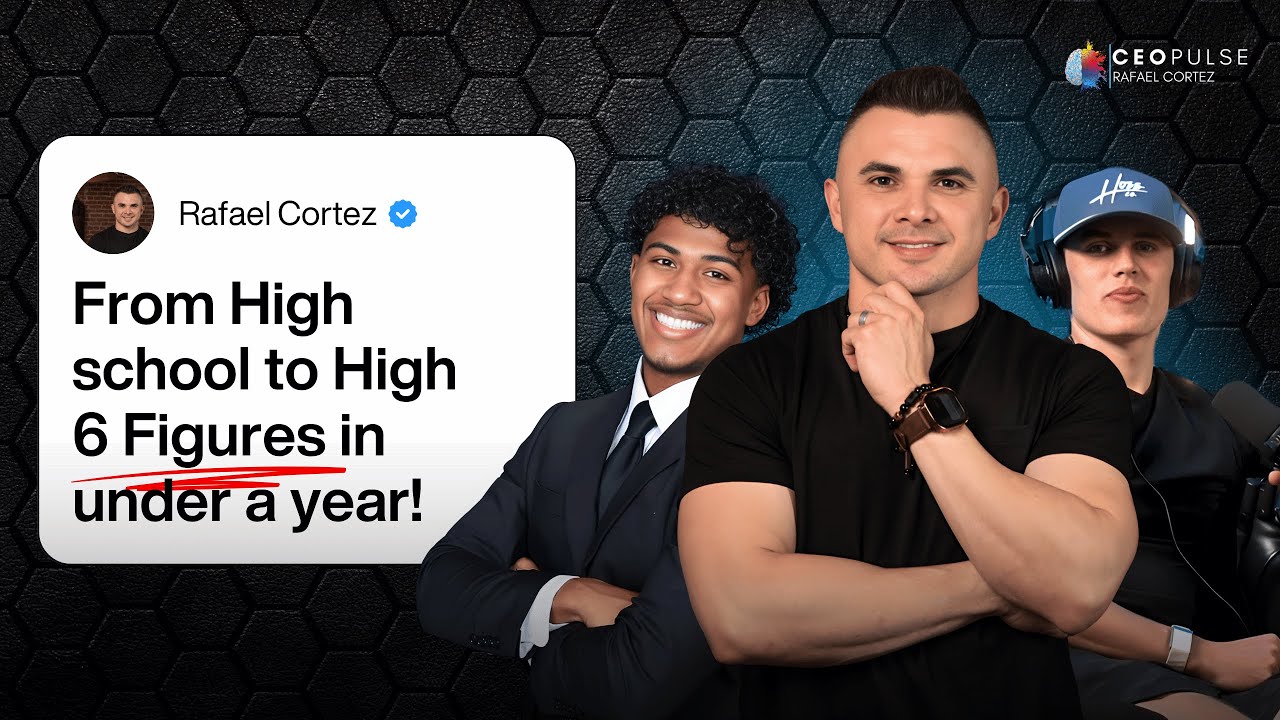
In EP 224 of the CEO Pulse Podcast, host Rafael Cortez talks with Joshua Douchee and Tyler Williams of Silverstone Capital, two young wholesalers out of Chicago. They share how a high school student and a real estate agent started with JV deals and dead leads, learned novations, defined their roles and built a fast growing wholesaling business.
What you will learn in this episode
- How Tyler Williams went from a baseball scholarship and YouTube videos to JV wholesale deals in high school
- How commission based virtual assistants calling dead leads produced their first 10 to 15 deals
- Why Joshua Douchee and Tyler Williams say defining roles early would have sped up their growth
- Their worst deal, their best deal and what each one taught them
- Why Rafael Cortez says bigger deals are often easier than small ones
- How being the squeaky wheel with title companies shortens the time to close
- How Rafael Cortez decides when to have hard conversations and let a team member go
How did Joshua Douchee and Tyler Williams build a wholesaling business so fast?
Who are Joshua Douchee and Tyler Williams?
Joshua Douchee and Tyler Williams run Silverstone Capital, a real estate wholesaling company out of Chicago. Rafael Cortez, host of the CEO Pulse Podcast and an Organizational Psychologist, introduces them as young entrepreneurs who are crushing it in their space. They later joined his mentorship and began collaborating with him on a regular basis.
Their friend Ethan connected them to Rafael Cortez. Rafael was hosting an in person training for REI Elite, his mentorship, and Ethan asked if he could bring someone who was already doing deals with him. Rafael says Ethan and Cam have always been dedicated, committed and hungry, so he said yes without question. That weekend is where they hit it off, and Joshua Douchee says meeting Rafael was the cornerstone and pivot of their company. By then, they were already doing novations.
How did a high school student and a real estate agent start wholesaling together?
Tyler Williams says he was committed to play college baseball on a 75 percent scholarship with no thought about wholesaling. In his senior year he could no longer think about anything but baseball, and he felt like he was not even living anymore. He wanted something to take his mind off it, and making money seemed like the best option. After a few months of watching TikToks, he discovered JV deals and started connecting with other wholesalers in the area.
With a few deals locked up through JVs, Tyler Williams needed buyers, so he started calling agents. One of them was Joshua Douchee, who had a new construction listing. Josh said to send the deal over and went to see it that same day with one of his buyers. Tyler went back to the lunch table and told his friends he thought he had just made $20,000. That deal never closed, but from then on Tyler sent Josh every JV deal he found.
Joshua Douchee did not even know Tyler Williams was a wholesaler. When he first became an agent, a managing broker told him wholesaling was bad and that agents listing properties were the good guys. Josh kept hearing Tyler say JV and joint venture, and assumed Tyler had the deals himself.
How did dead leads and virtual assistants produce their first deals?
Tyler Williams wanted leads without paying ten grand a month. He tried driving for dollars and other random things, then found virtual assistants on Facebook who would cold call for him on commission. He went to wholesalers he knew and asked them to send all their dead leads. The callers worked through those lists, and anything that closed earned them a commission. After about two months, they landed their first deal, and two or three more came up around the same time.
Rafael Cortez calls them scrappy. Their Silverstone Capital motto is that if they have to drive ten hours to close a $1,000 deal, they will do it, because they make something out of nothing. Rafael says abnormal results come from taking action most people will not take. That dead lead source produced about 10 to 15 deals over roughly six months in their first year.
Tyler Williams was 18 when he closed his first deal. It happened on his drive up to his college campus, and he remembers asking whether the wire had come in. From there they decided to go all in.
How did Silverstone Capital learn novations?
At the REI Elite live event, Rafael Cortez put Joshua Douchee on the spot and asked him to present to the private group about novations. Josh stayed up that night building the presentation while his friends went out, and Rafael says he crushed it.
Joshua Douchee believes they were among the first to dive into novations, because the strategy was not popular yet. They found it on Instagram while working dead leads in rural areas, and decided to learn it themselves instead of handing off the work. Their first novation was on the edge of North Carolina with a seller named Bobbie.
Rafael Cortez sees their partnership as a perfect storm: Josh brought the traditional thinking of an agent, and Tyler brought non traditional hunger to push deals through. Rafael adds that he has seen tenacity from them time and time again, and that they finished every task he set up between calls.
Why does Rafael Cortez say to measure progress from square one?
Rafael Cortez says their thinking is much bigger than it was a year ago. Tyler Williams says they used to ask how to close a few deals a month, and now that they close more than that, they catch themselves asking how to get to more. From a 30,000 foot view, they are moving faster than it feels.
Rafael Cortez says it helps to stop and acknowledge that progress. You may feel like you are at square one, but compare it to your square one six months ago or a year ago. There is always progress being made, and you appreciate it more when you become intentionally aware of it.
Why should business partners define their roles early?
Tyler Williams says the one thing they would do differently is define who they are and what they are good at from the very beginning. In his view, Joshua Douchee is the best networker and people person he has ever met, while Tyler's strengths are operations, analytics and management. Writing down those roles earlier would have let each of them hyper focus and grow even faster.
Once they did, Tyler Williams took marketing, acquisitions and locking up contracts, and Joshua Douchee took dispositions, using his agent background to sell the deals. They worked step by step, putting all their focus on marketing until it was solved, then acquisitions. Cold calling was their first solid lead source, and they later added PPC, which he says is seeing great success. Knowing who they are and keeping a straightforward plan of attack is why he believes they scaled faster than most.
They closed their first deal in Illinois in August of 2024. Tyler Williams adds that wholesaling taught him more about himself than about calling sellers.
What drives Joshua Douchee and Tyler Williams?
Tyler Williams says his why started with escaping baseball. He dropped out a week before the season started, breaking down as he explained that he thought about baseball every waking hour, practiced pitching mechanics in a mirror for two hours and could not sleep. Rafael Cortez notes he had lost the joy behind it. Tyler's why grew into wanting to be his own person, take care of the people around him and live life his way through financial freedom.
Joshua Douchee grew up watching his mother and father on construction sites as developers on the south side of Chicago. As a kid he sold Warheads for 50 cents apiece. His passion for real estate strengthened when his father passed away when he was 14, leaving the company to his mother. At 15 he learned he needed to be 18 with a high school diploma to get his license, so he skipped college plans, educated himself on real estate and got licensed the minute he turned 18 to serve his family. His little sister now works for their company as an acquisition rep, and he says he feels he has to lead the way as the man of the house.
Rafael Cortez says he did not find wholesaling until his late 20s and wishes he had started earlier. He values the freedom of virtual work and the growth oriented people it attracts.
What was Silverstone Capital's worst deal?
Joshua Douchee and Tyler Williams say their worst deal came from their dead lead source and was their biggest deal at the time, underwritten at a $60,000 to $70,000 spread. The owner's son coordinated everything but had no money, so they ordered him food to keep him going. When he asked for cigarettes instead, they ordered those too. The son kept falling and hurting himself, and they paid for rides to and from the hospital, afraid he would not make it to closing after they had spent $3,000 to $5,000 on the deal.
They got the deal done, but the lesson stuck: give an inch and people may take a mile, so be careful what you give.
Why does Rafael Cortez say bigger deals are often easier?
Rafael Cortez shares a deal in Gary, Indiana, where a seller who owned three boarded up houses free and clear only wanted to cover $700 in back taxes. Rafael kept repeating seven, thinking $7,000, and the seller agreed to $700 for all three. Rafael sold the package for $24,000. Sellers like that have problems they cannot solve any other way, and the bigger the problem you solve, the more it is worth.
Tyler Williams says many sellers they meet through novations had bad experiences with agents who overestimated value to win the listing, then let the home sit for months. When Silverstone Capital offers to take on the work and cost, nine times out of 10 the seller says tell me more.
Their best deal was in Ripley, West Virginia. It came at a lean time, when they were cutting expenses down to $10 trays of chicken and $1 jasmine rice. The agent handled the showings and inspection, there were no title issues, and it closed with a $63,500 spread on a property priced around $260,000 to $300,000. It was their biggest and easiest deal. Rafael Cortez agrees that bigger deals tend to be easier, because owners, buyers, title companies and agents take them more seriously, while small deals mean scraping for a thousand or two. He warns that pushing too many small deals through teaches the team that it is okay, and spreads and averages start dropping.
What does how you do anything is how you do everything mean in business?
Tyler Williams says that motto has become a focus for them. Growing up, his job was taking out the garbage, but he would leave the bag by the back door instead of finishing the job. His dad told him he was leaving runners on base. It only clicked in the last four to six months: if he trains his brain to finish small tasks all the way through, he will treat leads the same way and get contracts signed instead of stopping halfway.
Rafael Cortez recalls a call where they listed problem after problem before mentioning a deal about to close, and he asked why they did not start with that. Now they focus on what they can control and push deals to the finish line, which has helped them close sooner.
How do you get title companies to close faster?
In Chicago they worked with attorneys who act like transaction coordinators. In other states, title companies touch a file once and move to the next. Now they ask to be copied on every email and follow up constantly. They credit their mentor with the lesson that the squeaky wheel gets the oil, so their goal is to get paid first and on time, and they apply that habit to acquisitions, dispositions and marketing.
Rafael Cortez says he had to build follow up into his own SOPs, so a file sent a week and a half ago gets a call instead of a shrug. He says the team takes on the standard leaders set, and if leaders drop the ball, the team drops it too. They share that one month they made about $80,000 to $90,000 and are on track to do it again, and when it feels hard they remind themselves that a six figure month should be hard.
How does Rafael Cortez handle hard conversations with team members?
Rafael Cortez says you get what you tolerate, and sometimes the answer is replacing the person in a seat. Loyalty often makes owners hold on too long, so he asks whether someone is a value add or a value take. As the team grows into a whole table of people relying on your judgment, you must think about the benefit of the whole.
Rafael Cortez says some failures go against your ethics and standards and you have to pull the plug. Otherwise, give people enough rope to show they will step up, for example a weekly lead generation challenge with set calls and leads. He tracks scorecards but does not micromanage during that test, because he wants to see their commitment without him. When it is not working, he opens the conversation by laying out what was supposed to happen and asking, what am I missing?
Rafael Cortez says expectations matter, but so does alignment. You can plug a soldier into any task, but someone who does not enjoy the work will do it at a half level. He reminds them that every problem is either a systems issue or a people issue. Systems and training can be fixed; people issues are much harder.
What advice would they give their 17 year old selves?
Asked what they would tell their 17 year old selves, they said do not give up, and do not look around but look forward at your own path. They add that most people do not do the work, the content is all out there, and the first deal can be done without spending money on anything.
Before signing off, they say Rafael Cortez is the best mentor they have had, after paying for other mentors, and that even now a quick question to him turns into an hour long call. You can find them on Instagram and TikTok, and they say they will help disposition deals anywhere.
Key takeaways
- Start scrappy with what you have. Tyler Williams found his first deals by having commission based virtual assistants call dead leads from other wholesalers.
- Define partner roles early. Tyler Williams says putting Joshua Douchee on dispositions and himself on marketing and acquisitions let them hyper focus and scale faster.
- Bigger deals are often easier. Their $63,500 spread deal was also their easiest, and Rafael Cortez warns that too many small deals drag down team standards.
- How you do anything is how you do everything. Finishing small tasks trains you to finish deals, from getting contracts signed to pushing closings through.
- Be the squeaky wheel. Following up with title companies and agents gets your files closed first and on time.
- Every problem is a systems issue or a people issue. Rafael Cortez says you can fix systems and training, but you cannot fix a person who is not aligned with the role.
Quotes from the conversation
“There's always progress that's being made.”
Rafael Cortez, 14:53
“How you do anything is how you do everything”
Tyler Williams, 42:50
“You either have a systems issue or a people issue”
Rafael Cortez, 57:18
Episode chapters
| 0:30 | Meet Silverstone Capital |
| 3:12 | A high school student and an agent |
| 6:55 | Virtual assistants and dead leads |
| 10:11 | Learning novations |
| 15:39 | Defining roles and strengths |
| 20:25 | Finding their why |
| 28:50 | The worst deal |
| 39:00 | The best deal |
| 45:42 | Squeaky wheel with title companies |
| 52:39 | Hard conversations with your team |
Who is on this episode?
Joshua Douchee & Tyler Williams
Joshua Douchee and Tyler Williams run Silverstone Capital, a real estate wholesaling company out of Chicago. Joshua is a licensed real estate agent from a family of developers, and Tyler started doing JV wholesale deals while still in high school. They closed their first deal together in August 2024.
About the host: Rafael Cortez
Rafael Cortez is the host of the CEO Pulse Podcast, an Organizational Psychologist and a real estate broker and investor based in Phoenix, Arizona. Raised in Yuma, Arizona, he became one of the youngest firefighters in Yuma County at 19 and launched his first business at 21. He has been involved in more than 1,300 real estate deals since 2009 and teaches the L.E.S.S. Business philosophy: Lean, Effective, Strategic, Simple. Rafael is the founder of CEO Pulse, Pulse Realty and Pulse Capital and the creator of REI Pulse CRM, and he mentors wholesalers in group and 1 on 1 settings. Read Rafael Cortez’s full bio.
Questions and answers
How did Joshua Douchee and Tyler Williams start wholesaling?
Tyler Williams found JV deals while in high school and called agents to find buyers, which is how he met Joshua Douchee, a real estate agent. Tyler kept sending Josh deals, and they built Silverstone Capital together.
How can a new wholesaler get leads without spending much money?
Tyler Williams had virtual assistants cold call on commission through dead leads he collected from other wholesalers. After about two months it produced their first deal and about 10 to 15 deals over roughly six months.
Why should wholesaling partners define their roles?
Tyler Williams says knowing each partner's strengths lets you hyper focus. Joshua Douchee took dispositions and Tyler took marketing and acquisitions, and he believes defining that earlier would have brought even more success.
What is a novation in real estate wholesaling?
In this episode, novations are a strategy Silverstone Capital learned to sell properties, including rural deals, that most wholesalers they knew avoided. Their first novation was on the edge of North Carolina, and Joshua Douchee presented on the topic at an REI Elite event.
Why are bigger wholesale deals often easier?
Rafael Cortez and the Silverstone Capital team say owners, buyers, title companies and agents take higher priced deals more seriously. Their $63,500 spread deal in Ripley, West Virginia was their biggest and easiest.
What did their worst deal teach them?
For Joshua Douchee and Tyler Williams, supporting a struggling seller's son with food, cigarettes and hospital rides showed them that if you give an inch, people may take a mile. They learned to be careful about what they give during a deal.
How do you get a title company to close faster?
Joshua Douchee and Tyler Williams get copied on every email and follow up constantly instead of leaving the file in title's hands. They call it being the squeaky wheel, a lesson they credit to their mentor.
What does how you do anything is how you do everything mean?
Tyler Williams says finishing small tasks trains your brain to finish big ones. His dad taught it to him over unfinished garbage chores, and he now applies it to getting contracts signed and deals closed.
When should you let a team member go?
Rafael Cortez says you get what you tolerate, so ask whether a person is a value add or a value take. Give them a clear challenge, track scorecards without micromanaging, and ask what you are missing before you decide.
What advice do Joshua Douchee and Tyler Williams give new wholesalers?
Joshua Douchee and Tyler Williams say do not give up, and look forward at your own path instead of looking around. They add the information is already out there and the first deal can be done without spending money.
Related episodes
Build your business on systems
Rafael Cortez built REI Pulse CRM from the systems he runs his own deals on. See how it works for wholesalers and investors.
Explore REI PulseBrowse every CEO Pulse Podcast episode · About Rafael Cortez · YouTube · Apple Podcasts · Spotify
