
CEO Pulse Podcast | Interview
TL;DR
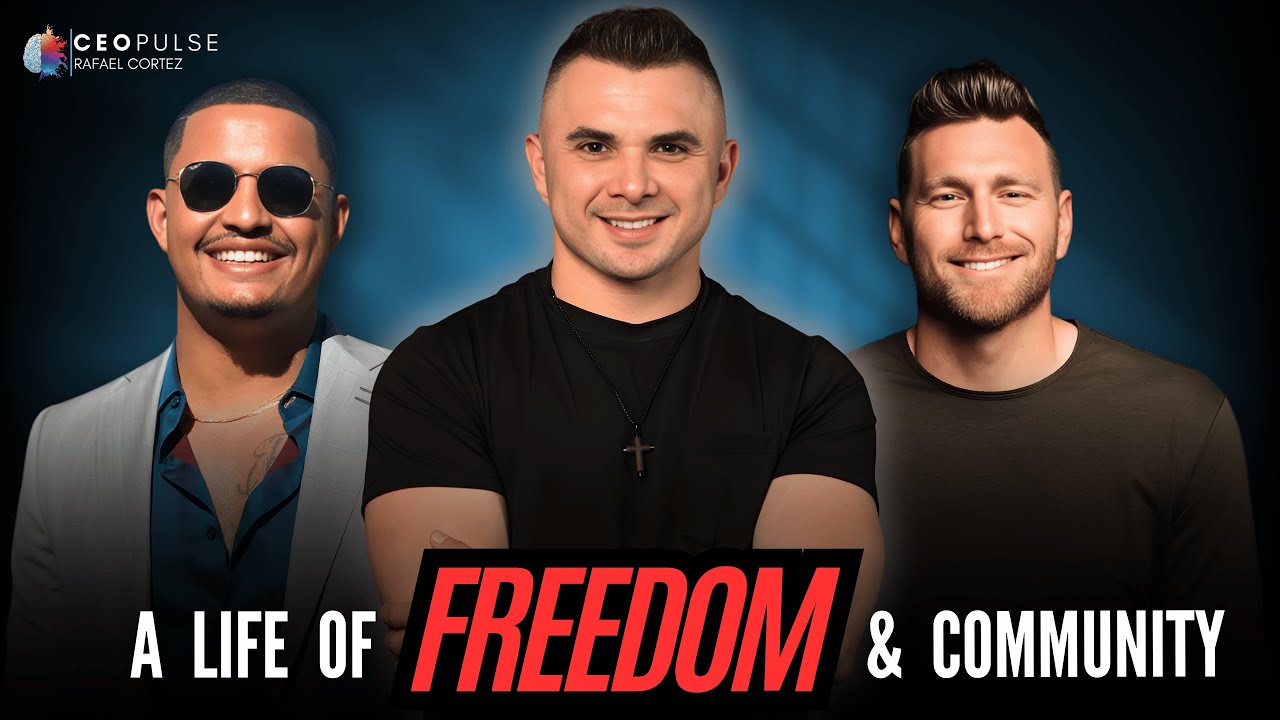
In EP 231 of the CEO Pulse Podcast, host Rafael Cortez talks with Dean Rogers and Stratton Brown, cofounders of the Deal Champs real estate investor community. Dean shares how going it alone cost him over $287,000, Stratton explains how one conversation changed his life, and all three cover community, freedom, lean teams and using AI to nurture leads.
What you will learn in this episode
- How Dean Rogers went from the NFL to 750 real estate deals after a Google search in 2013
- How one conversation at a real estate meetup changed the direction of Stratton Brown's life
- Why Dean Rogers says trying to do everything alone cost him $100,000 and then $187,000
- How Deal Champs grew a Tuesday meetup into a room of close to 200 investors
- How Dean and Stratton build their businesses around freedom with lean teams
- How real estate investors are using AI for lead follow up, nurturing and qualification
Why do real estate investors need community and mentorship?
Who are Dean Rogers and Stratton Brown?
Dean Rogers and Stratton Brown are real estate investors from Central California and two of the people behind Deal Champs, a community of real estate investors and wholesalers that they started together with Jason Pritchard. Rafael Cortez, host of the CEO Pulse Podcast and an Organizational Psychologist, calls them two great friends who are creating a movement in the real estate investment space, the wholesaling space and the wider world of entrepreneurship.
Dean Rogers shares that he has been in the business for over a decade, has done 750 deals and has built an eight figure rental portfolio. Stratton Brown shares that in his 20s he built two different companies to seven figures and built a seven figure real estate portfolio. Today both of them run their own real estate businesses first and run the Deal Champs community second.
How did Dean Rogers go from the NFL to real estate investing?
Dean Rogers says he grew up planning to play in the NFL and made it. After being moved from tight end to fullback, Dean started having concussions and realized he had to get out, even though he was living his childhood dream. He walked away from a three year deal and all the money that came with it and started from scratch.
Dean tried corporate work first and quickly saw it would not get him back to the dream life he had walked away from. Both of his parents were entrepreneurs, and while he saw the benefits, he also saw how hard it was, so he describes himself as risk averse and conservative at the time. He found real estate with a Google search on how to get started, which led him to Sean Terry's Flip to Freedom podcast and its promise of getting started with little to no money. That was 2013. Dean says real estate now lets him make NFL money and change things for the generations behind him. He has five kids.
How did one conversation change Stratton Brown's life?
Stratton Brown grew up with entrepreneur parents and family members and never really thought he would get a job. He played football at Fresno State, where he says he was all conference and 17th in the country in tackles. Friends who reached the league told him how fast they were spending money, so while he trained for his pro day he started reading books on investing to protect himself. He went to the Seahawks, nothing came of it, and he came home with a kid on the way and a simple goal: make the kind of money a practice squad player makes, about a hundred grand a year.
He went to a real estate meetup, the same kind of meetup he and Dean host with Deal Champs today, and met a man named Alan. Stratton says that a couple of years earlier Alan had been making 30 grand a year driving a truck. Now Alan said he made $200,000 a month, owned about 50 rentals in Fresno and more in Indiana, and planned to buy a jet. Stratton grew up in a small town where nobody talked about money that way, and Alan pulled out his phone and scrolled through his checks to prove it. Stratton says he can trace everything back to that conversation.
Stratton went to work for Alan and ended up running much of the day to day, including the door knocking team, the sales team and the marketing. Then he broke off on his own, went broke and ended up homeless before bouncing back. Rafael Cortez points out the pattern: both Dean and Stratton switched the vehicle when adversity hit, but the goal never changed. You never know when you will come across someone who plants the seed that makes all the difference.
Why does proximity matter so much in real estate and entrepreneurship?
Rafael Cortez makes a heavy point about the power of proximity. He met Dean and Stratton through masterminds, including a family mastermind and Steve Trang's mastermind, and Stratton bought a CRM from Rafael at the end of 2019. Rafael's advice for anyone getting into real estate or entrepreneurship is to look for the groups that will empower you, get into those circles, push through the uncomfortable conversations and be okay with not knowing.
Rafael shares that for about a decade in his transportation business he operated in a cocoon. He was not collaborating with anyone and believed that if he shared anything, people would take it and run with it because there was not enough to go around. A Vistage mastermind near the end of that stretch opened his eyes a little. When he got into real estate, started going to events and was first put on stage by Sean Terry, he found that everybody wanted to collaborate. People doing far better than him shared how they did their marketing and lead generation. That is when the phrase about going fast alone and going far with a group finally made sense to him.
Why do entrepreneurs struggle to find community?
Dean Rogers says the thing most entrepreneurs struggle with is finding people who are like them, because entrepreneurs are a small percentage of the population and more than 90 percent of people are doing the nine to five. When you want more freedom for your life, it can feel like you are doing something wrong, and everyone around you may tell you that you are crazy. Being around people who are like you, who are winning and who want to help you get better, is where Dean says the magic happens. Deal Champs grew organically out of that passion to help change other people's lives the way their own lives were changed by other people.
What did doing it alone cost Dean Rogers?
Dean Rogers calls his story a testimony to the need for community, investing in yourself and finding mentors. He got results quickly because he took massive action, but he hit a few big bumps that were easy to avoid. On his first flips, at the beginning of his second year, he personally lost $100,000, then worked for free the next year to rebuild. Coming out of that, he took a deal without any due diligence from a man who turned out to be running a Ponzi scheme, and lost $187,000.
The biggest lesson Dean took from it was that he needed a community and a mentor who could look at what he was doing. He told himself he did not have enough money to invest in himself, yet he lost over $300,000 between the money and the wasted time. He also told himself he had to do it alone, because he still carried his NFL ego and felt he had already made it. Dean says he could have hired Sean Terry, the person he was already learning from for free, and poured rocket fuel on some of the best years to invest. Instead, after about four and a half to five years, he felt he was back at the starting line.
Rafael Cortez says entrepreneurs get tested by life and adversity, and that it is almost a rite of passage. The conversation makes the point that ego is what usually gets in the way: you might figure it out on your own, but it can take five years instead of one.
Is going back to square one really starting over?
In the conversation, the point is made that every entrepreneur will get their face ripped off in business at some point, and the real question is when and how you handle it, which is why self development matters so much. Rafael Cortez says he often feels he is back at square one, but today's square one is very different from the square one of three months, a year or ten years ago. You may be moving in a circle, but you end up a little higher each time, even when you cannot see it.
Rafael also warns about the comparison game, which he calls the thief of joy. He points to the idea of the personal legend from The Alchemist, one of his favorite books. Knowing who you are tells you what serves you and what is in alignment for you, even when you share a path with other people. Right now Rafael's priority is time, which may mean some descaling.
How do Dean Rogers and Stratton Brown build businesses around freedom?
Stratton Brown says he started about 11 companies in his 20s and at one point tried to run five. Now his focus is the real estate company first and Deal Champs second, with two standing meetings a week with Dean, plus storage facilities and a small rental portfolio. Stratton says neither he nor Dean wants to be in an office every day in a suit, leaving at 9 p.m. and never seeing their kids. If you got into this for freedom, other people's opinions do not matter; build the business that gives you freedom.
Dean Rogers says his real estate investing business has been his baby for 11 years and that he and Stratton practice what they teach. His team is lean: Dean handles systems, strategy, vision and marketing, his business partner handles operations and the deals, and they have an office manager who also handles transaction coordination, one acquisition manager, one disposition specialist and two virtual assistants. After reverse engineering his KPIs in masterminds, Dean is hiring another acquisition manager and a follow up specialist to scale volume. Stratton runs three sales reps, outsourced transaction coordination, two admins and one operations person, handles dispositions himself, and gets lead flow from niche texting, cold calling and a lot of pay per lead.
What makes the Deal Champs community different?
Rafael Cortez tells the story of being invited to speak at what Dean and Stratton called a meetup on a random Tuesday in California. He expected 30 or 40 people. The room held 400 and close to 200 people showed up. Rafael scrapped his planned presentation, talked about systems, SOPs and processes for 45 minutes to an hour, and then did more than two hours of Q&A. He says he has never seen an audience more engaged.
Stratton Brown explains that they have been giving real value at those meetups for years. They have brought in speakers such as Pace Morby, Rafael and Henry Washington, and once a year they run a free Saturday wholesaling workshop of about six hours where they give everything away. People show up knowing they will get value with no fluff, which attracts more serious investors who then help each other. Their annual Deal Champs event takes about six months of planning, with every detail branded and polished.
How are real estate investors using AI to nurture leads?
Stratton Brown says AI is what he is most excited about, both in his business and in showing the Deal Champs community how to use it. He says AI is not going to fully replace people yet, but it empowers your team, and he has downsized employees because of it. He believes that within the next 12 to 18 months a two person operation could run a real business, and that the window to implement AI is small. In his business, bots handle texting and lead generation, then an AI calls and qualifies the lead before a person talks to them.
Rafael Cortez agrees that human capital will always be needed, but says entrepreneurs will stop putting up with work done at 50 percent, because AI can lower overhead and increase reliability. In the conversation, one approach shared is a tenacious follow up sequence where AI captures responses, keeps the conversation going and pre qualifies leads, so AI is used to nurture and follow up rather than to source leads.
What advice would Dean Rogers and Stratton Brown give their 17 year old selves?
Dean Rogers would tell his younger self to get around the big players, stop worrying about what people think, be a sponge and give as much value as possible to the people who are where you want to be. He notices that in the best rooms, the people doing the best are often asking the most questions and writing the most notes. His summary is to think bigger, move faster and be around bigger players, instead of trying to do it alone and playing small. Rafael Cortez adds the example of Sharon, the coauthor of Outwitting the Devil, who has multiple businesses yet takes notes and asks questions at every mastermind meeting.
Stratton Brown would tell himself to go significantly bigger than he thinks is possible, because it is going to be hard no matter what and time is finite. He wishes he had aimed past a hundred grand a year and asked how to be worth a hundred million dollars. He also says to get in rooms that push you, because the greatest entrepreneurs he knows are normal people who simply do not give up and have much bigger goals. To learn more about Deal Champs, Stratton points listeners to dealchamps.com, and both guests can be found on Instagram.
Key takeaways
- Community shortens the learning curve. Dean Rogers says he was one text message away from avoiding mistakes that cost him $100,000 and then $187,000.
- One conversation can change your direction. Stratton Brown traces his whole real estate career back to meeting one investor at a local meetup.
- Build the business around your priorities. Dean and Stratton keep lean, mostly virtual teams because they got into real estate for freedom, not headcount.
- Lead with value. Deal Champs gives so much away at meetups and workshops that close to 200 investors showed up on a random Tuesday.
- Use AI to nurture and follow up. AI can capture responses, keep conversations going and pre qualify leads, while comps still need human eyes.
- Think significantly bigger. Stratton Brown says the work is hard no matter what, so aim for the bigger goal.
Quotes from the conversation
“I was just one text message away from avoiding those mistakes.”
Dean Rogers, 24:04
“Everybody needs community, right? Everybody needs to connect, everybody needs to have that launching platform, I feel.”
Rafael Cortez, 21:54
“It's not going to fully replace people right now, but it really empowers your team.”
Stratton Brown, 45:04
“Go significantly bigger than you think is possible.”
Stratton Brown, 55:39
Episode chapters
| 0:00 | Ego, mentorship and community preview |
| 3:07 | Dean Rogers from the NFL to real estate |
| 8:40 | Stratton Brown and the meetup that changed his life |
| 13:14 | The power of proximity |
| 15:31 | Priorities and building with others |
| 22:26 | What doing it alone cost Dean Rogers |
| 35:29 | The Deal Champs meetup and community |
| 44:36 | Using AI to nurture and follow up with leads |
| 48:37 | Lean real estate teams |
| 51:28 | Advice to your 17 year old self |
Who is on this episode?
Stratton Brown & Dean Rogers
Dean Rogers is a former NFL player who got into real estate in 2013, has done 750 deals and built an eight figure rental portfolio. Stratton Brown played football at Fresno State, built two companies to seven figures in his 20s and runs a real estate company, storage facilities and a rental portfolio. Together with Jason Pritchard they started Deal Champs, a community of real estate investors.
About the host: Rafael Cortez
Rafael Cortez is the host of the CEO Pulse Podcast, an Organizational Psychologist and a real estate broker and investor based in Phoenix, Arizona. Raised in Yuma, Arizona, he became one of the youngest firefighters in Yuma County at 19 and launched his first business at 21. He has been involved in more than 1,300 real estate deals since 2009 and teaches the L.E.S.S. Business philosophy: Lean, Effective, Strategic, Simple. Rafael is the founder of CEO Pulse, Pulse Realty and Pulse Capital and the creator of REI Pulse CRM, and he mentors wholesalers in group and 1 on 1 settings. Read Rafael Cortez’s full bio.
Questions and answers
Who are Dean Rogers and Stratton Brown?
Dean Rogers and Stratton Brown are Central California real estate investors and cofounders of the Deal Champs community. Dean is a former NFL player with 750 deals and an eight figure rental portfolio, and Stratton built two companies to seven figures in his 20s. They joined Rafael Cortez on EP 231 of the CEO Pulse Podcast.
What is Deal Champs?
Deal Champs is a real estate investor community started by Dean Rogers, Stratton Brown and Jason Pritchard. It runs local and pop up meetups in California, a yearly free wholesaling workshop and an annual event. Rafael Cortez spoke at one of their meetups that drew close to 200 people.
How did Dean Rogers get started in real estate?
Dean Rogers found real estate in 2013 through a Google search that led him to Sean Terry's Flip to Freedom podcast. He had walked away from his NFL contract after concussions and wanted to get started with little to no money.
How much money did Dean Rogers lose by doing it alone?
Dean Rogers says he lost $100,000 on his first flips and later $187,000 on a deal from a man running a Ponzi scheme. He told Rafael Cortez that a mentor and a community could have helped him avoid both mistakes.
How did Stratton Brown get into real estate?
Stratton Brown went to a local real estate meetup and met an investor named Alan who showed him what was possible. Stratton went to work for Alan, ran his sales, marketing and door knocking teams, and later built his own companies.
Why does Rafael Cortez say community matters for entrepreneurs?
Rafael Cortez says everybody needs community and a launching platform. He spent about a decade working in a cocoon in his transportation business before real estate events showed him how much people were willing to collaborate and share.
How do Dean Rogers and Stratton Brown structure their teams?
Both run lean teams built around freedom. Dean Rogers works with a business partner, an office manager, an acquisition manager, a disposition specialist and two virtual assistants, while Stratton Brown runs three sales reps, two admins and one operations person and handles dispositions himself.
How do real estate investors use AI for leads?
Stratton Brown says bots can handle texting, an AI can call and qualify leads, and then a person takes over. The conversation also covers using AI to capture replies in a follow up sequence and pre qualify leads, though comps still need human review.
What advice would Dean Rogers give his 17 year old self?
Dean Rogers would tell his younger self to get around big players, be a sponge and give value to people who are where he wants to be. He would tell himself to think bigger, move faster and stop playing small.
How can you connect with Deal Champs?
Stratton Brown says to visit dealchamps.com and apply. Both Dean Rogers and Stratton Brown say Instagram is the best place to reach them.
Related episodes
Build your business on systems
Rafael Cortez built REI Pulse CRM from the systems he runs his own deals on. See how it works for wholesalers and investors.
Explore REI PulseBrowse every CEO Pulse Podcast episode · About Rafael Cortez · YouTube · Apple Podcasts · Spotify
