
CEO Pulse Podcast | Mindset Monday
TL;DR
In this Mindset Monday episode, Rafael Cortez and co-host Justin Thorstad explain the four stages of personal development: awareness, theory, integration and growth. They cover why many people stay stuck in theory, how to take action, a daily intention and nightly inventory practice, and why growth never ends.
What you will learn in this episode
- The four stages: awareness, theory, integration and growth
- Why awareness feels like turning on a light in a dark basement
- Why staying in the theory stage keeps results the same
- How to start implementing with low hanging fruit
- A daily intention and nightly inventory routine
- Why growth is continuous and uncomfortable by design
What are the stages of personal development?
Why does it help to know your stage of growth?
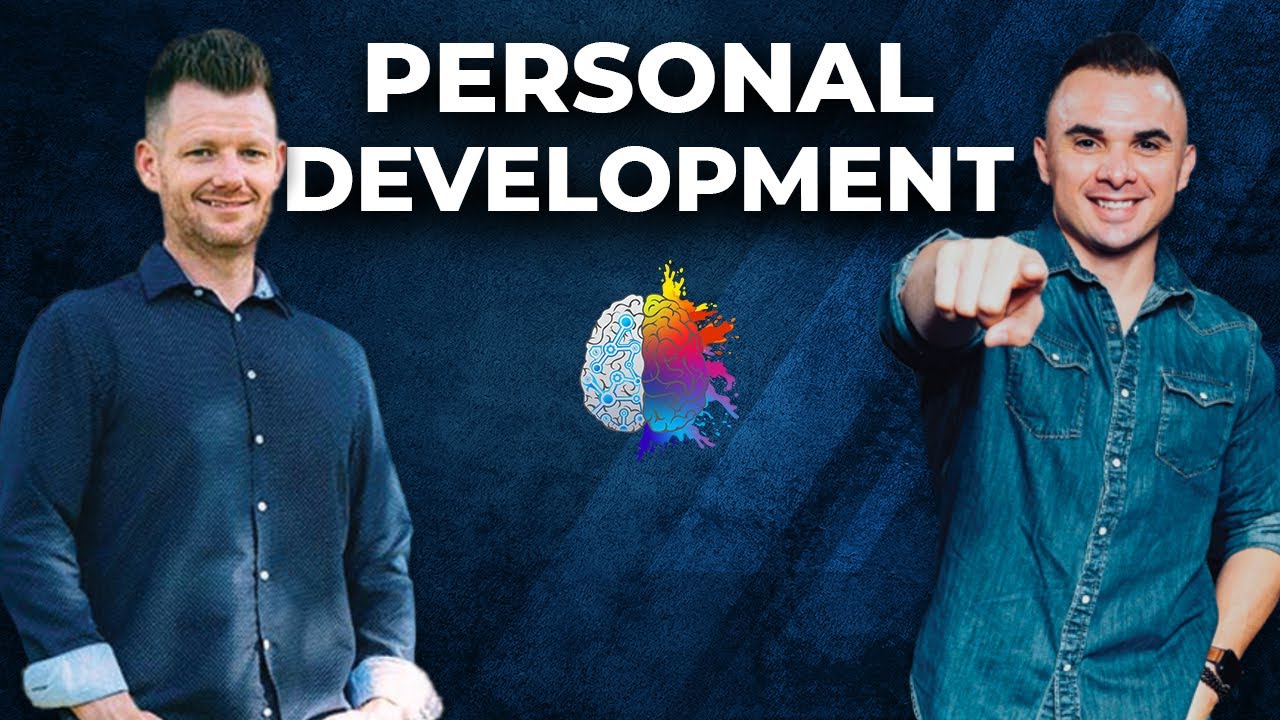
Rafael Cortez, host of the CEO Pulse Podcast and an Organizational Psychologist, opens this Mindset Monday episode with co-host Justin Thorstad. The topic came up after a morning conversation about how growth affects you at different levels. Rafael Cortez says that once you get bitten by the personal growth bug, it is easy to get lost in the journey, or stuck in a cycle of learning neat ideas without any change.
Justin Thorstad agrees and says knowing where you are and what could come next changes your expectations. The two walk through four stages and compare them with how a business moves from formation to implementation.
What is stage one, awareness?
Justin Thorstad explains that the first stage happens when you come across that first book, seminar or conversation about manifestation or personal growth. Rafael Cortez remembers being introduced through the law of attraction and the movie The Secret. He did not start visualizing the next day, but it planted a seed and made him curious. Justin Thorstad says it flipped a switch, like someone turned on the light, and a flood of new sources followed.
Justin Thorstad uses the image of opening the basement door with a flashlight. Your awareness only lights up a small piece of the mess. Some people get scared and close the door, while others cannot unsee it. He felt he had to do something about it, because hustle and force on the outside would never bring the inner peace he wanted. Rafael Cortez adds that in the beginning he did not know what he wanted. He only knew something was off, and awareness for him felt confusing.
What is stage two, the theory or philosopher stage?
Justin Thorstad calls the second stage the philosopher stage. You gain information, talk about it, and try to articulate it, which strengthens your knowledge. It is necessary, like building a mental model when you form a business. Rafael Cortez says this stage was exciting for him. He devoured books and podcasts, and wanted to tell everyone about the Think and Grow Rich principles, manifestation and meditation.
He compares it to watching a really good movie where you get excited, then walk out and realize it was just a movie. After reading many books and visualizing, he found himself asking why nothing had changed yet. That is the transition point to implementation.
Why do people get stuck in theory?
Justin Thorstad says many people stay in the philosopher stage for years. They become great students who can repeat what they heard, but their results do not change. Rafael Cortez adds that people cannot spend thirty years in theory. It comes down to personal responsibility, and changing habits is one of the hardest things, since the body holds an emotional record and the mind and body are connected.
Justin Thorstad notes that the difference shows up in conversation. Someone who has implemented can talk about the journey, the discomfort and the new experience, while someone who has only read sounds like a parrot. He compares it to saying you are an expert at real estate with no deals completed. The hosts say that reading is a trap when it becomes a quick fix that feels like progress. Underneath may be a belief of not feeling worthy or significant, and the hope to sound smart to gain acceptance. Justin Thorstad says we are human beings, not human doings, so the work is to change your state of being and reprogram the beliefs that drive behavior.
How do you move into stage three, integration?
Justin Thorstad suggests starting with low hanging fruit: how you talk to yourself, writing a vision for the future, deciding who you want to be, and how you want to feel. He recommends a morning ritual and an evening ritual to unpack the day. Rafael Cortez links it to emotion: the integration stage feels like a challenge, which is good because you are up against pressure and stepping out of your comfort zone.
They use the gym as an example. Watching training videos does not make you strong, and on your first day you will be weak. That is not a problem. It is why you showed up. Do not compare your beginning to someone else's middle. Meditation works the same way, as does learning tennis. It is repetition. Rafael Cortez notes that one session does not show results, but the compounding effect builds over time.
How do you stay on the path day by day?
Justin Thorstad says that if you walk nine miles into the jungle, you must walk nine miles out. There is no helicopter and no shortcut, because the path is the shortcut. It takes effort, time, patience and grace, and so long as you are in motion, nobody can judge your pace, not even you. Rafael Cortez asks himself each night whether he moved forward today. Justin Thorstad answers by looking at his wins, the actions he controls, since results are not always up to him.
He shares his two practices. In the morning, before touching your phone, set an intention: who do I desire to be, how do I want to think, feel and behave. In the evening, sit alone with a notebook and take inventory. Where did I win and feel proud? Where did I fall from grace and react? This is not to beat yourself up, but to set tomorrow's intention. Momentum builds and you give yourself a fighting shot.
Rafael Cortez adds that you should try what you hear. Throw spaghetti on the wall and see what sticks, and talk to someone even one or two steps ahead of you. Staying in the philosopher stage is damaging, Justin Thorstad adds, because without a picture of the shift, your attention stays on where you are flawed.
What is stage four, growth, and does it ever end?
Justin Thorstad describes growth as knowing yourself at a higher level, with more confidence, trust and peace. It does not mean nothing goes wrong. When reality unfolds in a way you did not want, you ask what the lesson is and how it is happening for your benefit. That awareness, he says, is a massive victory. Rafael Cortez links growth to a feeling of responsibility, meaning the ability to respond, not fault or blame.
Both hosts say that once you see it you cannot go back, like the scene in The Matrix. That does not mean you never go off track. Growth is continuous, and a new level brings you back to awareness, like an onion with endless layers. Justin Thorstad says he wants to be empty of regret and to have left it all on the field. His philosophy is that the thing you fear is the beacon calling you forward, since the cave you fear to enter holds the treasure you seek. Start with small steps such as a hard conversation you have been avoiding.
They recap the four stages and invite listeners to ask which one they are in. Rafael Cortez notes that the journey matters most because legacy is not measured in dollars and cents but in the ripple effect on the people around us.
Key takeaways
- Know your stage. Awareness, theory, integration and growth each need something different.
- Awareness is a flashlight. It lights part of the mess, and you decide what to do about it.
- Theory alone changes nothing. Results change when you implement what you learn.
- Start with low hanging fruit. Small daily practices build momentum.
- Set intention and take inventory. Plan the morning and review the evening without judgment.
- Growth never ends. Every new level cycles back to awareness.
Quotes from the conversation
“The path is the shortcut.”
Justin Thorstad, 22:12
“The cave you fear to enter holds the treasure you seek.”
Justin Thorstad, 38:23
Episode chapters
| 0:00 | Welcome to Mindset Monday |
| 2:19 | Stage one: awareness |
| 3:51 | The basement and the flashlight |
| 6:58 | Stage two: the philosopher stage |
| 10:50 | From theory to implementation |
| 15:30 | The trap of the quick fix |
| 19:27 | The gym and the first day |
| 23:24 | Morning intention and evening inventory |
| 29:36 | Stage four: growth |
| 38:23 | Facing the cave you fear |
Who is on this episode?
Justin Thorstad
Justin Thorstad is Rafael Cortez's co-host on the Mindset Monday series. In this episode he explains the stages of personal development.
About the host: Rafael Cortez
Rafael Cortez is the host of the CEO Pulse Podcast, an Organizational Psychologist and a real estate broker and investor based in Phoenix, Arizona. Raised in Yuma, Arizona, he became one of the youngest firefighters in Yuma County at 19 and launched his first business at 21. He has been involved in more than 1,300 real estate deals since 2009 and mentors entrepreneurs through the L.E.S.S. Business philosophy: Lean, Effective, Strategic, Simple. Rafael is the founder of CEO Pulse, Pulse Realty and Pulse Capital and the creator of REI Pulse CRM, and he mentors wholesalers in group and 1 on 1 settings. Read Rafael Cortez’s full bio.
Questions and answers
What are the four stages of personal development?
Rafael Cortez and Justin Thorstad describe awareness, theory, integration and growth. Growth is continuous and brings you back to awareness as you level up.
What happens in the awareness stage?
Justin Thorstad says awareness is like turning on a light in a dark basement. You see only a part of the mess, and you decide whether to act or close the door.
Why do people get stuck in the theory stage?
Justin Thorstad says many people keep consuming information as a quick fix without implementing it. Rafael Cortez notes that changing habits is hard and takes personal responsibility.
How do you move from theory to integration?
Justin Thorstad suggests starting with low hanging fruit like a written vision and daily practices. Rafael Cortez says this stage feels like a challenge because you step out of your comfort zone.
What daily practice does Justin Thorstad recommend?
Justin Thorstad suggests setting an intention each morning before touching your phone. Each evening, take inventory of where you won and where you reacted, without judgment.
Does personal growth ever finish?
Justin Thorstad says growth is continuous and each new level brings you back to awareness. Rafael Cortez compares it to an onion with endless layers.
Related episodes
Build your business on systems
Rafael Cortez built REI Pulse CRM from the systems he runs his own deals on. See how it works for wholesalers and investors.
Explore REI PulseBrowse every CEO Pulse Podcast episode · About Rafael Cortez · YouTube · Apple Podcasts · Spotify
