
CEO Pulse Podcast | Mindset Monday
TL;DR
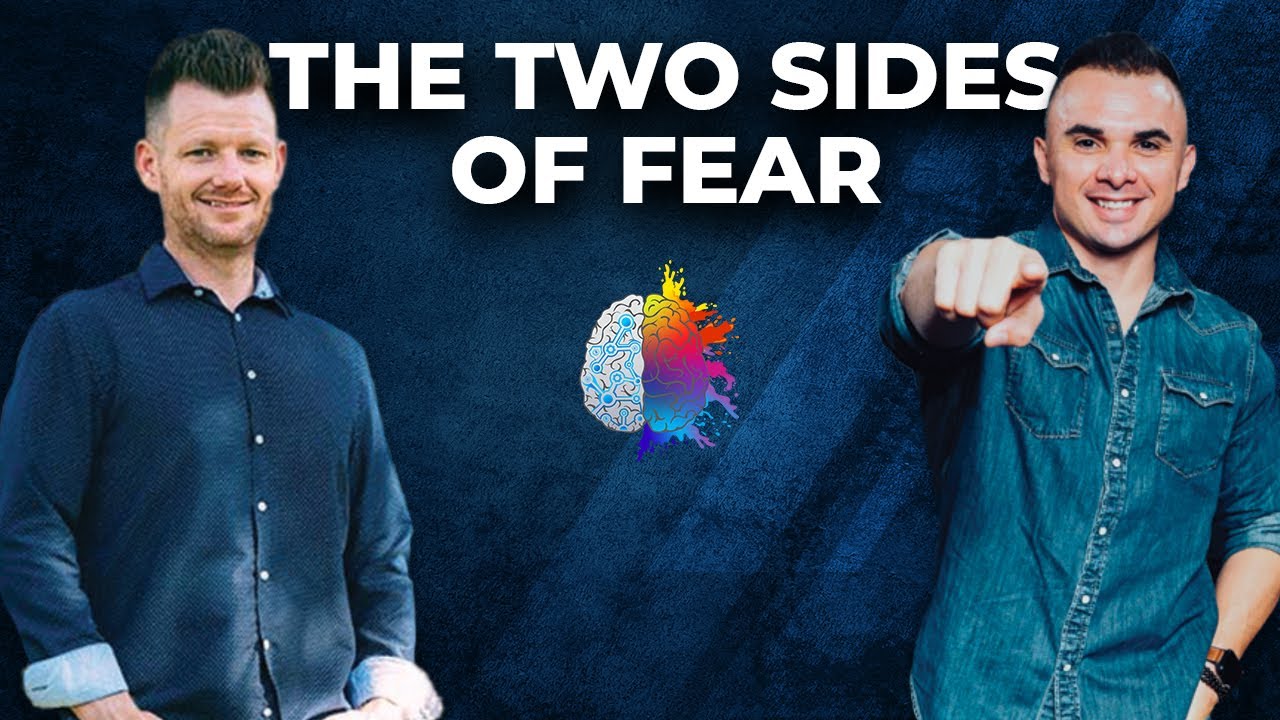
In this Mindset Monday episode, Rafael Cortez and co-host Justin Thorstad explore the two sides of fear in entrepreneurship: fear of success and fear of failure. They cover false evidence appearing real, expanding your comfort zone, taking small actions, serving yourself through growth, and why talking to people ahead of you brings clarity.
What you will learn in this episode
- The difference between fear of success and fear of failure
- Why both stories are false evidence appearing real
- How to expand your comfort zone through action
- How small steps beat waiting for the perfect decision
- How to recognize subtle signs of fear
- Why talking to people ahead of you creates clarity
What are the two sides of fear in entrepreneurship?
What are the two sides of fear?
Rafael Cortez, host of the CEO Pulse Podcast and an Organizational Psychologist, welcomes back co-host Justin Thorstad after a couple of weeks off. They tackle a topic that is common but hard to move past, and one that men in particular tend not to talk about enough. Rafael Cortez says men often stay guarded and focus on the provider role, while skipping the vulnerable side of fear.
Justin Thorstad explains the two sides. The first is fear of success, the fear of the opportunity itself: what if I step forward and fall flat on my face, or it does not turn out the way I think it should. The second is fear of failure in the sense of regret: what if I never get started and miss the opportunities in front of me? He has been wrestling with both for about 30 days as opportunities appear on the horizon.
Why are both sides false evidence appearing real?
Justin Thorstad's realization was that he would feel scared with either plan, so fear does not go away by choosing one option. He uses the definition of fear as false evidence appearing real. Both the story of what happens if he steps forward and the story of regret are made up by the mind. The mind goes there, and the body follows with matching emotions.
If he is going to fight to be right about a story, he says, he might as well be right about stepping into the opportunity, giving it his all and staying unattached to the outcome. The way he has found to manage fear is to expand his comfort zone and create new evidence by stepping into new opportunities. He sums it up as becoming comfortable being uncomfortable, since the only scary thing about the unknown is that it is unpredictable. A familiar path is predictable, but only the new one expands you, shows you and lets you feel proud that you took the step.
How does fear show up when you level up?
Justin Thorstad says it is easy to find justifications to stop, and that he found a hundred of them in a week. Each new level of performance demands a different version of you, more responsibility and a faster pace, which feels intimidating. One host describes a recent check-in with a men's group. For four or five days he felt irritable despite a great weekend, and could not put his finger on why. He recognized he was in resistance to something. In the end it traced back to a conversation that opened a big, exciting opportunity that was also intimidating.
Rafael Cortez adds that fear does not always show up as a shaky body or a pit in the stomach. It can be subtle, like irritability or high stress, and its effect is often fight or flight. The question is what fear looks like for you and what it is forcing you to do or avoid. Justin Thorstad adds that the main cause of stress is lacking acceptance of where you are. Results are temporary, not a life sentence, and wishing you were somewhere else is what creates the tension.
How do you move through fear with action?
Justin Thorstad says the way out of resistance is to sit down with your options and list action steps, even tiny ones like making a call to ask a question or double checking a detail. Action creates information, and information leads to better decisions. Many people avoid moving because they are not committed to a decision and do not want to pick wrong. He points out that you cannot know the right choice until you act, get a reaction and adjust. Action trumps everything.
He also says everybody wants the elevator to success, but it is a staircase, one step at a time. After a stretch of feeling tired and frustrated with his results, he reminded himself that the body is designed to walk uphill. He took a breath, looked back and realized how far he had come. Looking at the gap between here and where you want to be makes it seem like an impossible cavern. Looking at where you started puts it in perspective.
Why is fear of success real?
Rafael Cortez says fear of the outlook, not even the outcome, does not make rational sense, because it is fear of a better life. It pushes you from the known world into the unknown. He used to think fear of failure was the big one, but now believes the fear of big possibilities is the bigger share. Justin Thorstad connects it to self image, citing Psycho-Cybernetics: your self image works like a servo mechanism, and if it does not grow to fit a bigger level, you feel fear instead of excitement.
Justin Thorstad adds that of course you are afraid to make wrong choices in new territory, because you are ill-equipped and have never been there. Small steps give frequent feedback so you can course correct, and even if a big leap fails, you can rebuild with more information. He shares advice from a friend, a fighter pilot: once you commit and start walking in a direction, it is only a matter of when you arrive.
What helps you commit and stay inspired?
Rafael Cortez says commitment is the biggest answer to fear. Fear of a dangerous animal is a real danger, while perceived fear is a story. Ask how committed you are to the picture you have, and whether you are settling or tapping into your creative power. He notes that many entrepreneurs say they want to help people, so why not use that creative power and commitment to a vision to make an impact.
Both hosts discuss survival mode. When you are desperate it can be easier to act in the face of fear, but later comfort sets in and things decay. Performing from inspiration is the other motivator. Justin Thorstad says people want to serve others, but ask how you are serving yourself. Stepping into the unknown, widening your comfort zone and creating new stories serve your growth, and if you are not growing you are decaying and have little to offer anyone.
On failure, Justin Thorstad says everyone has a plan until they get punched in the face. He points to those who get on the field and keep going, versus hecklers in the stands. The spectator, he says, always carries regret about what could have been.
Who should you talk to about fear?
Justin Thorstad says ego often disguises fear as confusion. You need to talk to someone who has walked the path or is on it with you, because people who love you may not have the frame of reference. He calls his method vomit up: be open with someone more successful and experienced rather than laterally or downward. Truly successful people want to help, give perspective and warn about pitfalls, because they believe givers always gain.
The hosts note that men are often more guarded, but that is no longer an excuse. Practice emotional vulnerability, drop the guilt and shame and accept where you are, because what you resist persists. They add that women face fear when entering industries dominated by men, so the advice is the same: find your crew. Talking through fear brings clarity, since saying it out loud helps you see it clearly. Both sides of fear, they conclude, are met with clarity, commitment and consistent action.
Key takeaways
- Fear has two sides. Fear of success and fear of failure both keep you stuck.
- Both are made up stories. False evidence appearing real is the mind guessing.
- Expand your comfort zone. Stepping into the unknown creates new evidence.
- Take small action. Action creates information that improves your decisions.
- Fear can be subtle. Irritability and stress can be signs of resistance.
- Talk to people ahead of you. Verbalizing fear gives clarity and invites support.
Quotes from the conversation
“False evidence appearing real.”
Justin Thorstad, 3:08
“Everybody wants to take the elevator to success.”
Justin Thorstad, 14:20
“Givers always gain”
Justin Thorstad, 32:10
Episode chapters
| 0:00 | Welcome back to Mindset Monday |
| 1:35 | Fear of success and fear of failure |
| 3:08 | False evidence appearing real |
| 6:14 | Fear when you level up |
| 10:57 | Recognizing what fear looks like |
| 14:08 | Small action and the staircase |
| 15:41 | The fear of success |
| 21:56 | Commitment and resilience |
| 26:41 | Serving yourself and inspiration |
| 30:32 | Who to talk to about fear |
Who is on this episode?
Justin Thorstad
Justin Thorstad is Rafael Cortez's co-host on the Mindset Monday series. In this episode he breaks down the two sides of fear and how to move through them.
About the host: Rafael Cortez
Rafael Cortez is the host of the CEO Pulse Podcast, an Organizational Psychologist and a real estate broker and investor based in Phoenix, Arizona. Raised in Yuma, Arizona, he became one of the youngest firefighters in Yuma County at 19 and launched his first business at 21. He has been involved in more than 1,300 real estate deals since 2009 and mentors entrepreneurs through the L.E.S.S. Business philosophy: Lean, Effective, Strategic, Simple. Rafael is the founder of CEO Pulse, Pulse Realty and Pulse Capital and the creator of REI Pulse CRM, and he mentors wholesalers in group and 1 on 1 settings. Read Rafael Cortez’s full bio.
Questions and answers
What are the two sides of fear in entrepreneurship?
Justin Thorstad describes fear of success, the fear of the opportunity itself, and fear of failure, the regret of not getting started. Rafael Cortez says both keep people stuck.
What does false evidence appearing real mean?
Justin Thorstad says fear is a story the mind makes up about what might happen. Both the fear of stepping in and the fear of regret are guesses, not facts.
How can you manage fear as an entrepreneur?
Justin Thorstad suggests expanding your comfort zone and taking small action steps. Action gives you new information to make better decisions.
How does fear show up besides a shaky body?
Rafael Cortez says fear can be subtle, such as irritability or high stress that leads to fight or flight. Naming what it looks like for you is the first step.
Why is fear of success real?
Rafael Cortez says it is a fear of the unknown that comes with a better life. Justin Thorstad adds that your self image has to grow to fit a bigger level.
What does vomit up mean?
Justin Thorstad uses the phrase to describe being open with someone more successful and experienced. Truly successful people usually want to help, and talking brings clarity.
Related episodes
Build your business on systems
Rafael Cortez built REI Pulse CRM from the systems he runs his own deals on. See how it works for wholesalers and investors.
Explore REI PulseBrowse every CEO Pulse Podcast episode · About Rafael Cortez · YouTube · Apple Podcasts · Spotify
