
CEO Pulse Podcast | Interview
TL;DR
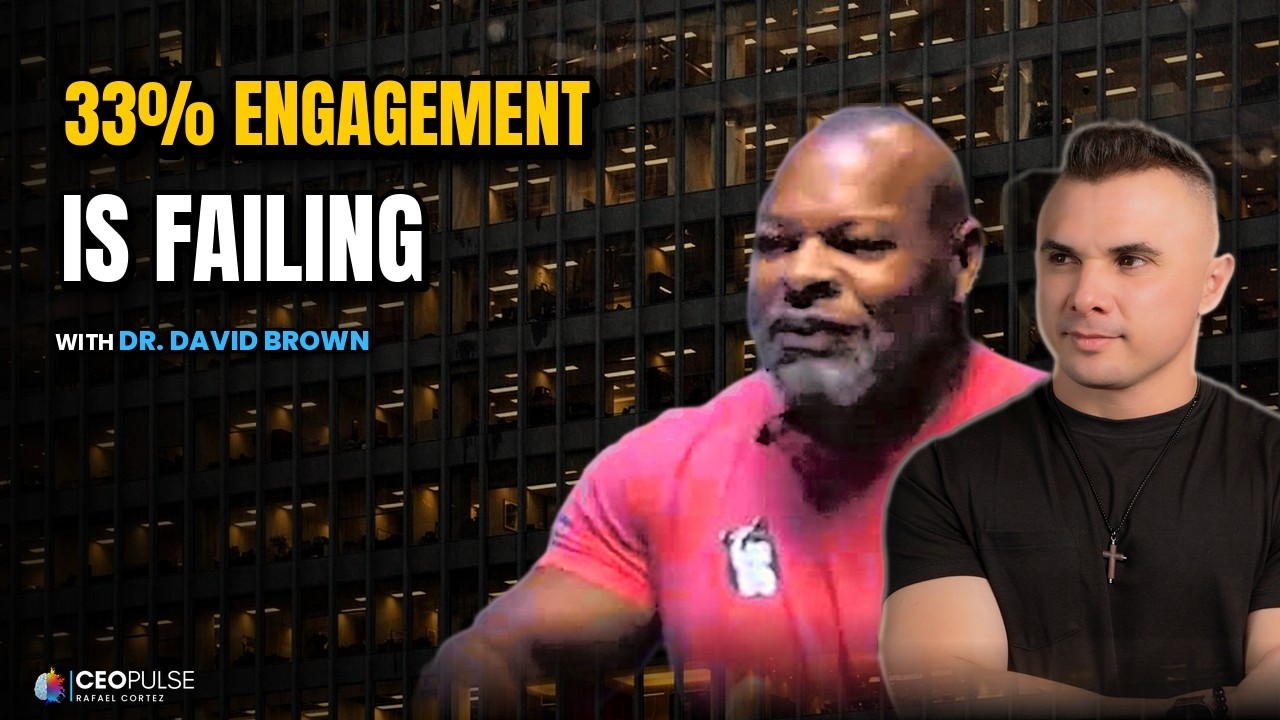
In this CEO Pulse Podcast interview, Rafael Cortez sits down with Dr. David Brown, one of his first mentors and a leadership and organizational behavior consultant. Dr. David Brown explains stages of growth, why founders must let go, how to fix the process before blaming people, how to raise engagement and the three things every new leader should hear.
What you will learn in this episode
- How the stages of business growth change a founder's job
- Why founders must let go to get through the flood zone
- Why you should look at the process before blaming people
- How culture comes down to employee, customer or profit focus
- How engagement and taking money off the table keep great people
- The three things Dr. David Brown says every new leader needs to hear
What do new leaders most need to hear?
Who is Dr. David Brown?
Rafael Cortez, host of the CEO Pulse Podcast and an Organizational Psychologist, introduces Dr. David Brown as one of his first mentors. They met years ago in a mastermind group of eight that Dr. David Brown facilitated, and Rafael Cortez says some of his biggest lessons came from that room. Both credit Napoleon Hill's idea of the mastermind for many turning points in their careers.
Dr. David Brown's background runs through sports, military service and the police department. Serving taught him that people are people, and it raised the question that shaped his career: how do you lead people to do what needs to be done, even when they do not want to? He went back to school to study organizational behavior and development, ran a successful business of his own and now consults with leaders using behavioral assessments. His guiding idea is to stay humble, admit he does not know everything and surround himself with good people.
How does a founder's job change as a company grows?
Dr. David Brown compares a stage one business to a newborn. At first you do everything: you sell, operate, set the vision, handle the finances and clean the floor. As the business grows, your job shifts to building processes so employees can succeed and eventually carry your vision forward, the way a parent of a teenager moves from doing everything to guiding. He uses James Fischer's seven stages of growth as his framework, and he jokes that CEO really means chief employee, because everyone in the company exists to serve the customer.
Rafael Cortez notes that founders who bootstrap often get so buried in tasks that they forget to prepare for the next hire or the next level. Dr. David Brown describes what sits between the stages. A wind tunnel is a stretch of turbulence you must push through. A flood zone is when the water is rising and you are just trying to keep your head above it. The way out is to accept that what got you here will not get you to the next stage, so you must change processes, people or both.
Why do founders struggle to let go?
Dr. David Brown calls it the rubber band effect. Founders say they want to grow, start to hand things off, then pull everything back and pull the whole team back with them. He recalls the idea attributed to J.C. Penney that the biggest thing he did to grow his company was to let go. Rafael Cortez admits letting go is nerve wracking, and says the answer is culture and leadership.
Dr. David Brown has assessed companies that believed they were at stage three or four, but based on their processes and how leaders and managers behaved, they were still startups. Before taking a client, he follows an approach he credits to Marshall Goldsmith and checks whether the leader is ready for change. He asks permission to tell the truth up front, explains what each side can expect and makes clear that honesty is meant to make them better, not to hurt them.
When should you say no to a client or an idea?
Rafael Cortez says it is fine to fire clients who do not fit. He recently told his director of operations that a client needing work far outside the team's genius area belonged with someone else. Saying no to a few dollars means saying yes to a lot of time. Dr. David Brown agrees that business is not about ego. If someone else connects better with a client, introduce them and let it go. When you take care of your people and customers, you are taken care of as a byproduct.
Rafael Cortez shares the CEO Pulse philosophy, L.E.S.S. Business, More Profits, where L.E.S.S. stands for lean, effective, strategic and simple. Dr. David Brown says the simplest way to get there is one word: no. Visionaries see opportunity in everything, so they must ask whether a new idea fits the current strategy. Saying no to people is a skill. After about three noes, team members stop sharing ideas, so he borrows the improv rule of yes and. Rafael Cortez connects it to the book Stealing the Show.
How do culture and process shape a team?
Dr. David Brown says culture comes down to one honest choice: are you employee focused, customer focused or profit focused? You can pursue all three, but you must know which one leads. Culture changes with leadership's vision, and complexity comes from people, which is why processes matter. When something goes wrong, most leaders blame the person first because it is easier than admitting they own the process. Fix the process, or the same issue will come back with someone else. Rafael Cortez keeps a few guiding principles on the wall for each of his companies, and every decision has to point back to them.
Dr. David Brown also describes how leadership style is learned. Leaders who are fast, dominant and visionary can shut down quieter team members without noticing. Great leaders combine the drive to say let's go with the ability to pull people together, and he stresses that this has nothing to do with gender.
How do engagement and calling keep great people?
Rafael Cortez says money alone no longer keeps people. They want belonging and the sense that their work makes a difference. Dr. David Brown sorts workers into those who want a job, a career or a calling. He matches people to jobs using benchmarks and onboarding, which he says keeps them three times longer, and he uses salary surveys to pay a little above the median so money comes off the table. Citing Gallup, he says a 1 percent rise in engagement can lift productivity 12 to 22 percent, yet engagement in America sits near 33 percent.
Work and life balance, he says, depends less on hours and more on how happy you are with your work. If you come home content, your family supports your job. Rafael Cortez adds that the gap between your natural and adapted behavior styles creates stress. Dr. David Brown's advice is to pick something you would do for free and find a way to monetize it, because you will fight through hard times only for something you believe in.
How did Dr. David Brown pivot through COVID?
COVID took about 80 percent of Dr. David Brown's business. Instead of quitting, he looked for opportunity and built an online program for aging corporate athletes, combining leadership with exercise, nutrition, sleep and recovery, plus an accelerator for trainers who want to use his system. Rafael Cortez, who spent years in brick and mortar businesses, has also pivoted into software and believes a stalled industry is rarely a dead end.
Both leaders expect solutions, not complaints. Rafael Cortez asks team members to bring three ideas with every problem, and about 90 percent of the time one of them works. Dr. David Brown refuses to own someone else's monkey, and he points to David Marquet's Turn the Ship Around, where employees lead and the boss supports from behind. Rafael Cortez recalls a scheduling crisis in his non emergency transportation business. He laid his cards on the table, and employees designed their own on call sign up system. A leader, Dr. David Brown says, should be the question man, not the answer man.
What are the three things new leaders need to hear?
First, be good and brave. People come to you for comfort and guidance, so stay calm, let them know things will be all right and accept that you do not have every answer but know where to find them. Second, keep growing and never rest on your laurels, because like the little engine that could, if you stop climbing you slide back down. Third, be intentional with integrity. Some people reach their goals by stepping on others, but you have to get there the right way.
To his 17 year old self, Dr. David Brown would say: do not do it alone. He grew up with a single mother in a family of six children and beat the odds, but for years he tried to do everything himself. Now he reaches out to friends and mentors, and he no longer fears falling on his face.
Key takeaways
- Prepare for the next stage. What got you here will not get you to the next level of growth.
- Let go. Founders who keep pulling work back create a rubber band effect.
- Fix the process first. Blaming people is easier, but process problems repeat with every new hire.
- Pick a cultural focus. Know whether employees, customers or profit leads your decisions.
- Bring solutions. Ask your team for three ideas with every problem.
- Do not do it alone. Mentors and masterminds speed up growth and reduce fear.
Quotes from the conversation
“CEO means to me, chief employee”
Dr. David Brown, 7:36
“You manage processes, you lead people”
Dr. David Brown, 24:01
“Don't do it alone.”
Dr. David Brown, 1:04:57
Episode chapters
| 0:45 | From military and police service to leadership |
| 4:43 | Stage one businesses and parenting |
| 10:09 | Wind tunnels, flood zones and letting go |
| 21:43 | What culture really comes down to |
| 28:54 | The power of saying no |
| 35:04 | Jobs, careers, callings and engagement |
| 46:04 | Pivoting through COVID |
| 48:21 | Bring solutions, not complaints |
| 1:02:13 | Three things new leaders need to hear |
| 1:04:33 | Advice to his 17 year old self |
Who is on this episode?
Dr. David Brown
Dr. David Brown served in the military and the police department, studied organizational behavior and development and ran a successful business. He consults with leaders using behavioral assessments and was one of Rafael Cortez's first mentors.
About the host: Rafael Cortez
Rafael Cortez is the host of the CEO Pulse Podcast, an Organizational Psychologist and a real estate broker and investor based in Phoenix, Arizona. Raised in Yuma, Arizona, he became one of the youngest firefighters in Yuma County at 19 and launched his first business at 21. He has been involved in more than 1,300 real estate deals since 2009 and mentors entrepreneurs through the L.E.S.S. Business philosophy: Lean, Effective, Strategic, Simple. Rafael is the founder of CEO Pulse, Pulse Realty and Pulse Capital and the creator of REI Pulse CRM, and he mentors wholesalers in group and 1 on 1 settings. Read Rafael Cortez’s full bio.
Questions and answers
Who is Dr. David Brown?
Dr. David Brown is a military veteran, former police officer and leadership consultant who studied organizational behavior. Rafael Cortez calls him one of his first mentors.
What is the flood zone in business growth?
Dr. David Brown describes the flood zone as the stretch between growth stages when the water is rising and you are just staying afloat. Getting out requires changing processes, people or both.
Why do founders hold their companies back?
Dr. David Brown calls it the rubber band effect. Founders say they want growth, then pull tasks back and pull the team back with them instead of letting go.
Should you blame the employee or the process?
Dr. David Brown says look at the process first. Blaming people is easier, but if the process is wrong, the same issue will repeat with someone else.
How can leaders raise employee engagement?
Dr. David Brown matches people to jobs, pays a little above market to take money off the table and ties work to meaning. Rafael Cortez asks team members to bring three solutions with every problem.
What are the three things new leaders need to hear?
Dr. David Brown says be good and brave, keep growing and be intentional with integrity. His advice to his younger self is do not do it alone.
Related episodes
Build your business on systems
Rafael Cortez built REI Pulse CRM from the systems he runs his own deals on. See how it works for wholesalers and investors.
Explore REI PulseBrowse every CEO Pulse Podcast episode · About Rafael Cortez · YouTube · Apple Podcasts · Spotify
