
CEO Pulse Podcast | Interview
TL;DR
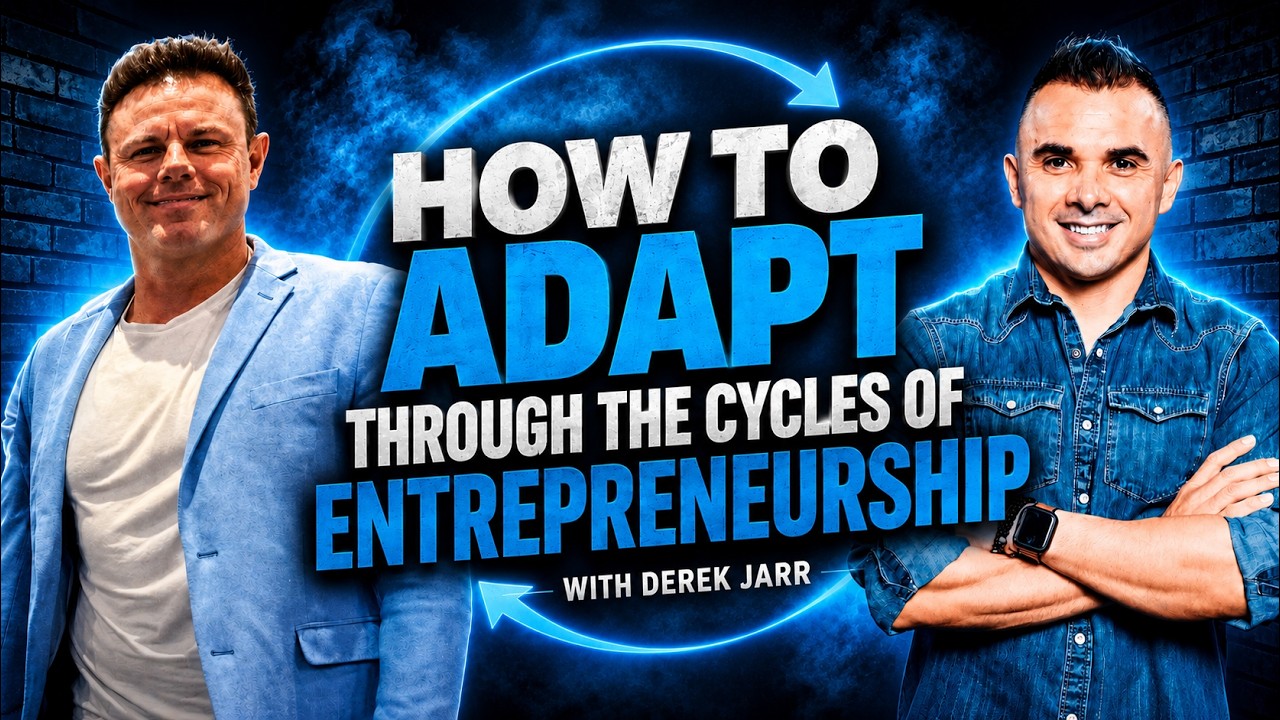
In EP 235 of the CEO Pulse Podcast, host Rafael Cortez talks with Derek Jarr, a real estate entrepreneur since 1996, about adapting through business cycles. They cover door knocking pre-foreclosures in Phoenix, the 2008 downturn, why you cannot stop selling, self-awareness, and how AI is changing the work.
What you will learn in this episode
- How Derek Jarr went from dropping out of college to buying houses in Phoenix
- What door knocking pre-foreclosures taught him about the work on the ground
- How he adapted during the 2008 and 2009 cycle and later moved into new work
- Why Rafael Cortez and Derek both say entrepreneurs cannot stop selling
- How self-awareness and old childhood patterns shape business decisions
- How AI is changing productivity, teams and the pace of building
How does Derek Jarr say entrepreneurs should adapt when the market changes?
Who is Derek Jarr?
Derek Jarr is a Phoenix real estate entrepreneur who has been building businesses since 1996, when he left college and started hustling on his own. Rafael Cortez introduces him as someone who got into real estate in 2002, came through the 2007 to 2009 years in a strong position, later moved into residential development and distressed real estate, and now leads Stay Frank. Rafael also repeats advice that comes up later in the conversation: your life should be exciting and your business should be boring.
Derek walked on and played football at Appalachian State University in North Carolina. School never quite clicked. In a freshman English class he got a C because of attendance even though his papers earned As and Bs, and that was enough to tell him the path was not for him. A classmate introduced him to selling supplements as an independent contractor who could also build a sales team. His parents were proud of the football player and much less excited when he left school to go sell a diet plan. Derek says he had always assumed he would start a business, and this felt like the chance to do it.
How did Derek Jarr get started in real estate?
He got his license and bought his first house in Phoenix in 2002, entering through fix and flips. In 2003 he learned about pre-foreclosures and started door knocking those houses. Rafael Cortez, who also came up in the Valley, says a lot of people who look established now still have that same beginning: no easy days, just sweat, time and work on the street.
Rafael asks for the wildest thing Derek saw on those doors. One visit started with a woman who did not want to talk, then asked him to come back in 10 minutes. When he walked through, the house was full of motorcycle parts and later, after a buyer flew in from California, law enforcement recovered guns and pointed out holes that looked like they had been used for surveillance. Derek had been in that house only two or three weeks earlier. The story is funny in hindsight, but it makes Rafael's point: you sit down with people, or you try to, and you get surprised all the time.
In that period Derek was also buying wholesale deals from other wholesalers. Partners in California put up the capital while he found deals, managed remodels and sold the houses. The work was physical, local and full of surprises, and it became the base for later moves into other parts of the business.
How did Derek Jarr adapt through the 2008 cycle?
Rafael opens the episode by noting that while many people were struggling in 2007, 2008 and 2009, Derek was doing very well. Later in the conversation Derek explains what that period looked like on the ground. During 2008 and 2009 his team was buying a lot of short sale properties and moving them, often by papering deals rather than running full rehabs. He calls it a glorious time, and then the rules changed. When banks started attaching new conditions to discounted payoffs, the old approach got harder, and he had to look at what came next, including residential development.
Rafael calls that pattern points of elevation. Getting into real estate through wholesaling, with a low barrier and a real upside, can open doors into development and other work if you keep watching for the next opening. Derek says he is drawn to new things, including less crowded pockets in the industry. About four years before the interview he launched Stay Frank, and Rafael introduces him as the owner and CEO of that company. The larger lesson they keep coming back to is not a single product. It is the habit of seeing a need, building around it, and moving when the market stops rewarding the last play.
Why do Derek Jarr and Rafael Cortez say you cannot stop selling?
When Rafael asks how Derek looks at new opportunities, Derek starts with a basic point. If you are going to be in business, you have to sell. You have to attract people, build relationships, or partner with someone who can. Great operators can optimize a system and still need a partner who can generate business, because those are often two different people.
He also names a mistake he has made. Entrepreneurs sell their way into a company, then become the CEO and decide selling and relationships are below them. Derek says he has fallen into that trap before, and he does not recommend it. Rafael agrees that the skill of selling, or finding someone who can sell, stays at the center of the work no matter how many times you change lanes.
Why do so many entrepreneurial dreams go to waste?
Looking at new work, Derek says, takes a leap of faith. Rafael Cortez says he sees so many dreams and good ideas go unexecuted because people wait until everything is lined up and all the ducks are in a row. After more than 20 years in business, he does not think that moment arrives. The better move is to believe you will find a way through whatever shows up, and to start somewhere.
Rafael asks what Derek's superpower is, and Derek says building relationships. Rafael adds that most people already know, even on a hard day, that they are good at something. For him, an early story he believed about himself was that he could figure it out, or connect with someone who could. Saying yes and working out the details later is a real pattern when you are in the lane. He compares it to driving from Phoenix to New York: you do not need to know every street in advance if you can read the next exit. If even 20 percent of the path is clear, he says, take the shot.
They also agree that you are rarely the first person to try a thing. Someone has done it before, faster or differently, and today may not lead where you expected, but it will lead somewhere you can learn from.
How do self-awareness and old patterns shape decisions?
The conversation turns inward when they talk about self-awareness. Rafael says one of his favorite authors is Neville, who writes about understanding who you are, what you are doing and what actually calls you, from the inside rather than from other people's expectations. If you can get clear on why you are doing something, a lot of other choices get easier.
Rafael uses a simple test: put yourself on a deserted island, with nobody to impress or teach. What would still make you happy? For him, it is creating something out of nothing, even something as ordinary as building a table. Once you know that starting point, decisions get cleaner, including the difference between a wish and a fact. He jokes that wishing you could fly does not mean you should jump off a building.
He also talks about the harder work of questioning old patterns. You can have harsh conversations with yourself, and you may need them to break through paradigms you picked up as a kid. Classical conditioning, he says, is real. We borrow ideas and perspectives that are not authentic to us, then follow them because they are familiar. Derek recognizes that some of his own early decisions were simply what was in front of him, not a life he had chosen on purpose. Both men treat that kind of honesty as part of growing, not as a reason to stay stuck.
How is AI changing the way Derek Jarr and Rafael Cortez work?
When Rafael asks what is on the horizon, Derek is excited about new work in his current company and about what AI can do for anyone starting or running a business. The tools can be used well or badly, but the capacity is hard to ignore. Rafael then shares a lesson from his own shop. A few years earlier he started building software, including a CRM, and a development team left him with a bag of code he could not interpret, at a much higher cost than planned. In the last six months, working on the latest version of REI Pulse CRM, he has been able to do with AI what he tried to do with that team in 2021.
Rafael compares the new pace to talking with Jarvis in Iron Man: you describe what you want and the system helps you build it. He thinks we are still early on a hockey stick curve, close to the uptick, and that people will either climb on or get left behind. Derek talks about the first time he used a feature in a new car and felt nervous in traffic, and how quickly that fear faded. Rafael calls the mix of excitement and fear roller coaster energy.
Derek also says he has already removed four roles in his businesses by rolling AI into his systems and processes. Rafael adds that skill will matter more than showing up only part of the time, and that every generation has had to evolve past older tools. The useful question, they suggest, is not whether the tools are coming. It is whether you will learn to use them, and whether more efficiency gives people room to get honest about what they actually enjoy.
What advice would Derek Jarr give his 17 year old self?
Rafael Cortez closes with the question he likes to ask every guest. Derek would tell his younger self not to worry so much about what people think, because they do not think about you as much as you imagine. He would also look for a balance of taking responsibility without guilt or shame. A mentor he worked with for about seven years taught ultimate responsibility, and Derek noticed how often shame gets attached to that idea. The healthier version, he says, is to accept what happened, ask what you can learn, and avoid making yourself feel worse on purpose.
He also points to his marriage, which in March would reach 20 years, and calls it the best deal he has ever done, the one thing he has not jumped away from. In close relationships, he wants to understand the other person, own what he said, and do something different next time. Rafael agrees that detachment is a gift, not as a way to dodge responsibility, but as a way to keep moving instead of beating yourself down until you cannot go forward.
Key takeaways
- Start before it feels finished. Rafael Cortez says too many dreams die while people wait for every duck to line up. Derek Jarr says new work still takes a leap of faith.
- Keep selling as you grow. Derek warns that entrepreneurs often sell their way in, then decide relationships are below the CEO. He has made that mistake and does not recommend it.
- Adapt when the last play stops working. After a strong run buying short sales in 2008 and 2009, Derek had to change course when the rules changed, a pattern Rafael calls points of elevation.
- Know why you are doing the work. Rafael says self-awareness, including ideas he takes from the author Neville, helps you tell the difference between what calls you and what you only inherited.
- Learn the new tools on purpose. Rafael has used AI to move REI Pulse CRM faster than an earlier software team, and Derek has already removed four roles by putting AI into his processes.
- Take responsibility without shame. Derek would tell his 17 year old self to worry less about other people's opinions and to learn from mistakes without attaching guilt.
Quotes from the conversation
“I think some of the best advice that I received that I didn't follow was like, your life should be exciting and your business should be boring.”
Derek Jarr, 9:27
“I see so many dreams go to waste”
Rafael Cortez, 17:54
“Don't worry so much about what people think because they don't think as much as you probably think they do.”
Derek Jarr, 40:28
Episode chapters
| 0:00 | Meet Derek Jarr and a life in real estate cycles |
| 4:26 | Door knocking pre-foreclosures in Phoenix |
| 10:09 | Looking for the next opening, including Stay Frank |
| 14:00 | Why entrepreneurs cannot stop selling |
| 16:12 | Short sales, the 2008 cycle and what came next |
| 17:54 | Why so many dreams go to waste |
| 22:18 | Self-awareness, Neville and old patterns |
| 29:41 | AI, a hard software lesson and a faster way to build |
| 36:32 | What AI is already changing in Derek's businesses |
| 40:28 | Advice to his 17 year old self |
Who is on this episode?
Derek Jarr
Derek Jarr has been an entrepreneur since 1996, when he left college and started selling on his own. He bought his first house in Phoenix in 2002, spent years door knocking pre-foreclosures, came through the 2008 cycle as an active buyer, and later moved into other parts of real estate. He is the owner and CEO of Stay Frank.
About the host: Rafael Cortez
Rafael Cortez is the host of the CEO Pulse Podcast, an Organizational Psychologist and a real estate broker and investor based in Phoenix, Arizona. Raised in Yuma, Arizona, he became one of the youngest firefighters in Yuma County at 19 and launched his first business at 21. He has been involved in more than 1,300 real estate deals since 2009 and teaches the L.E.S.S. Business philosophy: Lean, Effective, Strategic, Simple. Rafael is the founder of CEO Pulse, Pulse Realty and Pulse Capital and the creator of REI Pulse CRM, and he mentors wholesalers in group and 1 on 1 settings. Read Rafael Cortez’s full bio.
Questions and answers
Who is Derek Jarr?
Derek Jarr is a Phoenix real estate entrepreneur who has been building businesses since 1996. Rafael Cortez notes that he entered real estate in 2002, came through the 2007 to 2009 years in a strong position, and now leads Stay Frank.
How did Derek Jarr get into real estate?
After leaving college and selling supplements, Derek got his license and bought his first house in Phoenix in 2002 through fix and flips. In 2003 he learned about pre-foreclosures and started door knocking those properties. That street level work became the base for later parts of his career.
What did Derek Jarr do during the 2008 downturn?
Rafael Cortez says Derek did very well in 2007 through 2009, when many other operators were struggling. Derek explains that his team was buying a lot of short sale properties and moving those deals, then had to change course when the rules around those sales tightened.
What does Rafael Cortez mean by points of elevation?
Rafael uses that phrase for the way one part of real estate can open a door into the next, such as wholesaling leading into development. Derek Jarr's career is the example: he keeps watching for a new need and moves when the last play stops working.
Why do Derek Jarr and Rafael Cortez say you cannot stop selling?
Derek says you have to attract people, build relationships, or partner with someone who can. He has made the mistake of becoming the CEO and treating selling as beneath him. Rafael agrees that the skill stays central no matter how many times you change lanes.
Why do so many entrepreneurial dreams go to waste?
Rafael Cortez says many good ideas never get executed because people wait until everything is perfectly lined up. Derek Jarr adds that looking at new work still takes a leap of faith. Both men say you should start before the whole path is visible.
What does self-awareness have to do with business decisions?
Rafael Cortez says self-awareness helps you understand why you are doing the work and what actually calls you. He points to the author Neville and to childhood patterns, including classical conditioning, that can pull people into choices that are not really theirs. Derek recognizes that some of his early decisions were simply what was in front of him.
How is AI changing Derek Jarr's and Rafael Cortez's work?
Rafael says AI has helped him move REI Pulse CRM faster than an earlier software project that left him with code he could not use. Derek has already removed four roles by putting AI into his systems. Both men see the tools as early on a steep curve that operators will have to learn.
What is Stay Frank?
Stay Frank is the company Derek Jarr launched about four years before the interview, and Rafael Cortez introduces him as its owner and CEO. In the episode they treat it as one more example of Derek looking for a less crowded opening in real estate and building around a need he was seeing.
What advice would Derek Jarr give his younger self?
Derek Jarr would worry less about what other people think, because they are not thinking about you as much as you imagine. He would also take responsibility without adding guilt or shame, a balance he learned from a mentor over about seven years. He calls his 20 year marriage the best deal he has ever done.
Where did Derek Jarr go to college?
Derek walked on and played football at Appalachian State University in North Carolina before leaving school. Rafael Cortez asks what was going through his mind at that point, and Derek says he had always thought he would start a business and finally had a chance to do it.
Related episodes
Build your business on systems
Rafael Cortez built REI Pulse CRM from the systems he runs his own deals on. See how it works for wholesalers and investors.
Explore REI PulseBrowse every CEO Pulse Podcast episode · About Rafael Cortez · YouTube · Apple Podcasts · Spotify
