
CEO Pulse Podcast | Mindset Monday
TL;DR
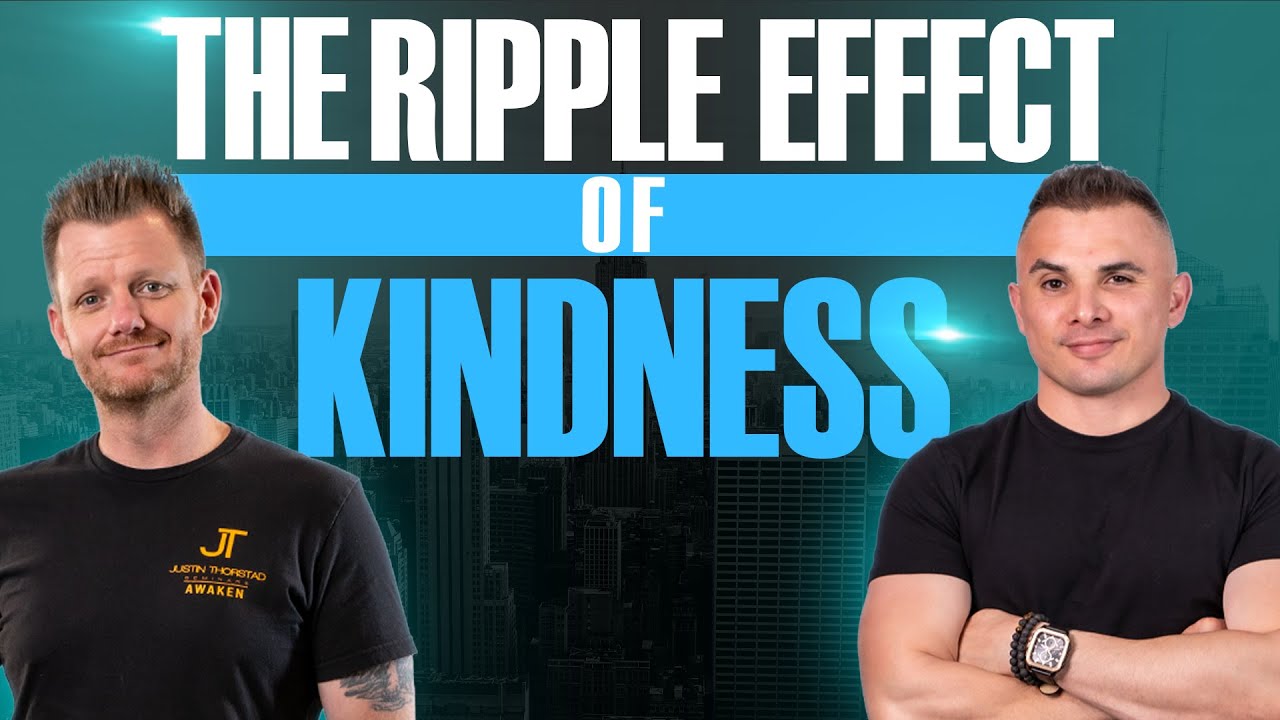
In this CEO Pulse Podcast Mindset Monday episode, Rafael Cortez and co host Justin Thorstad talk about the ripple effect of kindness. They share how mentors plant seeds, why giving must be unconditional, how small acts like a smile or paying for the next car can shift your state, and why no one is beneath you.
What you will learn in this episode
- How a mentor's small moments can spark someone's gifts
- Why paying it forward forces you to hold the space yourself
- Why giving only works when it is unconditional
- How a random act of kindness can shift your own state
- Why kindness does not have to involve money
- Why no one is beneath you or above you
Why does paying it forward create such a big ripple effect?
How did a speaking event turn into a lesson on paying it forward?
Rafael Cortez, host of the CEO Pulse Podcast and an Organizational Psychologist, returns from a couple of weeks away to record this Mindset Monday episode with co host Justin Thorstad. The topic is the value of paying it forward. Rafael Cortez says life gives us chances to plant seeds no matter what space we are in, and there is always someone nearby who could benefit from a little positivity and a good thought sent their way.
Rafael Cortez had just returned from Texas, where he spoke on stage. Many of his students flew in from all over to be there, along with one of his partners. He calls it a really cool thing to be part of, knowing people will travel based on advice and trust. The theme did not hit him until after the event. People kept thanking him for the inspiration and for putting opportunities in front of them.
On the flight home, while debriefing the event in his head, he felt deep gratitude and started thinking about how he got started. When he landed, he had a message from his original mentor, Sean Terry, congratulating him on a post from the event. Rafael Cortez gives him a big shout out, because Sean Terry was the one who planted those seeds. He was the first person to put Rafael Cortez on stage, giving him the chance to share his thoughts and get uncomfortable.
Rafael Cortez calls it a full circle moment. He was going back and forth between his mentor's message and messages from his students, and realized he was simply paying it forward. You never know how one conversation or opportunity will turn into something bigger. Some of his students may be on stage someday, creating their own ripple effects, and he believes that process keeps feeding the world.
Why should you thank the mentors who sparked you?
Justin Thorstad says it all starts with someone. Many people are afraid to express their unique gifts, and a mentor can spark them and bring them to the surface. Often it is something the mentor said or an experience shared with them. Yet many people never express gratitude for what helped them shift. Nine times out of ten, when you do, the mentor does not even remember saying it, because it was not monumental to them. It was just what they do. It resonated with you in a way that brought your gifts to life. If you are the one causing that, it feels good to know what worked, and it is a reminder that you never know what will land with people.
How does paying it forward make you hold the space?
Rafael Cortez says that when he thinks about paying something forward, it forces him to hold that space. Whether the space is accountability, giving back, contribution or mentoring someone, he has to own it first before he can pass anything on. Many people struggle with a natural sense of accountability, and setting himself up to pay something forward puts him in a place where he must take ownership of what he is doing.
He notes that it is hard to stay accountable at the top of a company when no one holds you accountable. Everyone is accountable to you, but the reverse is not always true. Justin Thorstad puts it simply: the mentor needs mentoring. Rafael Cortez says that knowing something will ripple out from his actions makes him hold the space for himself. Paying it forward is not just an outward act. It involves a lot of inner work.
Justin Thorstad adds that you have probably received advice from someone who did not really understand what they were talking about. That is the difference between someone who memorized information and someone who incorporated the philosophy, implemented it and had an experience with a result attached. That is holding the space. Because Rafael Cortez has lived what he shares, he can speak to its depth and importance with context.
What happens when you give unconditionally?
Rafael Cortez asks Justin Thorstad for examples of ripple effects he did not expect. Justin Thorstad recalls mentoring someone who could not afford it. Instead of money, he set a simple condition and kept giving sessions because he enjoyed working with him. That person later connected him with someone who led to a new opportunity. You never know what will come of it, Justin Thorstad says, but what you put out comes back.
He shares another story from years earlier, when money was very tight. A friend told him to withdraw a 20 dollar bill and give it to the first person in need he saw. It was all he had in his account, and he needed gas, but he did it. It felt good, and he says it helped break his attachment to money, giving what he felt he did not have. Shortly after, opportunities and deals kept coming, and he says it changed his energy around money. He considers that friend a kind of mentor, and he has since passed the same challenge on to others: whatever cash you have, give it to the next person you see, with no strings attached.
Why does a small act of kindness matter?
Justin Thorstad says it can be as simple as paying for the car behind you in a drive through line. Rafael Cortez does exactly that. Every time he goes through a Starbucks drive through, he pays for the person behind him just to give them a smile. He does not know who they are, and he does not ask what the tab is. He believes the energy you put out finds its way back in beautiful ways when you least expect it.
Justin Thorstad stresses that the key is that it is unconditional. Giving something away so that it comes back to you is still an attachment. It must be done with no expectations, only to brighten someone's day. He describes a social media creator who approaches strangers asking for help buying the cheapest item on a menu. When a cashier covers it herself because she has been there, he returns her money and gives her a thousand dollars. Justin Thorstad notes the recipients usually truly need it, and some even decline and ask that it go to someone who needs it more.
Justin Thorstad says there is so much pain in the world, so why not be the cause of a little more heaven on earth with the simplest, most random act of kindness? On Mother's Day, buy a dozen roses and hand them out. It reminds him of the saying givers gain. You always feel great when you give unconditionally, and the world can use it.
Can kindness change your own mood?
Rafael Cortez says it is easy to overlook this and believe we do not have enough value to brighten someone's day. He has done the Starbucks habit for about a year and a half, once or twice a week. Some days he is in a bad mood because of a weird escrow or something else, and he does not feel like giving. He does it anyway because it is planting a seed, and when he drives away, the good feeling usually overrides the bad moment.
Justin Thorstad asks how you could brighten someone's day and still feel bad. Many people say they will give once they have enough money, and he suggests that may be why they do not have enough. And who says it has to be money? You can give time, a compliment or a smile. Rafael Cortez agrees that paying it forward can be emotional rather than financial. It is easy to fall into victimhood over things we cannot control, like the economy, but we can control how we perceive what we come across. When we shift our mood, the people around us shift too, because it is contagious.
Is giving a form of self care?
Justin Thorstad frames it as a strategy for self care. If your state is subpar, you now know what to do: go do something nice for someone else. You shift your state, and so does the other person, so now two people carry elevated energy into the rest of their day and influence everyone around them. If you want to see more heaven on earth, he says, be part of the solution, and it begins with one person.
Rafael Cortez highlights that paying it forward goes beyond gratitude. Gratitude is internal, a conversation with yourself and your maker. Paying it forward puts gratitude into motion toward someone else, and it can be as simple as a compliment. The hosts share a story of a woman at a grocery store who noticed a stressed mother with small children and complimented how well she was managing. The mother said it meant more than she could know. Her family had moved from another state a month earlier, and she had told her husband that if she did not see something good that day, they would move back. That compliment was her sign to keep going. You have no idea what might change someone's life, so give authentically.
Why should you trace your ripple effects?
The hosts discuss the idea that to whom much is given, much is expected. How much each person has been given is subjective, but if you are still breathing, you have something to give, and it does not have to be money. There is always a way to make an impact, and we can be intentional about making it positive.
Rafael Cortez loves pulling the thread of ripple effects: this happened because of that, I met that person at that event and had that conversation, which led to this. When you trace it back, you find one simple moment that set everything in motion. You can only connect the dots looking back, and the origin often seemed insignificant at the time. Why not give your time, your information, care and compassion? He believes we are all connected, so how you treat others reflects how you treat yourself. His biggest takeaway from the Texas weekend was not the connections or productivity, but realizing all the ripple effects flowing from what he had paid forward.
He invites listeners to ask: what is the easiest way to pay something forward, or to put a smile on someone's face? Entrepreneurs often get stuck in their own world, but that does not mean they cannot brighten someone else's day.
Why is no one beneath you?
Justin Thorstad shares that at one of his offices, early on certain mornings, he sees the woman who cleans the building. She does not speak much English, but he smiles and says hi every time, and now she lights up when she sees him. He says some entrepreneurs think they are up here and others are below them, but anyone can be knocked down in the blink of an eye. No one is beneath you and no one is above you. When he sees someone in a job others might look down on, he gives them some love, because that could be you. If you are doing work you enjoy, you are blessed.
What did Rafael Cortez's grandfather teach him?
Rafael Cortez remembers his grandfather, who passed in 2001. He lived in Mexico and worked as a laborer building houses, work that did not pay much. He was strict, with a stern, traditional demeanor. When Rafael Cortez was about nine or ten, he walked in while his grandfather watched a jumbo jet on the news and asked, never expecting an answer, how those huge planes fly. With a straight face, his grandfather explained it in terms of heat and air temperature, giving him a whole theory. Rafael Cortez admits he does not know if that is how jets actually work, but it made sense, and he thought his grandpa had it going on.
His point is that you might see someone going through a rough patch or working a humble job, and you have no idea what talent lies beneath. If you open up to conversations, set stigmas and ideas aside and just be a good human, you will be surprised. Justin Thorstad agrees that people judge a book by its cover without knowing who someone is or how beautiful their life might be.
Justin Thorstad notes that on their trips to Mexico together, Rafael Cortez talks with resort workers like long lost cousins, whether they are mopping floors or anything else, and their faces light up. He treats them like they matter, because they do. Justin Thorstad connects it to the law of compensation: you are rewarded in direct ratio to the value you provide, and simple human connection is something everyone can offer, yet few do.
Rafael Cortez closes by noting that gratitude is widely discussed, but paying it forward is not voiced nearly as much. Justin Thorstad adds that when you are consumed by your own stress, it becomes the only thing you pay attention to, and paying it forward is a great way to break that state. The world needs more connection.
Key takeaways
- Mentors plant seeds. Small moments from a mentor can spark someone's gifts for years.
- Thank the people who shaped you. Gratitude closes the loop and shows what worked.
- Give unconditionally. Giving to get something back is still an attachment.
- Kindness is not about money. Time, a compliment or a smile can change someone's day.
- Giving shifts your state. A random act of kindness lifts you and the other person.
- No one is beneath you. Treat every person like they matter, because they do.
Quotes from the conversation
“What you put out comes back, period”
Justin Thorstad, 8:53
“And who says it has to be money?”
Justin Thorstad, 14:48
“No one's beneath you, and no one's above you.”
Justin Thorstad, 21:32
“It doesn't take that much to be a good human.”
Rafael Cortez, 24:59
Episode chapters
| 0:45 | The value of paying it forward |
| 1:31 | A Texas event and a message from a mentor |
| 3:52 | How mentors spark hidden gifts |
| 5:26 | Holding the space and accountability |
| 7:47 | Ripple effects of unconditional giving |
| 10:57 | Why giving must be unconditional |
| 13:17 | Kindness as a way to shift your state |
| 16:54 | Gratitude in motion |
| 21:03 | No one is beneath you |
| 21:49 | Lessons from a grandfather |
Who is on this episode?
Justin Thorstad
Justin Thorstad is Rafael Cortez's co host on the Mindset Monday series of the CEO Pulse Podcast. In this episode Justin shares how unconditional giving changed his relationship with money and why kindness is a strategy for elevating your own state.
About the host: Rafael Cortez
Rafael Cortez is the host of the CEO Pulse Podcast, an Organizational Psychologist and a real estate broker and investor based in Phoenix, Arizona. Raised in Yuma, Arizona, he became one of the youngest firefighters in Yuma County at 19 and launched his first business at 21. He has been involved in more than 1,300 real estate deals since 2009 and mentors entrepreneurs through the L.E.S.S. Business philosophy: Lean, Effective, Strategic, Simple. Rafael is the founder of CEO Pulse, Pulse Realty and Pulse Capital and the creator of REI Pulse CRM, and he mentors wholesalers in group and 1 on 1 settings. Read Rafael Cortez’s full bio.
Questions and answers
What does paying it forward mean on the CEO Pulse Podcast?
Rafael Cortez and Justin Thorstad describe it as planting seeds of positivity and opportunity for others. Those seeds create ripple effects you may never fully see.
Who was Rafael Cortez's first mentor?
Rafael Cortez credits Sean Terry as his original mentor. Sean Terry was the first person to put him on stage and give him a voice.
Why should you thank your mentors?
Justin Thorstad says many people never express gratitude for what helped them shift. Often the mentor does not even remember the moment that changed you.
How does paying it forward build accountability?
Rafael Cortez says that planning to pay something forward forces him to own and hold that space first. It creates accountability even at the top of a company.
Why must giving be unconditional?
Justin Thorstad explains that giving to get something back is still an attachment. True giving has no expectations and aims only to brighten someone's day.
What happened when Justin Thorstad gave away his last 20 dollars?
Justin Thorstad says it felt good and helped break his attachment to money. Soon after, opportunities and deals kept coming his way.
Does kindness have to involve money?
Justin Thorstad and Rafael Cortez say no. You can give time, a compliment or a smile, and it can be as simple as paying for the car behind you.
How can kindness improve your mood?
Justin Thorstad calls giving a self care strategy. Doing something nice for someone shifts your state and theirs, and that energy spreads.
What does Rafael Cortez do at Starbucks?
Rafael Cortez pays for the car behind him in the drive through. He does it even on bad days, and the good feeling usually overrides his mood.
What did Rafael Cortez learn from his grandfather?
Rafael Cortez recalls his grandfather, a laborer in Mexico, explaining how jets fly. It taught him never to judge someone's hidden talents by their job.
Related episodes
Build your business on systems
Rafael Cortez built REI Pulse CRM from the systems he runs his own deals on. See how it works for wholesalers and investors.
Explore REI PulseBrowse every CEO Pulse Podcast episode · About Rafael Cortez · YouTube · Apple Podcasts · Spotify
