
CEO Pulse Podcast | Mindset Monday
TL;DR
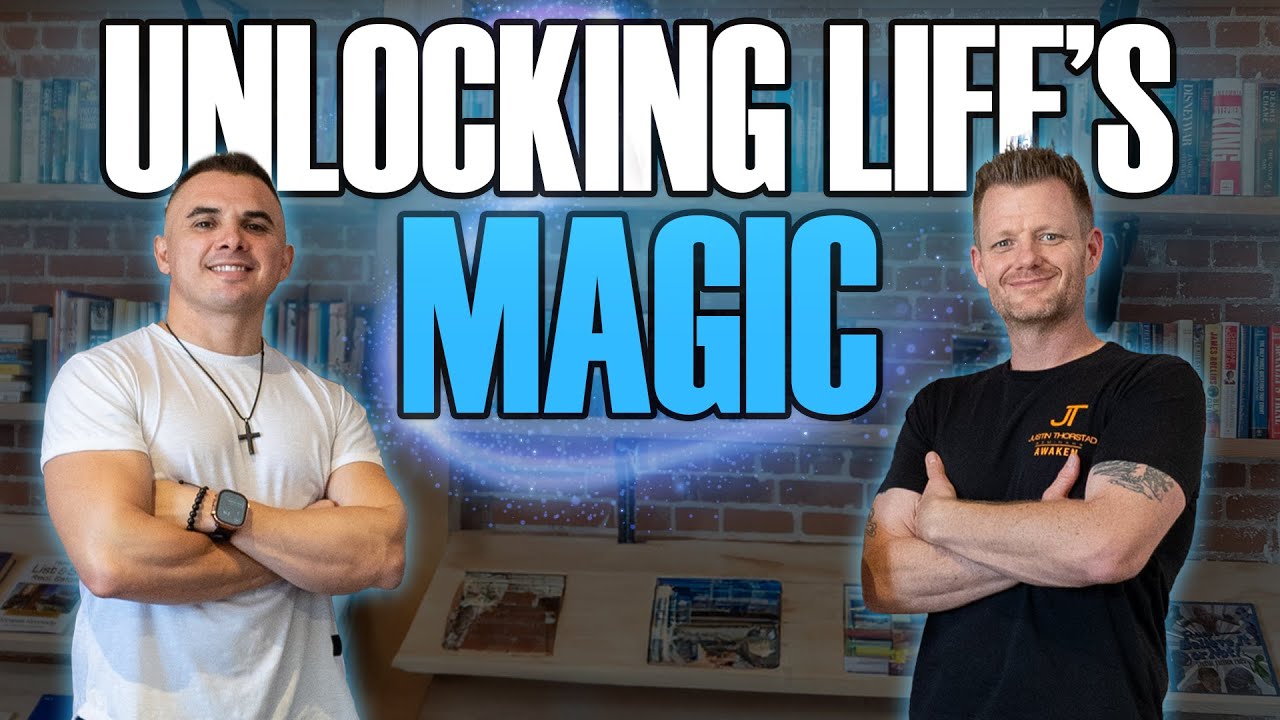
In this CEO Pulse Podcast Mindset Monday episode, Rafael Cortez and co host Justin Thorstad unpack the idea that the magic you are looking for is in the work you are avoiding. They explain why external wins never fill the void, how creative avoidance stalls dreams, why fear is a story and how action turns visualization into results.
What you will learn in this episode
- Why visualization becomes wishful thinking without action
- Why external wins never fill an internal void
- How focus, concentration and vision create willpower
- Why you should add extra difficulty to any new plan
- How market shifts separate the committed from the crowd
- What creative avoidance is and why family is not an excuse
- Why the cave you fear to enter holds what you seek
Why is the magic in the work you are avoiding?
What does the magic you are looking for is in the work you are avoiding mean?
Rafael Cortez, host of the CEO Pulse Podcast and an Organizational Psychologist, opens this Mindset Monday episode with co host Justin Thorstad around a quote Justin shared: the magic you are looking for is in the work you are avoiding. Rafael Cortez says people often visualize their ideal self and ideal life, but in that pursuit visualization becomes wishful thinking. The things that get in the way, difficult conversations, moving the needle and leaving the comfort zone, become actions people avoid, and that avoidance puts a dead stop on many dreams.
Justin Thorstad says that among the people both hosts mentor, only the committed few truly get it, yet everyone wants something bigger, better or different. The process starts with clarity about what you want. The second piece is connecting to the elevated emotions you would feel once you have it, and asking who you need to be to drive behavior in alignment with that desire. A clear intention alone is just a thought, he says. The elevated emotions are what draw it back to you.
Why do external wins never feel like enough?
Justin Thorstad explains that many people chase goals because they believe achieving them will prove they are worthy, capable or enough. But if you do not feel those things already, the win will not fulfill you. The newness wears off quickly. Rafael Cortez adds that the hosts have talked about finding drive from within, the thing that sparks you every morning and does not fade when you hit a financial milestone or buy a new car or house. External rewards can drive you places, but once you arrive you need another fix, and that is not a sustainable long term strategy.
Justin Thorstad describes the external chase as a bottomless void, like a hungry ghost: what comes in falls right through. So the better question is not what else to shoot for, but why the void exists. If you are living for the next accomplishment or waiting for Friday to have fun, something is broken. If you do not wake up excited for the day, you have to force yourself out of bed and force yourself to act, which he compares to pushing the cart instead of being pulled by the horse.
What are we really avoiding?
Rafael Cortez says we often look for things that will bring us magic or a dopamine rush. Those wins are fine, but they are fixes. When you dig a few layers deeper into what you really want as a human being, it gets more complex. We want joy and success, yet we avoid tough conversations, tough decisions, risk and the leap. Mundane distractions make it easy to drift if you do not have a firm grip on the person you are becoming. Another way to put it, he says, is asking whether you are afraid to take the bull by the horns.
Do you need willpower to take action?
Justin Thorstad says people who are distracted or procrastinating are missing two required elements: focus and concentration. Rafael Cortez asks about willpower. Justin Thorstad responds with a question: if pursuing something was rewarding in itself and the journey was the fulfillment, would you need willpower? Rafael Cortez thinks that drive is willpower. Justin Thorstad agrees it depends on the definition. Willpower can be a great resource for getting into action, and it can also be manufactured by the vision you are after. Rafael Cortez likens it to enthusiasm from within.
Rafael Cortez shares that he has talked with people who say they have the talent, skills and time, yet when it is time to start, they sit on the couch and watch TV. Justin Thorstad points out that people with less talent and fewer skills are creating the results those people want. Skill and talent are not the requirement. A clear intention married with elevated emotions, plus movement, is. If you do not know what to do, take the next best step you can think of and the next will unfold. You do not need a hundred step plan, because whatever you think it will take, it will take longer and more effort.
Why should you add difficulty to your plan?
Rafael Cortez offers his own rule of thumb: if you are planning something you have never done, assume you will need to add another ten levels of difficulty. It is part of the model, and it builds thicker skin and backbone. Justin Thorstad agrees that you must go through the process to develop the version of you with the capacity, persistence and no quit attitude to handle success when it arrives. Without trials, there is nothing to grow from. Rafael Cortez notes that easy success can inflate the ego until you get knocked down a few notches.
What do market shifts teach entrepreneurs?
Rafael Cortez recalls a few years back when wholesaling and real estate were in a cushy phase. You could lock up a property at a high price and still sell it, so many more people were wholesaling. When the market adjusted, many of them fell off and went back to a nine to five. Those who stuck with it, took time to learn the craft and did what the average person will not do are thriving now. They were not avoiding growth, discomfort, risk or betting on themselves, and they did not point fingers. Adversity thins out the crowd, he says, but it also builds character.
Justin Thorstad explains that when a market shifts, wealth does not disappear. It transfers to someone else. People who persevere and do the internal work can look back on what worked and what did not. Markets are cyclical, so next time they will recognize the indicators, position themselves and thrive. Successful people in any industry know this, and if you pay attention to your craft, you see shifts coming before anyone else.
How do you react when you slip on a banana peel?
Rafael Cortez adds that besides paying attention to your craft, you should pay attention to yourself. An old algebra teacher of his used to say most problems happen because someone slipped on a banana peel, something simple nobody accounted for. When an unplanned challenge hits, notice whether you are afraid and running back to your comfort zone, or getting creative about solutions and opportunities. Some people get excited about difficult cycles, not because they have more talent, but because they adapt their thinking toward opportunity and reach out to people with the skills they lack. If your first instinct is to run and hide, entrepreneurship will be very hard.
Why is feeling insufficient an advantage?
Justin Thorstad shares something he once considered a flaw. He often feels he is not smart enough and lacks the skills or industry knowledge to start a business. While others spend months on business plans and analysis, which he admits has some value, he is already moving because he knows he will be insufficient in some ways with any new venture. Rafael Cortez challenges the word insufficient, and Justin Thorstad clarifies that he means lacking skills in a field he has never worked in. For example, he owns a solar company but does not know much about solar. He does not need to, because he surrounds himself with people who do.
When Justin Thorstad makes mistakes, instead of beating himself up he practices gratitude, because he just learned something. If you stop learning, you get stale and decay. Your comfort zone exists because past experiences showed it was safe, but if you only operate from memories of the past, why expect a different future? The only way to grow is to step outside it.
What is fear really?
Justin Thorstad says people avoid, deflect and claim distraction because they are avoiding a story they believe will come true. He uses the acronym FEAR: false evidence appearing real. That story keeps them from pain, yet the far greater pain is staying the same, because you can predict exactly what will happen. Instead of focusing on what you might lose, focus on what you might gain: knowledge, education, relationships and money. Rafael Cortez adds that doing the same thing over and over while expecting different results is the definition of insanity.
What is creative avoidance?
Rafael Cortez says dreaming and visualizing are easy, and everyone jumps on that bandwagon. He calls it wishful thinking until the first action is taken. People make vision boards and talk about manifesting, then sit in the same spot for months or years. He believes opportunities related to what they envisioned showed up along the way, and they did not act. He shares the fable of a drowning man who begs for help, ignores a log and two more chances, then asks why he was forsaken, only to hear that three opportunities were sent and he took none.
Is family a reason not to act?
Rafael Cortez says that is where creative avoidance comes in, and it is unfair to put it on your family. People say they cannot because of their kids or their commitments. The reality, he says, is that you have to do it because of them. Using family as the excuse keeps you in the same cycle that stopped you from creating what you want.
Justin Thorstad notes that he hears this often from moms, and argues that kids are the very reason to act. You find a way. You are demonstrating to young minds what it means to be a sovereign person who decides and takes action. If you are a single mom with sons, you are showing them the kind of woman they will one day value. It is not I cannot because, but I should because. Any time someone points to something external, whether the market, a partner, kids or a lack of talent, Justin Thorstad says they are giving an excuse to avoid responsibility and action.
How did a written vision come to life for Rafael Cortez?
Rafael Cortez says there is magic and opportunity all around us. About five or six years before this recording, he started an I am statement on his phone that has grown longer over time. It works like a written vision board, with plans, visualizations and pictures he reviews to remind himself why he does what he does. Reviewing it the week before, he noticed it described a warehouse style space in downtown Phoenix filled with creativity, deals and an exchange of ideas. That is exactly where he was sitting during the recording. It came about through a partnership, and the week before they had hosted an incredible event there. It was a vision realized.
Justin Thorstad says it is a collective effort, but someone had to start the energy, and the energy of the intent behind it created the momentum for the pieces to come together. Take ownership of that, not from ego, but as evidence. When you realize you created something, you can take a snapshot of it in your mind and body and know it will work again, then ask what you want to create next as a service to others.
Why does action matter so much in manifestation?
Rafael Cortez admits that because he has seen proof of concept so many times, he sometimes catches himself asking whether he really wants something he is visualizing. But the power of manifestation is that you take action. Had he stayed in his comfort zone, getting here might have taken another 10 or 15 years. You cannot imagine your ideal life and then wait for your comfort zone to grow on its own.
Justin Thorstad shares his view that each time you create something, it is evidence that you are a creator, and stacking that evidence builds belief. He contrasts cause and effect thinking, where something external must cause an internal effect, with the idea that an internal cause, a clear intention held with belief, can influence what unfolds externally. He is clear he is not suggesting you sit on the couch and wait. Rafael Cortez compares it to The Matrix: we can wake up and stop accepting that we are victims of life coasting along. With faith, perseverance and tenacity, we can create what we want. He calls the results magic, wonderful things he cannot fully explain.
How do you start noticing the magic?
Rafael Cortez suggests a simple exercise: recall the last time you really desired something and opportunities started showing up, you took a step forward and it unfolded into something more. You will find examples even in small things, like thinking of an old friend and then hearing from them. We often dismiss these as coincidences. He says you planted a seed, but a seed also needs water, and nothing sprouts if you slip into creative avoidance.
So ask yourself what is stopping you and what you are actually avoiding. If you want to contribute and help others, are you dealing with your own issues first? You cannot help people with their finances if your own are not handled, or with inner peace if you lack it. The magic only happens when you cut out the avoidance.
Justin Thorstad closes the loop with another favorite saying: the cave you fear to enter holds the treasure you seek. You fear a dragon inside, but when you go in and confront it, you find it is small and you can slay it. Often the story you made up about the cave is not true, and what you find inside is your greatness. Be mindful of fear stories, he says, because that is all they are.
Key takeaways
- The magic is in the avoided work. Tough conversations and decisions are often where breakthroughs live.
- External wins do not fill the void. Feel worthy now instead of waiting for a win to prove it.
- Vision creates willpower. A clear intention with elevated emotions makes action easier.
- Plan for extra difficulty. New ventures take longer and more effort than expected.
- Fear is a story. False evidence appearing real keeps you stuck; staying the same costs more.
- Stop creative avoidance. Family and circumstances are reasons to act, not excuses.
- Action turns vision into reality. Wishful thinking ends when the first action is taken.
Quotes from the conversation
“It can also be manufactured by the vision you're after.”
Justin Thorstad, 9:01
“Just make up your mind that you're gonna have to add another 10 levels of difficulty to whatever your plan is”
Rafael Cortez, 10:32
“I call it wishful thinking until the first action is taken”
Rafael Cortez, 18:40
“The cave you fear to enter holds the treasure you seek”
Justin Thorstad, 32:34
Episode chapters
| 0:52 | The magic is in the work you avoid |
| 2:33 | Elevated emotions and worthiness |
| 5:43 | Why external wins never fill the void |
| 8:03 | Focus, concentration and willpower |
| 10:23 | Add ten levels of difficulty |
| 11:13 | Market shifts and the transfer of wealth |
| 15:51 | Moving before you feel ready |
| 18:18 | Wishful thinking and creative avoidance |
| 22:00 | A written vision comes to life |
| 31:00 | Noticing the magic and facing the cave |
Who is on this episode?
Justin Thorstad
Justin Thorstad is Rafael Cortez's co host on the Mindset Monday series of the CEO Pulse Podcast. In this episode Justin shares the quote that inspired the conversation, explains fear as false evidence appearing real and describes how he starts ventures before he feels ready.
About the host: Rafael Cortez
Rafael Cortez is the host of the CEO Pulse Podcast, an Organizational Psychologist and a real estate broker and investor based in Phoenix, Arizona. Raised in Yuma, Arizona, he became one of the youngest firefighters in Yuma County at 19 and launched his first business at 21. He has been involved in more than 1,300 real estate deals since 2009 and mentors entrepreneurs through the L.E.S.S. Business philosophy: Lean, Effective, Strategic, Simple. Rafael is the founder of CEO Pulse, Pulse Realty and Pulse Capital and the creator of REI Pulse CRM, and he mentors wholesalers in group and 1 on 1 settings. Read Rafael Cortez’s full bio.
Questions and answers
What does the magic you are looking for is in the work you are avoiding mean?
Rafael Cortez and Justin Thorstad explain that breakthroughs usually sit behind the tough conversations, decisions and risks people avoid. Visualizing without that work becomes wishful thinking.
Why do external achievements stop feeling good?
Justin Thorstad says chasing wins to prove you are worthy creates a void that nothing external can fill. The newness wears off quickly unless you already feel enough.
Do you need willpower to take action?
Justin Thorstad says willpower helps, but it can also be manufactured by a compelling vision. When the journey itself is rewarding, action comes more naturally.
Do you need talent to succeed?
Justin Thorstad notes that people with less talent often create bigger results. A clear intention, elevated emotions and consistent movement matter more.
How much harder are new ventures than expected?
Rafael Cortez suggests assuming you will add ten levels of difficulty to any plan for something new. That challenge builds the backbone you need.
What happens to wealth when markets shift?
Justin Thorstad says it transfers rather than disappears. People who persevere and learn from each cycle are better positioned for the next one.
What does FEAR stand for?
Justin Thorstad uses FEAR as false evidence appearing real. It is a story that keeps you from pain, while staying the same is often more painful.
What is creative avoidance?
Rafael Cortez describes creative avoidance as finding reasons, often family or circumstances, not to act. He says your family is the reason you should act.
How did Rafael Cortez's I am statement come true?
Rafael Cortez wrote about a creative warehouse space in downtown Phoenix in his I am statement years earlier. He later recorded this episode in that exact kind of space.
What does the cave you fear to enter mean?
Justin Thorstad uses the saying to show that what you fear is often smaller than you imagine. Confronting it is where you find your greatness.
Related episodes
Build your business on systems
Rafael Cortez built REI Pulse CRM from the systems he runs his own deals on. See how it works for wholesalers and investors.
Explore REI PulseBrowse every CEO Pulse Podcast episode · About Rafael Cortez · YouTube · Apple Podcasts · Spotify
