
CEO Pulse Podcast | Mindset Monday
TL;DR
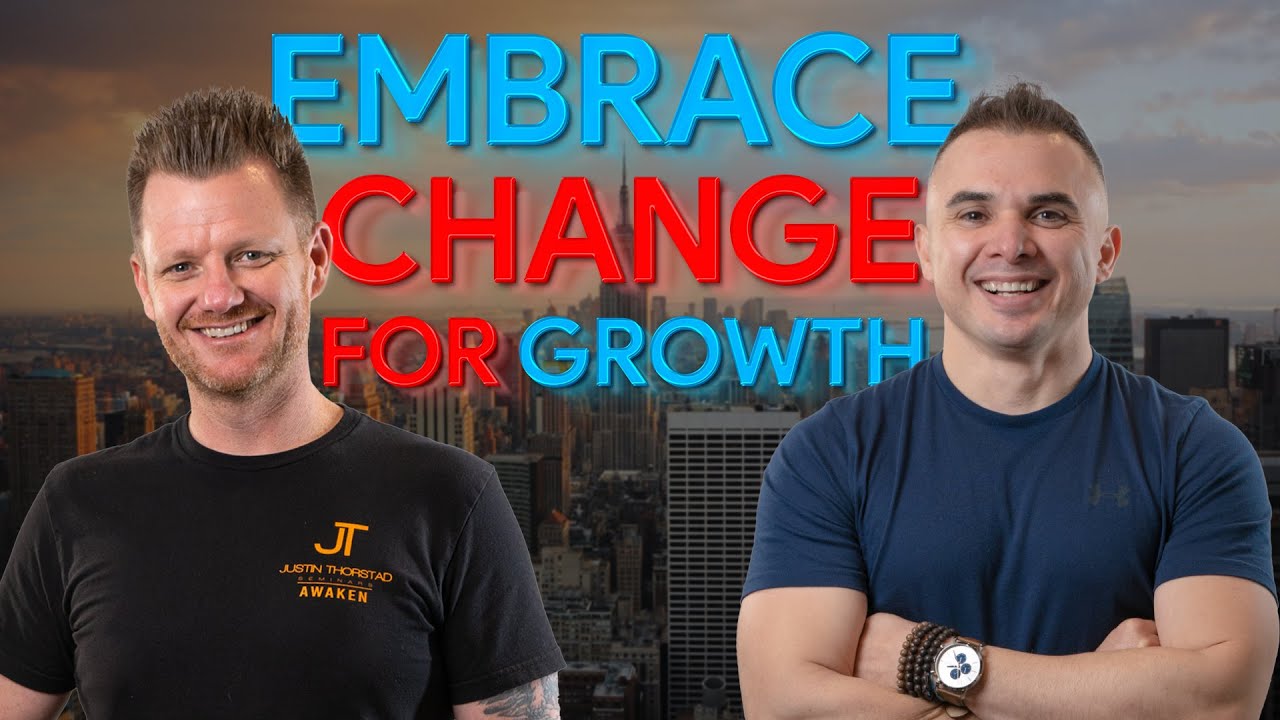
In this CEO Pulse Podcast Mindset Monday episode, Rafael Cortez and co host Justin Thorstad explore how entrepreneurs adapt to change. They cover your relationship with change, why tweaking what works can mean your thinking is too small, how anger hides sadness or fear, and Rafael's three step process of awareness, alignment and action.
What you will learn in this episode
- How to examine your own relationship with change
- Why constantly tweaking what works can be a sign you are not thinking big enough
- How a morning and evening meditation practice supports change
- Why anger usually masks sadness or fear
- Rafael Cortez's three step process for handling change
How can entrepreneurs adapt to change in business?
What is your relationship with change?
Rafael Cortez, host of the CEO Pulse Podcast and an Organizational Psychologist, opens this Mindset Monday episode with co host Justin Thorstad by calling change the only constant in life. As entrepreneurs, change can hit at an industry level, a mindset level or an individual level, yet the frameworks for dealing with it stay the same.
Justin Thorstad says the first step is to look at your relationship with change. He loves it and often creates it on purpose, like shaking a snow globe, because a new environment forces you to be creative and resourceful. External change happens without your permission, so resisting it is like saying your success depends only on conditions. He gives the example of the class action lawsuits that could remove buyer agent compensation in real estate. He welcomes it, because agents who cannot handle their internal state will leave a saturated industry, and the rest will rethink their playbook and how they articulate their value.
Rafael Cortez adds that people often go blind to the opportunity change brings. Industries like construction, law and real estate still run much the way they always have, not because there are no better ways, but because it is how things have been done. Justin Thorstad puts it simply: if nothing changes, nothing changes. You can ride the wave like a surfer or be crushed by it.
Are you changing things that work because your thinking is too small?
Rafael Cortez admits something about himself. Systems and processes are his thing, and when something is dialed in and humming, he sometimes looks for an excuse to change it even though nothing is broken. Justin Thorstad plays devil's advocate: working does not mean working at its highest and best, but he asks whether fixing it is a way to avoid a more uncomfortable project.
Rafael Cortez says he has sat with that question and found the answer: his thinking was not big enough. He kept reworking the Legos in the same small box instead of expanding into uncharted territory. Tweaking moved the needle, but it was not a game changer. When he stepped back to see the big picture, he saw far more in play than he had recognized. Justin Thorstad thanks Rafael Cortez for being that authentic, and adds that every business and product has a life cycle, from birth through adulthood, and it dies without innovation. There is no box, he says, other than the limits you place on yourself.
How can meditation help you grow with change?
Rafael Cortez shares that a 20 minute morning meditation by Dr. Joe Dispenza, which Justin Thorstad introduced him to years ago, gives him that feeling of expansion. It starts with the space between your ears and widens to the room, the building and beyond, and he sees change the same way: it grows, and you grow with it.
Justin Thorstad explains that focusing narrowly keeps the mind in a reactive, stressed state, while diffusing your awareness relaxes it. In the morning he sets an intention for who he wants to be and who he does not want to be, so he can catch himself during the day. At night he takes inventory of how he did and what to improve tomorrow.
Is change happening for you or to you?
Justin Thorstad says it starts with honesty and awareness. He asks a question often attributed to Einstein: do I live in a friendly universe or a hostile one? If it is friendly, then even a change that disrupts his business can only be happening for his benefit. His job is to stay present and objective, because judgment distorts what you see. What you resist persists, and when you grow yourself, the rising tide lifts all boats.
Why does change trigger anger, and what is underneath it?
Rafael Cortez says change used to rock him, especially when he started his first business. One unexpected banana peel could throw off his whole day. He did not separate the issue from the rest of his life, and the buzzkill leaked into meetings, customer calls and negotiations. He realized he was giving away his personal power and not taking responsibility for his emotions.
Justin Thorstad says he used to operate the same way until he understood that anger comes from sadness, fear or both. Sadness is about losing something or believing it should not be this way. Fear might be that a market change will wipe out your business. Both come from scarcity. It is not wrong to feel them, but finding the root lets you reframe your relationship to the change and see new opportunities.
What is Rafael Cortez's three step process for handling change?
Rafael Cortez asks himself whether he wants to step up or step out. If he keeps choosing step out, he is in the wrong lane. He says change, and how we react to it and approach it, is a responsibility. Justin Thorstad adds that responsibility is not blame; it is your ability to respond. You will still get triggered, but you choose whether you bring water or fuel. Rafael Cortez, a former firefighter, jokes that you should never bring water to a grease fire.
His process has three steps. First, awareness of what kind of change it is. Second, alignment: is it in line with who he is, where he wants to be and his lane? Third, commit to an action: roll with it, stop the change, or move out. Rafael Cortez says alignment is often intuition, especially in moral or ethical situations where you cannot put a number on it.
Justin Thorstad adds that we do not see things as they are; we see things as we are, through decades of beliefs and stories. Change causes indecision, but indecision is still a decision. Rafael Cortez remembers how, before his personal growth journey, change left him in analysis paralysis and stagnation. They close by noting that what caused the change is irrelevant. The question is what you will do about it.
Key takeaways
- Check your relationship with change. Resisting change means letting conditions define your success.
- Think bigger. Tweaking what already works can be a sign your vision is too small.
- Find the root of anger. Anger usually masks sadness or fear rooted in scarcity.
- Responsibility is your ability to respond. You choose whether you add to the problem or the solution.
- Use a simple process. Awareness, alignment, then commit to an action.
Quotes from the conversation
“If nothing changes, nothing changes.”
Justin Thorstad, 7:28
“Change is a responsibility.”
Rafael Cortez, 26:50
“We don't see things as they are we see things as we are”
Justin Thorstad, 29:20
Episode chapters
| 0:49 | Change is the only constant |
| 2:05 | Your relationship with change |
| 5:35 | Being blind to opportunity |
| 8:41 | Changing what already works |
| 11:44 | When the thinking is not big enough |
| 15:42 | Meditation and expansion |
| 18:34 | A friendly universe |
| 21:07 | When change used to rock Rafael |
| 25:53 | Step up or step out |
| 28:20 | Awareness, alignment and action |
Who is on this episode?
Justin Thorstad
Justin Thorstad is Rafael Cortez's co host on the Mindset Monday series of the CEO Pulse Podcast. In this episode Justin explains why he welcomes change, how anger masks sadness or fear, and why responsibility is your ability to respond.
About the host: Rafael Cortez
Rafael Cortez is the host of the CEO Pulse Podcast, an Organizational Psychologist and a real estate broker and investor based in Phoenix, Arizona. Raised in Yuma, Arizona, he became one of the youngest firefighters in Yuma County at 19 and launched his first business at 21. He has been involved in more than 1,300 real estate deals since 2009 and mentors entrepreneurs through the L.E.S.S. Business philosophy: Lean, Effective, Strategic, Simple. Rafael is the founder of CEO Pulse, Pulse Realty and Pulse Capital and the creator of REI Pulse CRM, and he mentors wholesalers in group and 1 on 1 settings. Read Rafael Cortez’s full bio.
Questions and answers
How should entrepreneurs think about change?
Justin Thorstad says to examine your relationship with change first. Change happens without your permission, so resisting it only creates suffering.
Why might you keep changing systems that already work?
Rafael Cortez found that his thinking was not big enough. He was reworking the same small box instead of expanding into bigger opportunities.
What is underneath anger when change hits?
Justin Thorstad says anger usually comes from sadness, fear or both. Both are rooted in scarcity, and finding the root lets you reframe the change.
What does responsibility mean in this episode?
Justin Thorstad and Rafael Cortez define responsibility as your ability to respond. It is not blame, and it is always within your control.
What is Rafael Cortez's process for handling change?
Rafael Cortez uses three steps: awareness of the change, checking alignment with who he is and his lane, and committing to an action. The action can be to roll with it, stop it or move out.
Which meditation do Rafael Cortez and Justin Thorstad recommend?
Rafael Cortez mentions a 20 minute morning meditation by Dr. Joe Dispenza that Justin Thorstad introduced him to. Justin Thorstad pairs it with an evening practice to review the day.
Related episodes
Build your business on systems
Rafael Cortez built REI Pulse CRM from the systems he runs his own deals on. See how it works for wholesalers and investors.
Explore REI PulseBrowse every CEO Pulse Podcast episode · About Rafael Cortez · YouTube · Apple Podcasts · Spotify
