
CEO Pulse Podcast | Interview
TL;DR
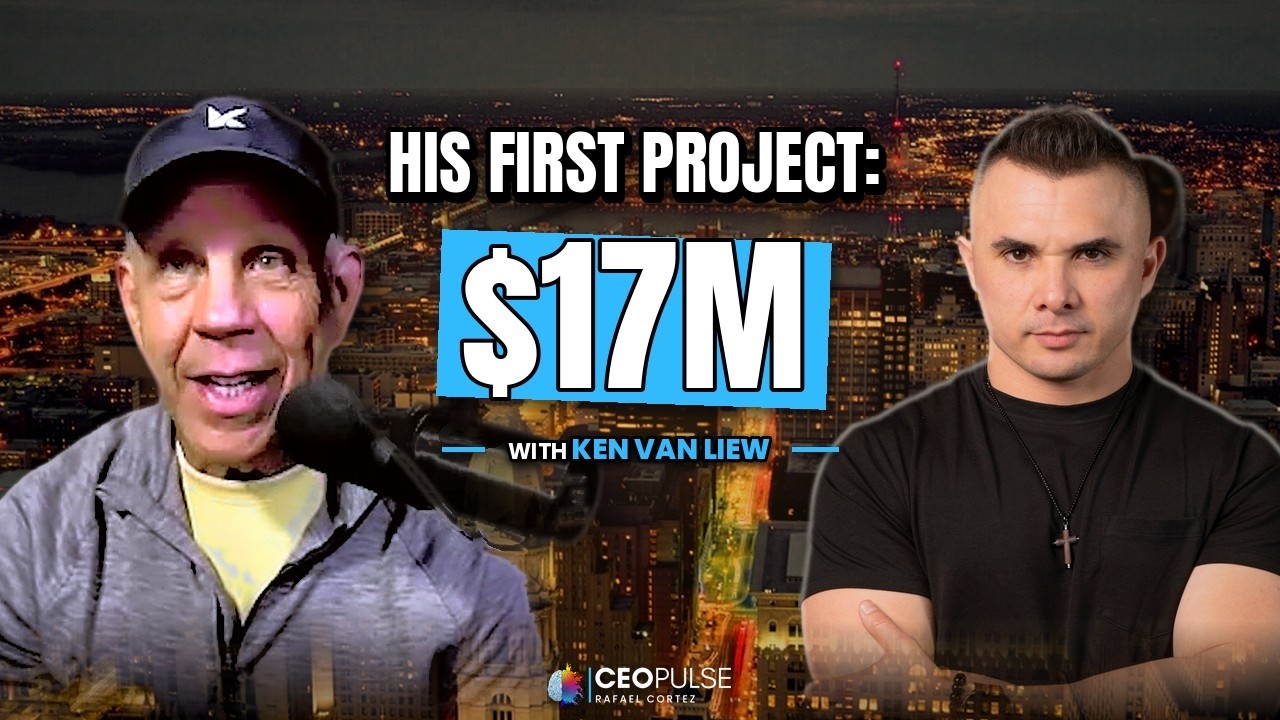
In this CEO Pulse Podcast interview, Rafael Cortez talks with Ken Van Liew, a real estate developer with over 30 years of experience and author of Modern Wealth Building Formula. He shares how he went from building skyscrapers to a $17 million first project, recovered after 2008 and built daily rituals that keep his dreams alive.
What you will learn in this episode
- How Ken Van Liew turned sports discipline into success in school and work
- The top down thinking that led him from construction to development
- Why visualizing your dream matters when the path is not clear
- How he bounced back after losing nearly everything in 2008
- The daily rituals and accountability that drive his results
- Why higher level rooms and deep relationships change your perspective
How do you start a business on the right foot?
Who is Ken Van Liew?
Rafael Cortez, host of the CEO Pulse Podcast and an Organizational Psychologist, sits down with his friend Ken Van Liew, a real estate developer with more than 30 years of experience and the author of the international bestseller Modern Wealth Building Formula. His path runs from magician to civil engineer to building skyscrapers in New York City to leading major real estate developments. The two know each other from the masterminds they attend.
Ken Van Liew says his drive as a kid came from sports. He was not the best student and had some learning challenges, but he was a strong athlete. In college, after struggling through a tough math class and meeting his future wife, he began to ask how he could bring his success on the football field into the classroom. That became a lifelong mindset: take what you do well in one area, find what it has in common with another, and carry it over.
How did a construction career lead to development?
It took Ken Van Liew six years to earn his civil engineering degree. Summer construction jobs and a design development award planted a seed, but after graduation he took a desk job as an engineer, as he was expected to. He went stir crazy and soon landed a construction job in Poughkeepsie, New York, building a building at 21. By 26 he was a project superintendent on a skyscraper.
One day, standing on top of a 30 story building in Brooklyn with newborn twins at home, he realized something was wrong with the picture. In 1997 he decided to get into real estate, and in 1999 he completed his first project, worth $17 million. He jokes that overachieving is a mental disorder, but he calls his approach top down thinking. He did not know much about real estate, but he knew developers earned a fee for building. If he could build a project as the developer, he could pay himself a fee large enough to quit his job.
A golf outing his mother in law invited him to led him to join a country club on an executive special, and a relationship he built there helped him buy a 17 acre property. An architect then pointed him to a dentist who held approval to build a 113 bed facility. That is how he fell into real estate backwards, by figuring out how to replace his job. Twenty years later he wrote his book. He laughs that his overnight success took about 33 years.
Why does visualizing your dream matter?
Rafael Cortez notes that society undervalues digging the trenches. Most people want success overnight, but quick wins are the exception. You have to build tenacity, thicker skin and experience. He was struck that Ken Van Liew started without a clear direction and still built something massive.
Ken Van Liew does not want his story to feel intimidating. You can accomplish anything you put your mind to, and life begins at the end of your comfort zone. Like eating an elephant, you take one bite at a time. What he calls daydreaming is really visualizing your dream. On top of that building, looking out at the World Trade Center, he began dreaming about creating something of his own. He grew up with very little, sold t shirts in college and learned to figure things out without a silver spoon.
He compares getting started to driving without a map. You cannot see what is around the corner until you walk to it. If you stop before the corner, you deprive yourself of the opportunity. Never give up, keep your dreams alive and keep moving forward.
How did he hold on to his dream through setbacks?
Rafael Cortez asks how Ken Van Liew holds on to the dream when the daily grind and setbacks make it fade. Ken Van Liew says he lost it twice. When Lehman Brothers collapsed in 2008, his organization lost $300 million in one day, and he did not want to do real estate anymore. He has been a magician since age 12, and every time something happened, he returned to performing magic. Keeping that magic in his life always helped him get back in the game.
He uses a football analogy. When you get knocked down, sometimes you go to the sideline to regroup. Sometimes you even sit in the stands and watch for a while. The key is to get back on the field. He has won championships from little league to college football, and he believes everyone is a champion. Add gratitude, service and giving, and you can have whatever you want in life. He has been married 39 years, and he says he and his wife were just as happy having simple picnics with cold cuts when they had nothing.
Do vision boards and morning rituals really work?
In 1999 Ken Van Liew was introduced to Tony Robbins, did his first fire walk around 2000 and went through Life Mastery. A lesson with ultra runner Stu Mittleman helped him transform his health and energy. He credits mindset and daily rituals such as journaling, vision boards and morning routines for getting into a daily zone of action.
Rafael Cortez says students often ask whether vision boards, meditation and morning rituals are just clichés. His answer is that everyone he sees getting results in the masterminds has some form of daily practice. He may not know all the science, but he knows it works.
Ken Van Liew adds accountability. For years he had a 15 minute accountability call every day at seven o'clock, where he and his partner wrote down gratitude and their three critical tasks, then measured themselves at the end of the day. After the World Trade Center collapse he read a book called Effortless Prosperity, and he believes that way of thinking helped him manifest everything he has today.
Why do higher level rooms change everything?
Today Ken Van Liew is producing a national documentary on real estate investing and leading large mixed use developments in North Carolina and New Jersey. He is also building an invite only real estate investment enterprise of high level professionals focused on giving, receiving and what he calls relationship equity. Members meet weekly to get practical help doing deals, not theory. He wants to help people avoid the hurdles he faced, including the family moments he missed while building skyscrapers.
Rafael Cortez says intentionally stepping into higher level rooms was a game changer for him. At first he felt inadequate in rooms with authors and leaders he admired, but once conversations opened up, he found they had more in common than he expected. There are challenges at every level. Ken Van Liew says the foreword to his book was written by his mentor, real estate author Dolf de Roos.
Ken Van Liew admits that after 2008 he was tempted by shiny objects outside real estate, but he had to stay focused on his core space. Rafael Cortez notes that there are many ways to play in the same space, and that cutting the learning curve by tapping into someone else's experience and mentorship is far better than going it alone. Asked what he would tell his 17 year old self, Ken Van Liew says to do everything in moderation, worry less and build rapport with people who have already done it. He learned late that beyond networking there is ecosystem merging, where deeper emotional rapport and relationships bring the fulfillment and wealth you are truly looking for.
Key takeaways
- Transfer what works. Carry your strengths from one area into the next.
- Think top down. Start with the end result and work backward.
- Walk to the corner. You cannot see opportunity until you move toward it.
- Regroup, then return. Step to the sideline when needed, but get back on the field.
- Rituals drive results. Journaling, gratitude and accountability create a daily zone of action.
- Build relationship equity. Deep relationships bring fulfillment and growth.
Quotes from the conversation
“Life begins at the end of your comfort zone”
Ken Van Liew, 8:58
“Sometimes you go to the sideline to get your bell unrung.”
Ken Van Liew, 13:25
“You gotta build up that tenacity as an individual, and that thicker skin”
Rafael Cortez, 7:52
Episode chapters
| 0:00 | Meet Ken Van Liew |
| 2:21 | From sports to civil engineering |
| 3:56 | The view from a 30 story building |
| 5:32 | Top down thinking and his first project |
| 8:47 | Visualizing your dream |
| 12:42 | Bouncing back after 2008 |
| 14:23 | Mindset and daily rituals |
| 19:59 | Accountability and Effortless Prosperity |
| 24:48 | Stepping into higher level rooms |
| 32:51 | Advice to his 17 year old self |
Who is on this episode?
Ken Van Liew
Ken Van Liew is a real estate developer and former civil engineer who built skyscrapers in New York City before leading his own developments. He is the author of the international bestseller Modern Wealth Building Formula.
About the host: Rafael Cortez
Rafael Cortez is the host of the CEO Pulse Podcast, an Organizational Psychologist and a real estate broker and investor based in Phoenix, Arizona. Raised in Yuma, Arizona, he became one of the youngest firefighters in Yuma County at 19 and launched his first business at 21. He has been involved in more than 1,300 real estate deals since 2009 and mentors entrepreneurs through the L.E.S.S. Business philosophy: Lean, Effective, Strategic, Simple. Rafael is the founder of CEO Pulse, Pulse Realty and Pulse Capital and the creator of REI Pulse CRM, and he mentors wholesalers in group and 1 on 1 settings. Read Rafael Cortez’s full bio.
Questions and answers
Who is Ken Van Liew?
Ken Van Liew is a real estate developer with over 30 years of experience and the author of Modern Wealth Building Formula. He was a civil engineer and skyscraper superintendent before becoming a developer.
What is top down thinking?
Ken Van Liew uses top down thinking to start with the end result and work backward. He knew developers earned a fee for building, so he set out to build as the developer and pay himself enough to quit his job.
How did Ken Van Liew bounce back after 2008?
Ken Van Liew says his organization lost $300 million in one day when Lehman Brothers collapsed. Returning to magic, his lifelong hobby, and his champion mindset helped him get back in the game.
Do vision boards and morning rituals really work?
Rafael Cortez says everyone he sees getting results in his masterminds has some kind of daily practice. Ken Van Liew credits journaling, gratitude and a daily accountability call for his success.
What is relationship equity?
Ken Van Liew describes relationship equity as the value built through deep, giving relationships with high level professionals. He says these relationships bring the fulfillment and wealth people are truly looking for.
What would Ken Van Liew tell his 17 year old self?
Ken Van Liew would tell his younger self to do everything in moderation, worry less and build rapport with people who have already done it. He also stresses deeper relationships beyond simple networking.
Related episodes
Build your business on systems
Rafael Cortez built REI Pulse CRM from the systems he runs his own deals on. See how it works for wholesalers and investors.
Explore REI PulseBrowse every CEO Pulse Podcast episode · About Rafael Cortez · YouTube · Apple Podcasts · Spotify
