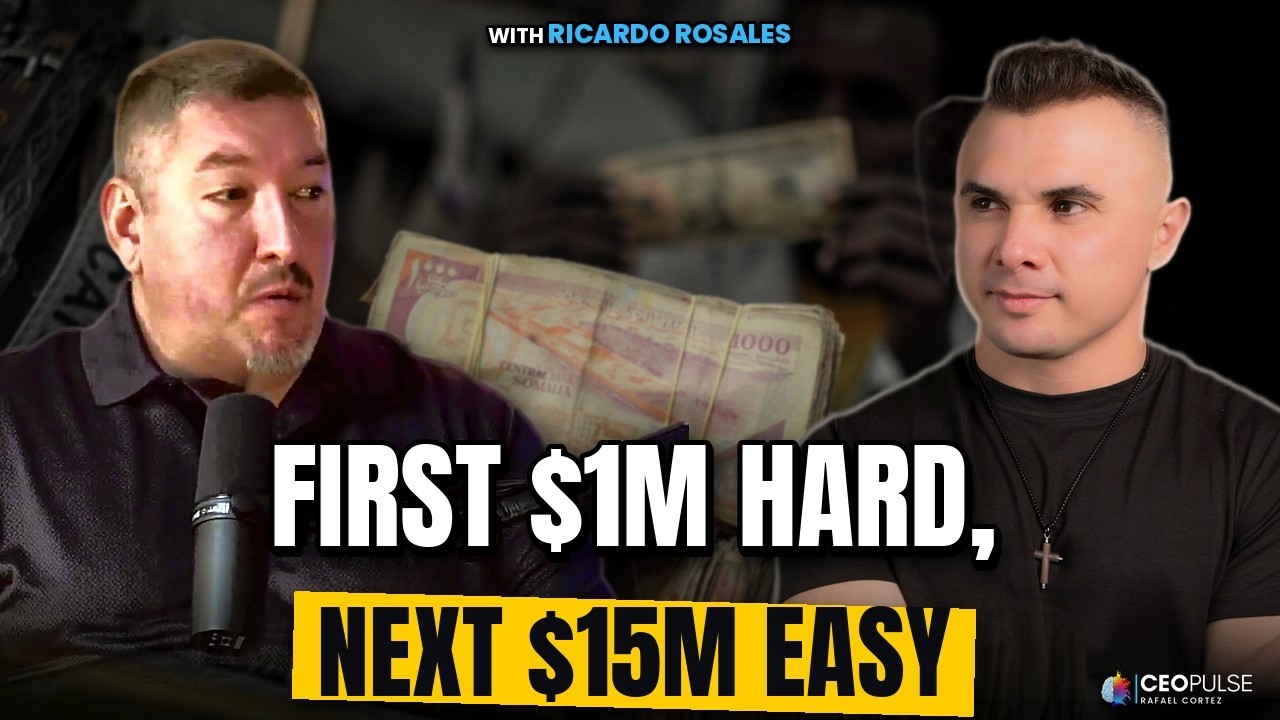

CEO Pulse Podcast | Interview
TL;DR
In this CEO Pulse Podcast interview, Rafael Cortez talks with his friend Ricardo Rosales, a Texas real estate investor and owner of several companies run by virtual teams. Ricardo Rosales shares his path from Venezuela to the Navy, oil and gas, flipping houses and wholesaling, how Hurricane Harvey forced a pivot, and why he empowers and promotes his people.
What you will learn in this episode
- How Ricardo Rosales learned business by working beside his father
- Why he joined the Navy and how he chose his first civilian job
- What his first house flip taught him about contractors
- How Hurricane Harvey forced a pivot from flipping to wholesaling
- Why empowering virtual team members changed his results
- Why he believes in promoting from within and rewarding merit
How do entrepreneurs pivot through setbacks?
Who is Ricardo Rosales?
Rafael Cortez, host of the CEO Pulse Podcast and an Organizational Psychologist, sits down with his close friend Ricardo Rosales, a real estate investor from Texas who owns several companies, including a virtual assistant company, a transaction coordination company and software products. Ricardo Rosales started as a fix and flip investor and moved into wholesaling and land.
Ricardo Rosales says he wanted to be an entrepreneur from age eight because he wanted to be like his father, who ran an insurance business in Venezuela and was loved by everyone he worked with. He asked his father for a suit and a job, and became the filing assistant in the office. By his early teens he was the office runner, delivering documents and applications around the city. Rafael Cortez points out that you never know who is watching you build your business, especially your kids.
How did Ricardo Rosales end up in the United States?
Ricardo Rosales comes from a family of educators, doctors and professionals, and his father wanted him to get a degree. As a teen he lost focus and failed most of his classes in his final year of high school, partly because he could not see a future for himself in Venezuela. His father made a deal: pass the makeup exams over the summer and they would move to Miami, where Ricardo Rosales had been born, and he would go to college. He passed every test, and his father moved him within two days to get him out of that environment.
In Miami he studied English and helped his father open a small insurance office, wearing many hats. He became a father young, married, and later divorced, and he and his daughter's mother remain good friends. His father kept pushing college, Ricardo Rosales kept refusing, and the relationship became boss and employee instead of father and son. He left around 1999 and went through a rough, unstable period.
He then built a business exporting cell phones to Venezuela and opened three stores. Just as it grew, a full shipment was stolen, and he lost everything and still had a daughter to support.
Why did Ricardo Rosales join the Navy?
With few options, Ricardo Rosales saw a Navy commercial and walked into a recruiter's office. The recruiter's name was almost the same as his own, which he took as a sign. He needed structure, stability and benefits for his daughter.
Ricardo Rosales planned to serve 20 years, but after two years his enthusiasm faded. He and a friend came up together, and his friend was always ranked first even when Ricardo Rosales felt he produced more. He is grateful to that friend today, because it pushed him toward a different life. Rafael Cortez shares that his own path into real estate started from one training on bookkeeping software where he met the right person.
Ricardo Rosales spent his time off on the ship learning to write a resume, and by the time he left he had 19 job offers in Houston. He interviewed the companies too, watching whether people looked happy. He turned down a much higher paying offer at a company where people seemed miserable and took an entry level hourly role where people were happy. That role had a growth path, and within about two years he was a subsea technician traveling the world and earning more than he had ever imagined.
What did Ricardo Rosales learn from his first flip?
Unlike many coworkers who spent their money on toys, Ricardo Rosales looked for ways to grow it. He discovered the TV show Flip This House with Armando Montelongo, read his book and started making offer after offer. In late 2008 he bought his first property, a full gut rehab he calls a university. On demo day a city crane was about to knock it down, and he talked the city into letting him fix it. Contractors took his money, and the project took about a year. He kept it as a rental and later sold it, and over time it turned into a strong return.
Rafael Cortez notes that almost no one knocks their first deal out of the park unless they have a mentor cutting the learning curve. Ricardo Rosales admits he once resisted mentors because of ego. Now both of them pay to be in rooms with people who are winning, which is how they met.
Ricardo Rosales built up a number of rentals but realized he was buying someone else's dream. He did not enjoy the hard parts of being a landlord, so he sold them and focused on flips while still working as a product line manager overseeing a very large business unit. Handling huge contracts expanded his thinking. He also taught coworkers how real estate could help them, and some built real wealth.
How did Hurricane Harvey force a pivot?
In 2015 Ricardo Rosales was laid off. He chose real estate over network marketing, which he credits as his personal development school, because flipping could support his lifestyle faster. Survival mode forced him to scale from three flips at a time to 20 or 30. With his partner Dennis, an engineer, he built a fully integrated operation with a general contracting company, a warehouse for materials and its own marketing.
Then Hurricane Harvey hit in August 2017. His crews left for higher paying recovery work, and he could not find contractors to finish more than 40 properties. Holding costs piled up quickly. Rather than buy more houses they could not finish, they pivoted to wholesaling. Houston soon filled with wholesalers, so Ricardo Rosales began marketing in similar cities like Tampa, flying in to lock up deals in person. He spent the next few years clearing out the remaining properties, sometimes selling at cost. Rafael Cortez observes that it was not the storm itself but the collateral damage that took the toll.
Why did empowering virtual team members change everything?
In 2018 Ricardo Rosales hired his first two virtual assistants, Carlos and Carla, who now lead his executive team. In 2021 his in house team left a large number of potential deals uncollected. Frustrated by the revolving door, he meditated and prayed on it, then let the team go to rebuild. Rafael Cortez adds that hustle is a season, not a business strategy, and a CEO should know enough to step in without staying there.
Ricardo Rosales had run his business on Traction since learning it through a Sean Terry course. Reviewing his vision traction organizer, he looked for what was working, and the constant was Carlos and Carla. He gave them raises and asked them to build a virtual team. The leader he had in charge did not trust the new team members and became a bottleneck. When Ricardo Rosales empowered the team directly to make offers, they locked up 13 contracts the first week. It was an empowerment issue, not talent. Today his companies have about 90 people with plans for many more.
Why promote from within and reward merit?
Ricardo Rosales pays his people well, tells each one they can grow as high as they want, and promotes from within. Some who started in lead generation now manage acquisitions, and one is being prepared to become director of operations. Rafael Cortez agrees: internal leaders already know the industry, the company and the culture. Both believe in merit, and Rafael Cortez points out that the military killed Ricardo Rosales's motivation by ignoring it. When he was leaving, the Navy offered promotions and bonuses, but he had already checked out.
Ricardo Rosales calls himself a 14 year overnight success. After Harvey he went from doing well to having almost nothing, yet he embraces his journey because it lets him help others facing setbacks. His mentor Robert Allen laughs that he is the only person who says he loves his journey. Asked what he would tell his 17 year old self, he says to start personal development right away. His father played Tony Robbins and Zig Ziglar tapes on the way to school, and he wishes he had listened. Rafael Cortez closes by noting that awareness, emotional intelligence and the ability to pivot are the base for everything great.
Key takeaways
- Your kids are watching. Ricardo Rosales built his drive by modeling his father.
- Choose people over pay. He picked the job where people were happy, and it had more upside.
- Mentors shorten the curve. His first flip taught expensive lessons he could have avoided.
- Pivot when the ground shifts. After Harvey, wholesaling replaced flipping out of necessity.
- Empower your team. Results jumped when team members were trusted to make offers.
- Promote from within. Reward merit and give people room to grow.
Quotes from the conversation
“It was an empowerment issue.”
Ricardo Rosales, 1:08:55
“I like to promote from within.”
Ricardo Rosales, 1:11:00
“You're either coming from a setback, dealing with a setback, or headed to a setback.”
Ricardo Rosales, 1:18:02
Episode chapters
| 0:00 | Meet Ricardo Rosales |
| 0:47 | Wanting to be like his father |
| 4:39 | The bet that moved him to Miami |
| 19:40 | Cell phones and a stolen shipment |
| 22:44 | Joining the Navy |
| 33:42 | Choosing the happy job in Houston |
| 37:42 | Flip This House and the first university |
| 56:02 | Hurricane Harvey and the pivot |
| 1:00:44 | Virtual teams and empowerment |
| 1:18:43 | Advice to his 17 year old self |
Who is on this episode?
Ricardo Rosales
Ricardo Rosales is a real estate investor based in Texas who started as a fix and flip investor and moved into wholesaling and land. He is a Navy veteran and former oil and gas manager who now runs several companies powered by virtual teams.
About the host: Rafael Cortez
Rafael Cortez is the host of the CEO Pulse Podcast, an Organizational Psychologist and a real estate broker and investor based in Phoenix, Arizona. Raised in Yuma, Arizona, he became one of the youngest firefighters in Yuma County at 19 and launched his first business at 21. He has been involved in more than 1,300 real estate deals since 2009 and mentors entrepreneurs through the L.E.S.S. Business philosophy: Lean, Effective, Strategic, Simple. Rafael is the founder of CEO Pulse, Pulse Realty and Pulse Capital and the creator of REI Pulse CRM, and he mentors wholesalers in group and 1 on 1 settings. Read Rafael Cortez’s full bio.
Questions and answers
How did Ricardo Rosales get into real estate investing?
Ricardo Rosales was working in oil and gas when he discovered the show Flip This House. He read Armando Montelongo's book, made many offers and bought his first full rehab in late 2008.
How did Hurricane Harvey change Ricardo Rosales's business?
After Harvey, Ricardo Rosales's crews left for recovery work and he could not finish more than 40 properties. He pivoted from flipping to wholesaling and began marketing in similar cities.
What did Ricardo Rosales learn about empowering a team?
Ricardo Rosales found that his virtual team was being held back by a bottleneck leader. Once he empowered them to make offers, they locked up 13 contracts in the first week.
Why does Ricardo Rosales promote from within?
Ricardo Rosales says internal people already know the company and culture and have proven their merit. Rafael Cortez agrees that tapping existing talent is often better than hiring from outside.
How did Ricardo Rosales choose his first job after the Navy?
Ricardo Rosales had 19 offers and chose the company where people looked happy, not the highest salary. That role had a growth path that led him to a successful career as a subsea technician.
What would Ricardo Rosales tell his 17 year old self?
Ricardo Rosales would tell his younger self to start personal development right away. He wishes he had listened to the motivational tapes his father played on the way to school.
Related episodes
Build your business on systems
Rafael Cortez built REI Pulse CRM from the systems he runs his own deals on. See how it works for wholesalers and investors.
Explore REI PulseBrowse every CEO Pulse Podcast episode · About Rafael Cortez · YouTube · Apple Podcasts · Spotify
