
CEO Pulse Podcast | Interview
TL;DR
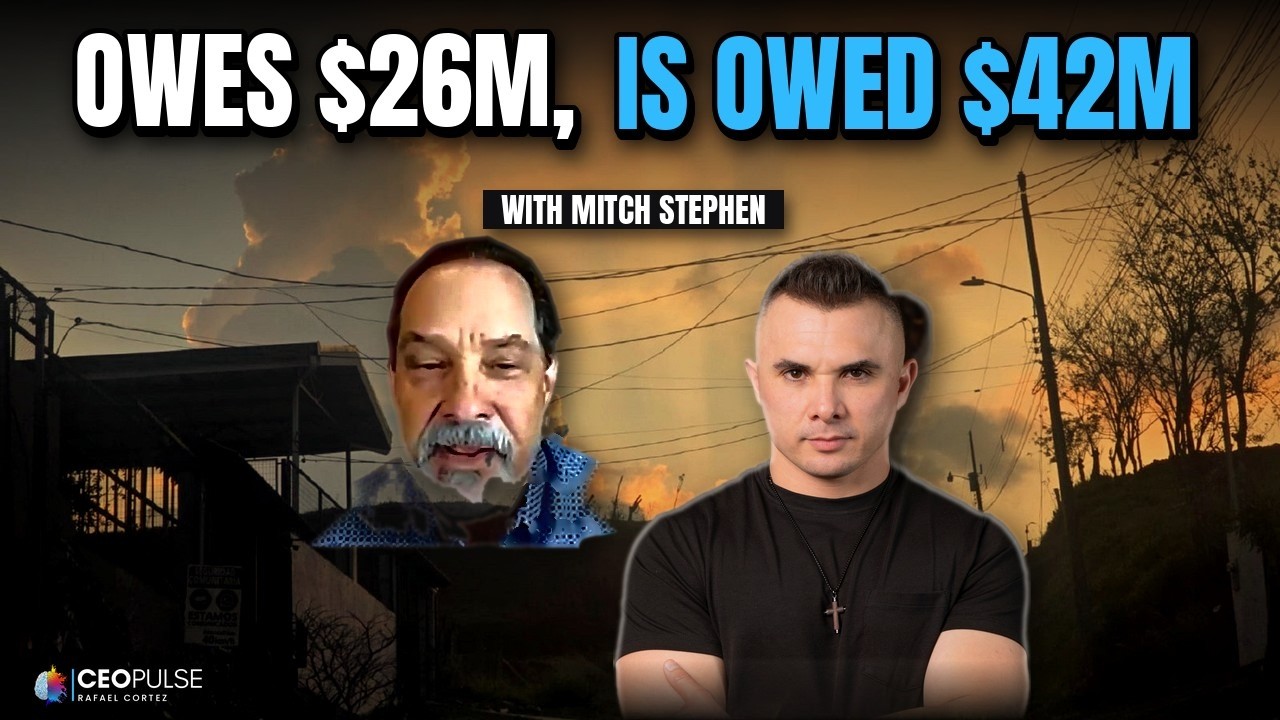
In this CEO Pulse Podcast interview, Rafael Cortez talks with Mitch Stephen, a San Antonio investor who has bought more than 2,500 homes. Mitch Stephen explains how he started with no money, his owner finance value formula, why seller financing booms in recessions, how he works with private lenders and why notes must feed forever cash investments.
What you will learn in this episode
- How Mitch Stephen went from a 15 dollar an hour job to more than 2,500 homes
- Why Mitch Stephen says you must pick strategies you can win with no money
- How the owner finance value formula sets a sales price from local rents
- Why owner financing does well in good times and booms in bad times
- How Mitch Stephen structures private lender relationships
- The difference between one time, temporary and forever cash
How does Mitch Stephen make nothing down real estate deals work?
Who is Mitch Stephen?
Rafael Cortez, host of the CEO Pulse Podcast and an Organizational Psychologist, welcomes Mitch Stephen from San Antonio, Texas. Mitch Stephen has invested in real estate for more than 25 years and has purchased over 2,500 homes, actually buying them rather than assigning or double closing, and has fixed, flipped and owner financed along the way.
He is the author of several books, including My Life and a Thousand Houses, 200 plus ways to find bargain properties and a book on owner financing. He says he never intended to write a book. After losing someone very important to him, he started writing to cope and filled 1,200 pages, which became his first book. The bargain properties book came from the question he heard most, how he finds so many deals; it ended up with 215 ways.
How did Mitch Stephen get started with no money?
At 23, Mitch Stephen read Nothing Down by Robert Allen, which suggested you do not need money to get rich in real estate. That was perfect, he says, because he had nothing. His message to listeners: if you think it takes money to make money, you will never get there. If you do not have money, pick strategies you can win with no money, and wholesaling and assigning contracts is one of the most obvious.
He bought his own place and a couple of rentals but did not go full time until 34, quitting in March 1996. Without a college degree he felt capped at about 15 or 16 dollars an hour no matter how hard he worked. So he made a private pact never to take a job again.
Keeping your mind
A friend who had been a prisoner of war after the Bay of Pigs once told him the mind is the most powerful thing in the world and the human body is the most adaptable. If you keep your mind, the body figures everything out. Mitch Stephen applied that by taking a job completely off the table. His first weeks were rough, but he worked up to 15, then 25, 50 and 100 dollars an hour, keeping every raise. Asked what makes a pact stick, he says your enough meter has to be pegged so deep that you are not taking it anymore.
Rafael Cortez notes that betting on yourself puts you in survival mode and makes every conversation more focused. Mitch Stephen says he graduated from the street, and Rafael Cortez, who has two degrees in psychology, shares how he let his young son learn about a bonfire's heat from a safe distance instead of only hearing warnings.
What is Mitch Stephen's owner finance strategy?
Mitch Stephen has spent 27 years in one niche: buying houses with other people's money and selling them with owner financing. He buys at about 50 cents on the dollar and sells at roughly twice that, partly because the house is worth it and partly because he is offering financing. He compares it to a sofa bought at a high price because the payment terms made it affordable. He goes up to 65 percent of the owner finance value and says he averages about 58 percent.
His buyers are renters who would rather pay the same monthly amount to own. They often lack good credit or any credit, so the separator is the down payment, ideally 10 percent or more. He does not push for 20 percent because buyers soon add fences, patios and landscaping, and appreciation adds more equity that keeps them committed.
How does the owner finance value formula work?
Mitch Stephen created what he calls the OFV, or owner finance value. Start with average neighborhood rent, which is easier to find than comps. Subtract monthly taxes plus monthly insurance, multiply by 115, then add 12 percent. With 1,000 dollars in rent, 100 in taxes and 50 in insurance, he gets 850 times 115, about 98,000 after rounding, plus 12 percent for an owner finance value of about 110,000 dollars.
He adds 12 percent instead of 10 because he always wants more than the minimum down payment. He notes that today home prices have risen faster than rents, so comps can come in above the rent formula.
Why does owner financing boom during a recession?
Mitch Stephen explains that when banks stop lending, home prices drop because most people cannot pay cash, yet rents rise because everyone becomes a renter. In one neighborhood, houses that sold for 57,000 to 59,000 before the recession were selling for 27,000 in cash sales. His rent formula still supported 59,000, so he bought at 27,000 and listed at 59,000 with 6,000 down. Because rents were rising, his sales prices were rising too.
He says the strategy does well in good times and booms in bad times. On regulation, his answer is simple: hire a licensed residential mortgage loan originator, have them explain what your closing team must do to conform, and do it.
The mistake that changed his business
During the recession about a third of Mitch Stephen's roughly 100 house portfolio went into foreclosure, and he bought a house a day for 45 days while wearing both the acquisition and sales hats. With around 70 vacant houses he got scared and stopped buying. Now he has separate acquisition and sales people and is neither. He adds that you can still go broke by ignoring state and federal rules or by over leveraging, which he watched sink some well known investors.
How does Mitch Stephen work with private lenders?
Mitch Stephen never lets private lenders in above 65 percent of the owner finance value; anything above that comes from his own pocket. He says he has about 26 million dollars in private money at a blended yield of about 8 percent, non recourse and collateral only, with each deal standing on its own. Before a first loan he tells every lender he has two rights: pay as agreed, or hand over the deed. He pays a premium so lenders share the risk of events nobody can control.
He sells his houses on 30 year notes at 10 percent, so he earns a spread on borrowed money and the full rate on the equity, plus the down payment. When banks offer to refinance all of his private money at a lower rate, he only does it in tranches of about a million dollars at a time, then puts those lenders back to work quickly. If he cashed everyone out, he says, they would be gone when the next recession hits.
What is the difference between temporary and forever cash?
Mitch Stephen collects on about 300 notes averaging close to 500 dollars a month in positive cash flow, about 150,000 dollars a month, against roughly 35,000 dollars a month to run his operation. Quoting Jack Bosch's book Forever Cash, he explains that flips and wholesale deals are one time cash, notes are temporary cash because they pay off, and forever cash lasts until you decide it ends.
So he periodically sells or borrows against notes to raise 500,000 to 700,000 dollars and buys storage properties with about 50 percent down. He says the owner finance strategy is not the final step, and he does not bet on appreciation, which he calls a risky business model. Rafael Cortez calls the one time, temporary and forever framework a clean way to see it.
What would Mitch Stephen tell his 17 year old self?
Mitch Stephen would tell his younger self that you do not have to wait for anybody's permission to become an expert at anything. Figure out what you want to do as fast as you can and put in your 10,000 hours. Rafael Cortez thanks him for an instructional and entertaining conversation.
Key takeaways
- Pick strategies you can win with no money. Mitch Stephen points to wholesaling and assigning contracts when you are starting without capital.
- Price from the rents. His owner finance value formula sets a sales price buyers can afford based on neighborhood rent.
- Owner financing booms in bad times. When banks stop lending, prices fall but rents rise, which supports seller financed sales.
- Do not over leverage. Mitch Stephen caps private lenders at 65 percent of the owner finance value.
- Move temporary cash into forever cash. Notes pay off, so he reinvests into long term holdings like storage properties.
Quotes from the conversation
“If you don't have money, you have to pick strategies that you can win at with no money and they're there.”
Mitch Stephen, 6:16
“Betting on appreciation, I think is a risky business model.”
Mitch Stephen, 43:59
“You don't have to wait for anybody's permission to become an expert at anything.”
Mitch Stephen, 53:04
Episode chapters
| 0:00 | Meet Mitch Stephen |
| 1:32 | Why he started writing books |
| 5:29 | Nothing Down and getting started with no money |
| 7:02 | The pact to never take a job again |
| 19:34 | Buying with other people's money and owner financing |
| 22:03 | The owner finance value formula |
| 26:16 | Why owner financing booms in a recession |
| 33:25 | Working with private lenders |
| 44:28 | One time, temporary and forever cash |
| 52:20 | Advice to his 17 year old self |
Who is on this episode?
Mitch Stephen
Mitch Stephen has invested in real estate in San Antonio, Texas for more than 25 years, buying over 2,500 homes and specializing in owner financing. He has written several books on finding bargain properties and owner financing.
About the host: Rafael Cortez
Rafael Cortez is the host of the CEO Pulse Podcast, an Organizational Psychologist and a real estate broker and investor based in Phoenix, Arizona. Raised in Yuma, Arizona, he became one of the youngest firefighters in Yuma County at 19 and launched his first business at 21. He has been involved in more than 1,300 real estate deals since 2009 and mentors entrepreneurs through the L.E.S.S. Business philosophy: Lean, Effective, Strategic, Simple. Rafael is the founder of CEO Pulse, Pulse Realty and Pulse Capital and the creator of REI Pulse CRM, and he mentors wholesalers in group and 1 on 1 settings. Read Rafael Cortez’s full bio.
Questions and answers
Who is Mitch Stephen?
Mitch Stephen is a San Antonio real estate investor who has purchased more than 2,500 homes over 25 plus years. He tells Rafael Cortez he specializes in buying with other people's money and selling with owner financing.
What is the owner finance value formula?
Mitch Stephen takes average neighborhood rent, subtracts monthly taxes and insurance, multiplies by 115 and adds 12 percent. The result is the sales price he sets for an owner financed house.
Why does owner financing work well in a recession?
Mitch Stephen says banks stop lending in a recession, so prices drop while rents rise. Because he prices houses from rents, his sales prices can rise while the market falls.
How does Mitch Stephen protect himself with private lenders?
Mitch Stephen keeps private loans at or below 65 percent of the owner finance value and structures them as non recourse, with each deal standing alone. He tells lenders upfront that he can pay as agreed or hand over the deed.
What is forever cash?
Citing Jack Bosch, Mitch Stephen tells Rafael Cortez that flips are one time cash and notes are temporary cash. Forever cash comes from long term holdings, such as his storage properties, that last until you decide they end.
What would Mitch Stephen tell his 17 year old self?
Mitch Stephen says you do not have to wait for anybody's permission to become an expert at anything. He would tell his younger self to decide early and put in 10,000 hours.
Related episodes
Build your business on systems
Rafael Cortez built REI Pulse CRM from the systems he runs his own deals on. See how it works for wholesalers and investors.
Explore REI PulseBrowse every CEO Pulse Podcast episode · About Rafael Cortez · YouTube · Apple Podcasts · Spotify
