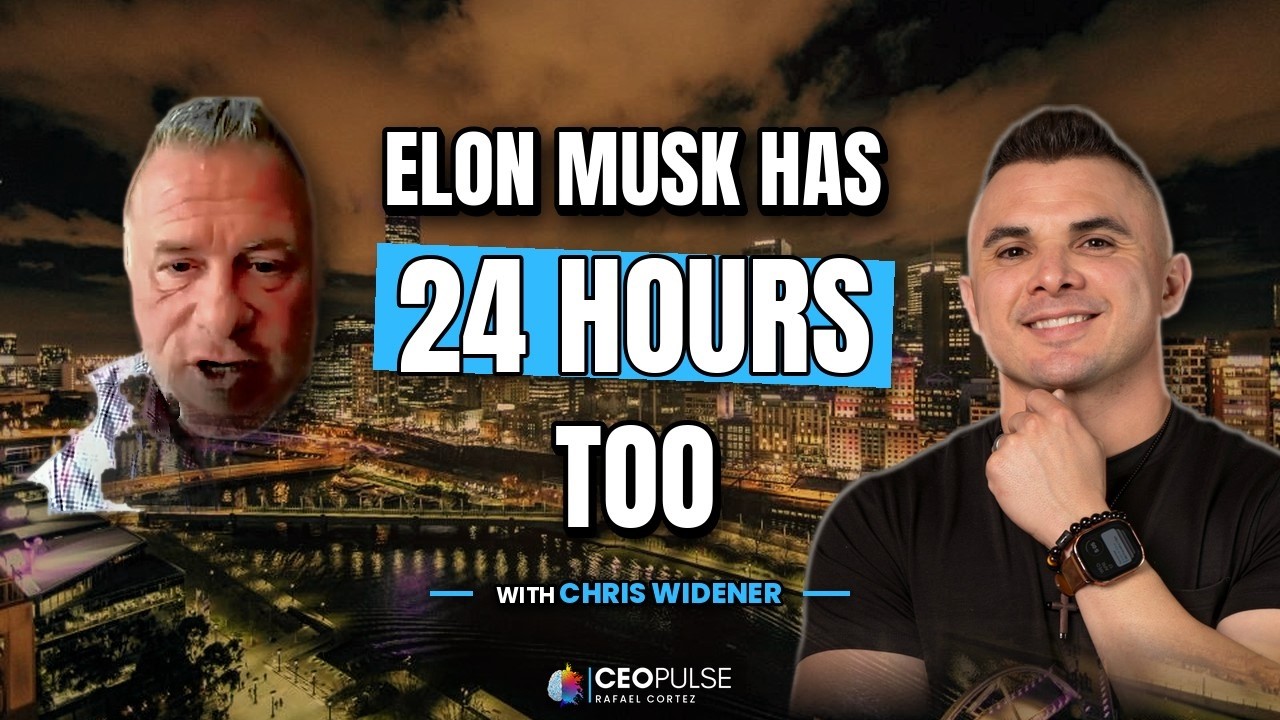

CEO Pulse Podcast | Interview
TL;DR
In this CEO Pulse Podcast interview, Rafael Cortez talks with Chris Widener, author of 22 books and a member of the motivational speakers hall of fame. He explains why success comes down to execution, why leaders are servants, how organizations hit growth barriers, why communication is the top leadership skill, and why you should be a voice, not an echo.
What you will learn in this episode
- How Chris Widener turned a difficult childhood into a speaking career
- Why vision motivates you but execution gets you there
- Why servant leaders earn loyalty that tyrants never do
- How the team vision board idea works
- Why organizations hit natural growth barriers
- Why communication is the number one leadership skill
What does it take to lead and grow an organization?
Who is Chris Widener?
Rafael Cortez, host of the CEO Pulse Podcast and an Organizational Psychologist, welcomes Chris Widener, author of 22 books translated around the world, a member of the motivational speakers hall of fame and named one of the top 50 speakers in the world. Rafael Cortez calls himself a lifelong personal growth learner and is honored to host someone who has worked with the legends of the field.
Chris Widener's upbringing was rough. His father died when he was four, he lived in 28 homes, attended 11 schools and was in constant trouble as a young teen. Borrowing a Zig Ziglar joke, he says he graduated in the part of the class that made the rest possible: 149th out of 172. He barely got into college, graduated and started speaking. He later wrote with John Maxwell, worked with Jim Rohn for the last seven years of Rohn's life and coauthored his last book, The 12 Pillars, and hosted a television show with Zig Ziglar. Much of his speaking centers on his book The Art of Influence.
Do grades predict success?
Chris Widener says nobody should judge potential by grades. At a conference, he joked to a successful business owner in the back row that the A students sit in front; she replied that A students often end up working for C students. He tested well but was bored in school, and the skills that earn good grades are not always the skills of a successful entrepreneur.
So how did he get from struggle to success? The same way everyone does: you get tired of where you are, decide what life you want, figure out how to get it and then decide whether you will do it. His life turned around the summer before his senior year, when a youth minister took him under his wing and became the male role model he lacked. After that, he says, you set your agenda and strategy, and success is really just about execution.
Vision and the mundane
Chris Widener is often quoted for saying that vision is the spectacular that motivates you to do the mundane. The big vision might be a company, a home or a car, but the boring daily work decides whether you build it. Steve Jobs and Bill Gates outworked almost everyone, and giant companies are rarely built part time. Rafael Cortez describes vision as the map, purpose as the fuel and action as the vehicle; you need all three.
Why should leaders be servants?
Chris Widener believes leaders are servants who place the group's benefit above their own. Servant leaders earn loyalty, and people stick with them through hard times, while people tolerate a tyrant only while the money flows. He cites Zig Ziglar: you can have everything you want in life if you help enough other people get what they want. He points to Lee Iacocca, who took a 1 dollar salary when he set out to turn Chrysler around. It was symbolic, since his stock compensation paid only if he succeeded, but it spoke volumes to the line workers.
Rafael Cortez sees his own success as a byproduct of his team's success. If he focuses on the income goal of his director of operations, his own goal is met. Chris Widener adds a twist on vision boards: ask your top three to five people to create a vision board of what they want, and hang those on your wall. Help them get it, and you will get what you want. Rafael Cortez shares his own version, a top three personal priorities segment in his weekly management meetings, where team members name goals such as buying a house. Over months, those big challenges became so routine they felt boring, which shows how much his people had grown.
Why do organizations hit growth barriers?
Chris Widener spent years as both a pastor and a speaker. As a church planter he started a church in Issaquah, Washington, with no salary, then trained pastors to open more, which he jokes was franchising. During the week he spoke on leadership at companies like Microsoft and Harvard Business School. He studied John Maxwell's work early and later wrote with him. In 2002 he moved to writing and speaking full time.
The church world taught him that organizations grow through structure and execution, not because the message is better. Studies of church growth found natural barriers at certain sizes, and businesses face the same barriers, with decisions about cash flow, debt and hiring that determine whether they stay small. Rafael Cortez shares that he is building a model of the stages of business, each with its own priorities and challenges.
Choosing your lane
Chris Widener uses a sandwich shop that maxes out its capacity: the owner can stay and enjoy a great business or open another location. A beloved family burger chain in Seattle has six or seven locations by choice, while McDonald's has tens of thousands. Neither is right or wrong. He capped his own speaking at about 70 events a year so he could be home with his kids, earning less than friends who traveled more. Rafael Cortez calls it life by design.
What skills do great leaders need?
Chris Widener believes some people have natural leadership advantages, but the difference between the successful and the unsuccessful is what you do with what you have. He points to Chris Gardner, whose story became The Pursuit of Happyness, who went from homeless to stockbroker after simply asking a man what he did for a living. Character traits such as integrity and honesty outnumber skills, but the number one skill is communication. He builds it on Aristotle's ethos, pathos and logos: ethics as the foundation, then logic and passion. You cannot cast a vision through a spreadsheet. Rafael Cortez adds that preparing to communicate exposes gaps in his own thinking.
We do not manage time, Chris Widener says; we manage ourselves while time passes. Everyone has 24 hours. One client wondered why he was unproductive and was spending about four hours a day on video games at work. Growth is a choice too: a network marketing leader he works with could never have imagined speaking to 30,000 people, but she chose to grow into it.
The fear of success
At 14, Chris Widener tried to sell self watering flower pots for a family acquaintance and landed a regional home center that wanted thousands of them, around 23,000 pots in a year. The man who held the license was so frightened that he gave up the rights. Many people, Chris Widener says, are more afraid of success than failure. Rafael Cortez agrees, because success implies change and constant growth. Asked what he would tell his 17 year old self, Chris Widener shares the best advice he ever got: be a voice, not an echo. His friend Mark Sanborn says the first step to being a thought leader is to think.
Key takeaways
- Success is execution. Chris Widener says many people have a vision and a plan, but execution decides results.
- Lead as a servant. Putting your team first builds loyalty through hard times.
- Help your people win. Their goals on your wall keep your success tied to theirs.
- Communication comes first. Build on ethics, then add logic and passion.
- Be a voice, not an echo. Think for yourself instead of repeating others.
Quotes from the conversation
“Success is really just about execution.”
Chris Widener, 6:56
“Vision is the spectacular that motivates you to do the mundane.”
Chris Widener, 7:50
“Be a voice, not an echo.”
Chris Widener, 45:58
Episode chapters
| 0:00 | Welcome Chris Widener |
| 0:46 | A difficult childhood and a speaking career |
| 3:55 | Why grades do not predict success |
| 5:36 | Deciding to change and the power of execution |
| 10:17 | Servant leadership |
| 15:14 | Your team's vision boards |
| 18:23 | From church planter to leadership speaker |
| 23:10 | Growth barriers and choosing your lane |
| 31:56 | Communication, the top leadership skill |
| 40:33 | The fear of success |
Who is on this episode?
Chris Widener
Chris Widener is a leadership speaker and author of 22 books, including The Art of Influence, and coauthor of The 12 Pillars with Jim Rohn. A member of the motivational speakers hall of fame, he has worked with John Maxwell, Jim Rohn and Zig Ziglar and helps leaders grow.
About the host: Rafael Cortez
Rafael Cortez is the host of the CEO Pulse Podcast, an Organizational Psychologist and a real estate broker and investor based in Phoenix, Arizona. Raised in Yuma, Arizona, he became one of the youngest firefighters in Yuma County at 19 and launched his first business at 21. He has been involved in more than 1,300 real estate deals since 2009 and mentors entrepreneurs through the L.E.S.S. Business philosophy: Lean, Effective, Strategic, Simple. Rafael is the founder of CEO Pulse, Pulse Realty and Pulse Capital and the creator of REI Pulse CRM, and he mentors wholesalers in group and 1 on 1 settings. Read Rafael Cortez’s full bio.
Questions and answers
Who is Chris Widener?
Chris Widener is a leadership speaker and author of 22 books and a member of the motivational speakers hall of fame. He tells Rafael Cortez he worked with John Maxwell, Jim Rohn and Zig Ziglar.
What does vision is the spectacular that motivates you to do the mundane mean?
A big vision gives you the reason to do boring daily work. Chris Widener says that daily execution, not the vision itself, determines whether you get there.
What is servant leadership?
It means putting the group's needs ahead of your own. Chris Widener says servant leaders earn loyalty that lasts through hard times, while people leave tyrants when things get tough.
What is the team vision board idea?
Chris Widener suggests asking your top people to create vision boards of their goals and hanging them on your wall. Helping them reach those goals helps you reach yours.
What is the most important leadership skill?
Chris Widener says communication, built on ethics and delivered with logic and passion. Rafael Cortez adds that preparing to communicate clarifies his own thinking.
What would Chris Widener tell his 17 year old self?
Chris Widener would share the best advice he ever got: be a voice, not an echo. He says real thought leaders think for themselves.
Related episodes
Build your business on systems
Rafael Cortez built REI Pulse CRM from the systems he runs his own deals on. See how it works for wholesalers and investors.
Explore REI PulseBrowse every CEO Pulse Podcast episode · About Rafael Cortez · YouTube · Apple Podcasts · Spotify
