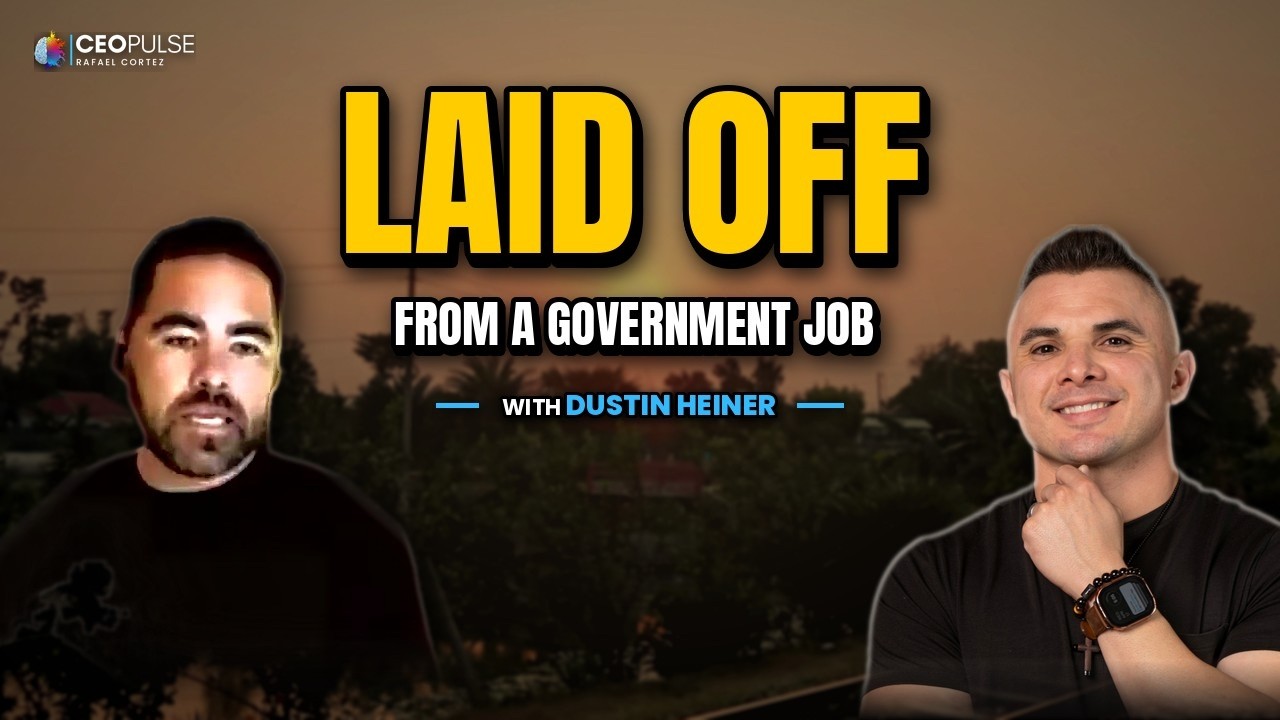

CEO Pulse Podcast | Interview
TL;DR
In this CEO Pulse Podcast interview, Rafael Cortez talks with Dustin Heiner, founder of Master Passive Income, who became successfully unemployed at 37 through rental properties. Dustin Heiner explains how a layoff notice changed his identity, why every business should serve more people, the simple rental math he uses and why delayed gratification pays off.
What you will learn in this episode
- How a layoff notice made Dustin Heiner decide to become an investor
- Why your value is greater than what any boss will pay you
- Why serving more people is the key to every business
- The simple addition and subtraction behind rental cash flow
- Why delayed gratification beats instant gratification in real estate
- Why persistence and problem solving define entrepreneurs
How do rental properties create real freedom from a job?
Who is Dustin Heiner?
Rafael Cortez, host of the CEO Pulse Podcast and an Organizational Psychologist, welcomes Dustin Heiner, founder of Master Passive Income. Dustin Heiner has invested in rental properties since 2006, focusing on single family homes and properties of four units or fewer, and he quit his job at 37. When people asked if he was retiring, he told them he loves working; he is successfully unemployed.
Long before real estate, Dustin Heiner built a web design company, a skateboard manufacturing business, a convenience store and a pizzeria while working a job. Real estate turned out to be the easiest way to make the most money with the least work. Each rental producing about 250 dollars a month adds 3,000 dollars a year, so 10 properties add 30,000 dollars and 20 add 60,000 dollars a year. He could have quit two or three years earlier, but the steady paycheck was hard to leave.
How did a layoff notice change Dustin Heiner's life?
Dustin Heiner, a father of four, was working in IT for a county government in California. About a week after returning from paternity leave for his fourth daughter, he got a Friday afternoon call to come to the top boss's office. The walk down that hallway felt like his feet were lead bricks. He wondered whether he had wasted his life working for someone else and whether he was failing as a provider. His boss handed him a layoff notice.
Sitting back at his desk, Dustin Heiner decided two things: provide for his family right away, and never let this happen again. He quickly moved to another department, the Sheriff's Office. From that day on, with only one or two properties, he told everyone he was an investor. A boss pays you just enough to keep you working and keep you from quitting, he says, so you are worth far more than anyone will pay you. Five or six years later, he walked into his new boss's office and quit because he could. The two mile walk to his car felt like walking on clouds.
The mindset shift
His first paycheck, pushing carts at Walmart in Fresno, showed him how little was left after deductions. His dad and stepdad both owned businesses. Reading Rich Dad Poor Dad changed how he thought about money: you can work once and get paid over and over. Every business he builds now has to be passive income, with people hired to run it. Rafael Cortez describes the progression from employee to self employed to business owner, where systems, strategy and team create income that does not need you in the business every day.
Why is serving more people the key to every business?
The ultimate key, Dustin Heiner says, is serving more people. In real estate he buys good houses, fixes them up and rents them at affordable prices to people who do not want or cannot buy a home; some produce 250 dollars a month and others up to 800 dollars. Through Master Passive Income he shows people how to invest anywhere in the country, and students tell him they made back far more than they paid. He also built a fitness business, Fitness Forge, around his passion for Olympic lifting.
To start a business, look at what you are good at, what you have experience in and what you enjoy, then find the market and build a business to fit it. People kept asking him about real estate and then about fitness, which showed him the need. Rafael Cortez adds that in the digital age there are programs on almost anything, so the difference is taking action.
If he had to start over
Dustin Heiner would first build an online business, such as a membership with a course or two, a YouTube channel or a podcast, to generate income. Second, he would save every penny he does not need to live on and buy one rental property. The math is addition and subtraction: add up taxes, insurance, property management and other expenses, then subtract from rent. A home renting for 1,300 dollars with 1,000 dollars in expenses produces 300 dollars a month. Today he runs four income producing businesses. His 30 plus properties take about 30 minutes a month, and Master Passive Income takes five to 10 hours a month.
Why does delayed gratification pay off?
Rafael Cortez recalls a former IBM software professional who said he made his cookies somewhere else and parked his cookies in real estate. Dustin Heiner loves delayed gratification because the payoff is so much bigger. The first property takes the longest, and each one after comes faster. One student bought his first property in December 2019 and in about 18 months owned eight duplexes, 16 units, producing close to 4,000 dollars a month. About two years in, he had 22 units and five to six thousand dollars a month.
Rafael Cortez adds that as you pay down a mortgage, cash flow grows; his team looks for at least 300 dollars a month on buy and hold deals. Dustin Heiner says rents on homes he bought in 2006 and 2007 have doubled, so properties he underwrote at 250 dollars now bring 500 or 600 dollars.
Ready for the next correction
At the time of this conversation, Dustin Heiner expected a market correction and was saving to buy, because in 2007 he wished he had more money to invest. Even in a seller's market, he says investors who know how to find and negotiate deals can still buy well, and when people lose homes he can serve them with a good place to live. Rafael Cortez calls that a solution driven mentality rather than a money driven one.
Why do entrepreneurs need persistence?
Rafael Cortez says building a business is not rocket science, though it takes rejection, tenacity, grit and hours, and things make sense once you take the first step. Dustin Heiner adds persistence: you will get knocked down, and entrepreneurs are problem solvers who push through. He did many things wrong when he started investing, fixed each problem and now runs a well oiled machine.
Asked what he would tell his 17 year old self, Dustin Heiner says find passive income much sooner, so your business is not just another job. When you get knocked down, get back up, and find someone who has already done it and ask how they did it.
Key takeaways
- Identity comes first. Dustin Heiner called himself an investor long before most of his income came from investing.
- Serve more people. Every good business solves a need for as many people as possible.
- Keep the math simple. Rent minus expenses equals your monthly passive income.
- Delay gratification. Holding properties grows cash flow as rents rise and loans are paid down.
- Persist and solve. Entrepreneurs push through problems and build better systems.
Quotes from the conversation
“I am successfully unemployed.”
Dustin Heiner, 1:47
“Here is the ultimate key, serving more people.”
Dustin Heiner, 15:03
“I personally love delayed gratification.”
Dustin Heiner, 24:53
Episode chapters
| 0:00 | Welcome Dustin Heiner |
| 3:05 | The layoff that changed everything |
| 7:00 | Deciding to become an investor |
| 11:04 | From paychecks to passive income |
| 14:13 | Serving more people |
| 19:43 | How he would start over |
| 21:26 | The simple rental math |
| 24:34 | Delayed gratification |
| 27:43 | Getting ready for a correction |
| 31:38 | Persistence and problem solving |
Who is on this episode?
Dustin Heiner
Dustin Heiner is a rental property investor and the founder of Master Passive Income. He has invested since 2006, owns 30 plus rental properties and left his county government IT job at 37.
About the host: Rafael Cortez
Rafael Cortez is the host of the CEO Pulse Podcast, an Organizational Psychologist and a real estate broker and investor based in Phoenix, Arizona. Raised in Yuma, Arizona, he became one of the youngest firefighters in Yuma County at 19 and launched his first business at 21. He has been involved in more than 1,300 real estate deals since 2009 and mentors entrepreneurs through the L.E.S.S. Business philosophy: Lean, Effective, Strategic, Simple. Rafael is the founder of CEO Pulse, Pulse Realty and Pulse Capital and the creator of REI Pulse CRM, and he mentors wholesalers in group and 1 on 1 settings. Read Rafael Cortez’s full bio.
Questions and answers
Who is Dustin Heiner?
Dustin Heiner is the founder of Master Passive Income and a rental property investor since 2006. He tells Rafael Cortez he quit his job at 37 and calls himself successfully unemployed.
How did Dustin Heiner leave his job?
After a layoff notice, he moved to another department and began calling himself an investor. Dustin Heiner kept buying rentals and quit about five or six years later when passive income covered his family's needs.
How do you calculate rental property cash flow?
Add up expenses like taxes, insurance and property management, then subtract them from the rent. Dustin Heiner gives the example of 1,300 dollars in rent and 1,000 dollars in expenses, which leaves 300 dollars a month.
Why does Dustin Heiner focus on serving people?
He says serving more people is the key to every business. Dustin Heiner provides good, affordable rentals and shows students how to invest, and both create income.
Why does delayed gratification matter in real estate?
Each property gets easier to buy and cash flow grows over time. Dustin Heiner says rents on homes he bought in 2006 and 2007 have roughly doubled.
What would Dustin Heiner tell his 17 year old self?
Find passive income much sooner and be persistent when you get knocked down. He also tells Rafael Cortez to find someone who has done it and ask how.
Related episodes
Build your business on systems
Rafael Cortez built REI Pulse CRM from the systems he runs his own deals on. See how it works for wholesalers and investors.
Explore REI PulseBrowse every CEO Pulse Podcast episode · About Rafael Cortez · YouTube · Apple Podcasts · Spotify
