
CEO Pulse Podcast | Interview
TL;DR
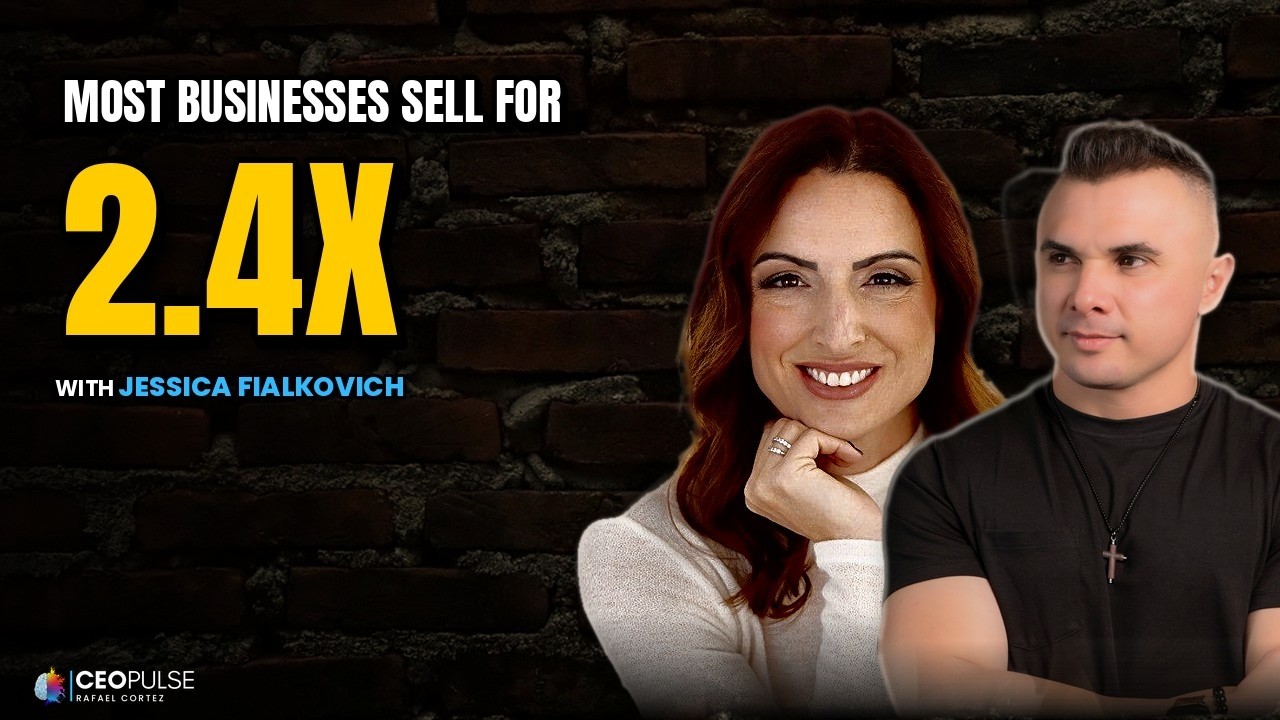
In this CEO Pulse Podcast interview, Rafael Cortez talks with Jessica Fialkovich, founder of Exit Factor and a business broker, about buying an existing business instead of starting from scratch. Jessica Fialkovich explains how small businesses are valued, the ideal buy box, SBA and seller financing, the first steps for buyers and due diligence.
What you will learn in this episode
- How Jessica Fialkovich went from a corporate layoff to a wine business and a brokerage
- How small businesses are valued as a multiple of EBITDA
- Why one to four times earnings is the ideal buy box
- How SBA loans, community lenders and seller notes fund acquisitions
- The first three steps to buying a business
- Why an asset purchase and a transactional attorney protect buyers
Why can buying a business beat starting one from scratch?
Who is Jessica Fialkovich?
Rafael Cortez, host of the CEO Pulse Podcast and an Organizational Psychologist, welcomes Jessica Fialkovich, founder of Exit Factor, a business brokerage and consulting firm with multiple locations. She has built eight businesses, holds interests in five and has helped people buy and sell companies for about eight years. Rafael Cortez often advocates buying a business that is already in place rather than doing the whole startup process.
Jessica Fialkovich was not the kid selling lemonade. She went the corporate route, working for NHL and NFL teams and then corporate real estate development. In the 2008 and 2009 recession, her job was cut by someone in New York who did not know who she was, and she realized the best safety is to create something of your own.
A bootstrapped wine business and a well timed exit
At 25, Jessica Fialkovich and her now husband copied a friend's luxury wine retail concept in a new location. They bootstrapped it with their corporate severance and supplier terms, and found that starting in a recession helped, because vendors were eager for a new buyer. Their biggest profit center became selling collector wines priced from 500 to 25,000 dollars a bottle online across the USA and Canada. When Gary Vaynerchuk's Wine Library helped bring online wine sales to the mainstream, a price war followed. Because they sold the same product as others, they exited after about 30 months, before margins and EBITDA fell. The lesson: watch industry trends and be realistic.
How is a small business valued?
Exit Factor has a consulting division that prepares people to buy and sell and a brokerage division that handles transactions. Every company, Jessica Fialkovich explains, is valued as a multiple of earnings or revenue, and revenue multiples are much lower. Earnings usually means EBITDA, earnings before interest, taxes, depreciation and amortization. Multiples range from one to 10 depending on industry, the quantity of earnings and the quality of earnings, meaning what makes the company special. Brokers, investment bankers and business bankers share a private database of comparable sales, much like comps for a house.
The ideal buy box
Businesses under 10 million dollars in revenue sell for about 2.4 times earnings on average, with the owner's salary added back. Jessica Fialkovich says the ideal buy box is one to four times that number, which also keeps you financeable. Before you buy, make sure your skills match what the owner does or add value. Baby boomers own about 55% to 60% of small businesses, and in 2019, 42% of her firm's transactions involved boomer sellers. Many of these businesses need better marketing, so more marketing experts are buying them to grow and exit. Rafael Cortez adds that if you dislike the work, you will burn out fast.
How do you finance a business purchase?
Rafael Cortez shares that he sold a business in 2014 with seller financing, including a down payment, a two year balloon and a six month transition, and later wished he had kept 5% to 10% of the equity. Jessica Fialkovich explains that most small business buyers do not want the seller to keep equity, and with SBA financing the seller can only stay on as a consultant for up to a year.
She describes three buckets. SBA loans come from business banks, with the SBA backing up to 90% of the loan for acquisitions at the time, terms of five to 10 years and 10% to 30% down. For deals under about 250,000 dollars, community development financial institutions offer loans from about 15,000 dollars up to a quarter million. Almost every deal now includes seller financing, as a note or an earnout. Banks often require about a 10% seller note, which can cut a 30% down payment to 20%, and it keeps the seller reachable after closing. About 60% to 70% of her deals combine buyer cash, a seller note and SBA financing. There are thousands of ways to structure a deal.
What mindset does it take to own multiple businesses?
Leaving corporate meant realizing no paycheck comes unless she gets out of bed and goes to work. That was daunting, then freeing. The second lesson: it is all about sales. Many entrepreneurs try to perfect a product before launch, but you need revenue in the door, so she invested in sales training. Third, start small. The wine store began with selling one case at a time and grew to selling bottles priced like nice cars. Long term targets matter, but so do the daily activities that keep you in business.
Rafael Cortez describes the priorities of a level one company: revenue first, then process, then people, because without revenue the doors close and without a process people do not know what to do. Jessica Fialkovich agrees; 200,000 Instagram followers mean little if they do not produce revenue. Rafael Cortez adds that when you buy a business, you also buy its mindset, talent and human capital.
What are the first steps to buying a business?
First, Jessica Fialkovich says, educate yourself so you know what to expect; some brokers will not work with buyers who do not understand the process. Second, window shop listings on marketplaces such as BizBuySell by industry and market to see earnings and asking prices. Third, know what you can afford: plan on 10% to 30% down with financing or 50% to 60% cash without it. Keep about three months of working capital, or six to 12 months for businesses with slow receivables such as government contracts; banks may include working capital in the loan.
Protect yourself in due diligence
Jessica Fialkovich recommends an asset purchase through a new entity rather than buying the seller's stock, which creates a wall between you and most of the seller's liabilities, though taxes can follow the assets. Hire an attorney who knows small business transactions to run lien searches and build protections into the contract, because something unexpected will come up after closing. Asked what she would tell her 17 year old self, she says be more flexible about your vision of the future, because it took a recession to knock her off a path she never questioned.
Key takeaways
- Buy instead of build. An existing business can save years of startup headaches when you know what to look for.
- Know the multiple. Small businesses average about 2.4 times earnings, with one to four times as the buy box.
- Stack the financing. Buyer cash, a seller note and SBA financing fund most deals.
- Sales come first. Revenue keeps the doors open before process and people.
- Protect the purchase. Use an asset purchase and a transactional attorney.
Quotes from the conversation
“It's all about sales.”
Jessica Fialkovich, 25:13
“There's literally thousands of ways to put a deal together.”
Jessica Fialkovich, 22:58
“Just be a little bit more flexible in the future.”
Jessica Fialkovich, 41:02
Episode chapters
| 0:00 | Welcome Jessica Fialkovich |
| 2:18 | From corporate layoff to a wine business |
| 5:29 | Exiting at the right time |
| 8:41 | How businesses are valued |
| 11:04 | What to look for when buying |
| 16:39 | Financing a business purchase |
| 23:49 | Control, ownership and sales |
| 29:21 | First three steps to buy |
| 35:46 | Due diligence and protection |
| 40:29 | Be more flexible |
Who is on this episode?
Jessica Fialkovich
Jessica Fialkovich is the founder of Exit Factor, a business brokerage and consulting firm. She became a first time entrepreneur at 25, has built eight businesses and helps people buy and sell small companies.
About the host: Rafael Cortez
Rafael Cortez is the host of the CEO Pulse Podcast, an Organizational Psychologist and a real estate broker and investor based in Phoenix, Arizona. Raised in Yuma, Arizona, he became one of the youngest firefighters in Yuma County at 19 and launched his first business at 21. He has been involved in more than 1,300 real estate deals since 2009 and mentors entrepreneurs through the L.E.S.S. Business philosophy: Lean, Effective, Strategic, Simple. Rafael is the founder of CEO Pulse, Pulse Realty and Pulse Capital and the creator of REI Pulse CRM, and he mentors wholesalers in group and 1 on 1 settings. Read Rafael Cortez’s full bio.
Questions and answers
Who is Jessica Fialkovich?
Jessica Fialkovich is the founder of Exit Factor and a business broker. She tells Rafael Cortez she started her first business at 25 and has built eight businesses.
How is a small business valued?
As a multiple of earnings, usually EBITDA with the owner's salary added back. Jessica Fialkovich says businesses under 10 million dollars in revenue average about 2.4 times earnings.
How can you finance buying a business?
Most deals combine buyer cash, a seller note and an SBA loan. Jessica Fialkovich says community development financial institutions can help with deals under about 250,000 dollars.
What are the first steps to buying a business?
Educate yourself, window shop listings and figure out what you can afford. Jessica Fialkovich suggests planning on 10% to 30% down with financing.
What is an asset purchase?
It means buying a company's assets through your own new entity instead of buying its stock. Jessica Fialkovich says this shields you from most of the seller's liabilities.
What would Jessica Fialkovich tell her 17 year old self?
Be more flexible about your vision of the future. She tells Rafael Cortez a recession knocked her off a path she had never questioned.
Related episodes
Build your business on systems
Rafael Cortez built REI Pulse CRM from the systems he runs his own deals on. See how it works for wholesalers and investors.
Explore REI PulseBrowse every CEO Pulse Podcast episode · About Rafael Cortez · YouTube · Apple Podcasts · Spotify
