
CEO Pulse Podcast | Interview
TL;DR
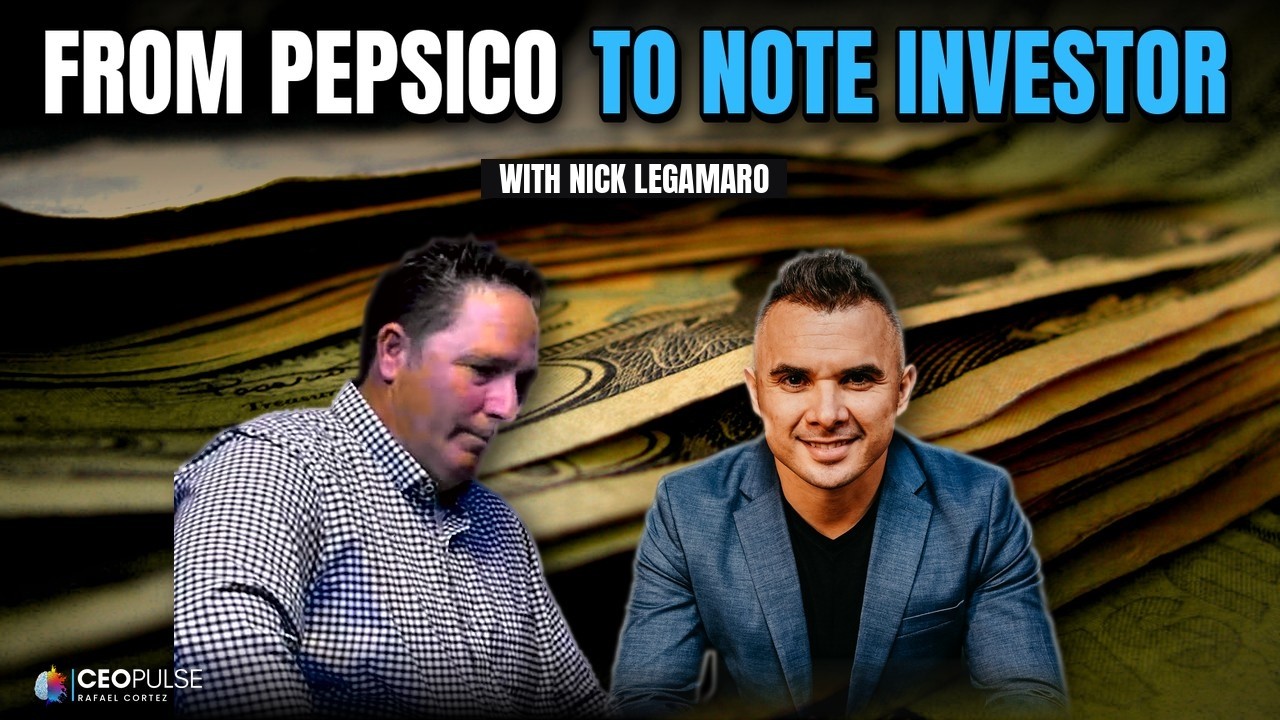
In this CEO Pulse Podcast interview, Rafael Cortez talks with Nick Legamaro, a real estate investor since the early 2000s and owner of Note Pros USA. Nick Legamaro shares his first wholesale deals in Dallas, how he built and sold a seller financing business after 500 transactions, and why execution, systems and borrowed experience cut the learning curve.
What you will learn in this episode
- Why borrowed experience is the fastest way through the learning curve
- How Nick Legamaro closed his first wholesale deals from a single postcard campaign
- How a buyer list in a notebook turned into a seller financing business
- Why he built that company to sell and sold it after about 500 transactions
- Three types of investors who benefit from creating or buying notes
- Why you should price systems and hires in deals, not dollars
How do you build a profitable real estate business faster?
Who is Nick Legamaro?
Rafael Cortez, host of the CEO Pulse Podcast and an Organizational Psychologist, sits down in the studio with his friend Nick Legamaro, a longtime real estate investor and owner of Note Pros USA. The two had just spent a week together at a mastermind in Tampa. Nick Legamaro started in real estate in the early 2000s, doing small fix and flips in the Dallas, Texas market and selling them to buy and hold investors.
Back then, Nick Legamaro says, there were no investor clubs, meetups or educators to learn from, so every mistake was costly. Today investors can learn from people who already made those mistakes. His advice is to find someone you like and can relate to and invest in learning from them, because that is how you get from point A to point B much faster. Rafael Cortez calls this borrowing knowledge: whether it is real estate, fitness or restaurants, someone has already gone through the learning curve.
Why does execution matter more than the strategy?
Nick Legamaro says there are 50 different ways to make money in real estate, and success boils down to execution. He can take almost any program or system and make it profitable if he executes. Every strategy starts with a deal, which is why he loves wholesaling as the foundation of real estate: if you are a wholesaler, go get the contract and figure out buyers later, because you cannot do anything without a contract. Rafael Cortez cites the idea of massive imperfect action, which Tom Krol pushes at Wholesaling Inc, and warns bootstrapped entrepreneurs against analysis paralysis, such as perfecting logos and websites before making offers.
Relinquish control to grow
In the beginning everyone works in the business, like a restaurant owner who cooks, takes orders and buses tables. Nick Legamaro says the failure he sees is that people never shift away from that and never relinquish control. If you do not let go, you cannot get out of your own way.
How did Nick Legamaro get his first wholesale deals?
Nick Legamaro survived the 2008 downturn without being crushed, stepped away from real estate for about two years and came back in 2010 determined to forget what he thought he knew. He chose wholesaling because it had the lowest cost of entry and, in his view, low downside risk with upside potential. He describes himself as a risk taker only after he has made the money: he builds his capital first, pulls the original amount back out and takes bigger swings with the earnings.
One postcard, two deals
Scared and short on money, Nick Legamaro mailed yellow letters and postcards to owners of houses worth $50,000 or less in Dallas. A seller retiring to California called and asked $25,000 for a small tenant occupied house. Driving by, he saw a for sale sign down the street, called the agent, Lydia, and floated about $35,000. Within an hour she had cash buyers outside the house. After her fee, he made about $5,000 on a deal where, he admits, he did almost everything wrong.
A second caller owed about $22,000 on a nicer house. Lydia asked whether her buyer could put $25,000 down and have the rest financed. Nick Legamaro reasoned that with no cost basis, the worst case was getting nothing he did not already have, and he wrote a note at about 5% over five years, terms he says he would never repeat. Over lunch, Lydia opened a notebook holding hundreds of buyers with $10,000 to $100,000 in cash each. That gave him an idea: what if they offered nicer houses with $25,000 down and seller financing for the rest?
How did he build a seller financing business to sell?
Around 2010, Nick Legamaro and a partner built a company around that model to serve hardworking buyers who had been told by banks they could not get a home mortgage. This time he worked on the business instead of in it and built it to sell. After about 500 transactions, they sold the creative financing business in 2018 to a holding company created by a century old chartered bank, which could not originate that type of paper itself.
Rafael Cortez relates to the problem those buyers face. When he owned a transportation company, he could not qualify for a home loan because he was self employed, even with strong bank statements, while his own employees qualified. Nick Legamaro says entrepreneurs paid through dividends or several income channels often look bad on paper, yet many people would put 30% down if they could get a house. Banks, he notes, control rather than own: the property secures the note, so underwriting well limits risk.
Note Pros USA and low default rates
Through Note Pros USA, Nick Legamaro creates, buys and sells notes and shows others how to do the same. Creating notes is not difficult, he says, but it is complex, and investors must follow rules such as Dodd Frank, the SAFE Act and qualified mortgage standards or risk long term exposure. Of more than 700 notes his team created, he counts about 15 that went into default and only three or four that ended in foreclosure, because they qualified borrowers carefully and used options like loan modifications, forbearance and cash for keys first.
Who benefits most from creating or buying notes?
Nick Legamaro names three groups. First, wholesalers ready to move from cash to cash flow: instead of a $20,000 assignment fee, take $10,000 plus a note paying $200 a month and build a portfolio that performs for years. Second, tired landlords, who can sell to an owner occupant with seller financing and stop taking repair calls. As he puts it, nobody calls their bank when the toilet breaks. He prefers being a lien lord rather than a landlord, because if it is good enough for the banks, it is good enough for him. Third, investors with cash, including self directed IRA holders, who can buy notes as an alternative investment with returns that are fairly linear compared with the markets.
Nick Legamaro adds that this side of real estate gets little attention because it is less visual than a television flip, but a flip is a job, while a note portfolio is an asset.
How should you think about systems and hiring?
Rafael Cortez says solopreneurs are really self employed, because the business falls when they step away. Building to sell forces clarity: every process, system and hire is designed so the business runs without you. Nick Legamaro prices everything in deals. If his average wholesale deal is $10,000, that covers eight or nine months of a full time virtual assistant or a custom CRM. Rather than building it himself, he goes and gets one more deal. He cautions against doing this before revenue comes in.
Nick Legamaro credits a job at Pepsi Cola after college for his operations mindset. He ran a profit and loss statement of about $10 million a year, saw how much he produced compared with what he was paid and started thinking like an entrepreneur. His advice to his own children: find something you like to do and figure out how to make money doing it, then bring in people better than you. Rafael Cortez says his biggest lesson from the Tampa mastermind was who not how.
Why keep investing in your education?
Even after more than a thousand transactions, Nick Legamaro still pays for masterminds and calls education the best money he spends. He recently modeled a seller financed flip at $190,000 and sold it at $210,000 on day one, about 10% off his own estimate, because the market had moved. He also admits he assumed seller financing could never work above $200,000 in one market, and that ceiling broke. When in doubt, he asks someone better at it, with no ego involved.
Asked what he would tell his 17 year old self, Nick Legamaro says what he tells his own children: if you want to start a business, now is the time, at any age. Take a chance, start small, find real mentors rather than television shows and choose collaboration over competition. Figure out what you do best and let others do the rest. His own superpower is structuring low, no or negative equity deals. Rafael Cortez adds that the real questions only appear once you take action.
Key takeaways
- Borrow experience. Learning from people who already made the mistakes cuts years off the learning curve.
- Execution beats strategy. Nick Legamaro says almost any real estate system works if you execute, and it all starts with a contract.
- Build it to sell. Designing a business to run without you creates the systems that let it scale.
- Consider cash flow, not just cash. Wholesalers and tired landlords can use seller financed notes to build long term income.
- Price hires in deals. If one deal pays for a VA or a CRM, go get one more deal instead of doing it all yourself.
Quotes from the conversation
“But it really boils down to just execution.”
Nick Legamaro, 2:58
“I wanna be the bank, because if it's good enough for the banks, it's good enough for me”
Nick Legamaro, 22:53
“Find something you like to do and then figure out how to make money doing it”
Nick Legamaro, 35:22
Episode chapters
| 0:00 | Welcome Nick Legamaro |
| 1:36 | Borrowing knowledge and experience |
| 4:39 | Analysis paralysis and letting go of control |
| 6:12 | Surviving 2008 and coming back in 2010 |
| 10:03 | The first postcard deals in Dallas |
| 16:15 | Building a seller financing company to sell |
| 20:54 | Note Pros USA and note defaults |
| 27:11 | Three types of note clients |
| 32:38 | Pricing systems and hires in deals |
| 43:01 | Advice to his younger self |
Who is on this episode?
Nick Legamaro
Nick Legamaro has invested in real estate since the early 2000s, starting in Dallas, Texas. He built and sold a seller financing business after about 500 transactions and now runs Note Pros USA, which creates, buys and sells real estate notes.
About the host: Rafael Cortez
Rafael Cortez is the host of the CEO Pulse Podcast, an Organizational Psychologist and a real estate broker and investor based in Phoenix, Arizona. Raised in Yuma, Arizona, he became one of the youngest firefighters in Yuma County at 19 and launched his first business at 21. He has been involved in more than 1,300 real estate deals since 2009 and mentors entrepreneurs through the L.E.S.S. Business philosophy: Lean, Effective, Strategic, Simple. Rafael is the founder of CEO Pulse, Pulse Realty and Pulse Capital and the creator of REI Pulse CRM, and he mentors wholesalers in group and 1 on 1 settings. Read Rafael Cortez’s full bio.
Questions and answers
Who is Nick Legamaro?
Nick Legamaro is a real estate investor since the early 2000s and owner of Note Pros USA. He tells Rafael Cortez how he built and sold a seller financing business after about 500 transactions.
What is the fastest way to shorten the learning curve in business?
Borrow experience from people who have already done it. Nick Legamaro and Rafael Cortez both recommend investing in mentors, masterminds and education rather than learning everything through costly mistakes.
How did Nick Legamaro start wholesaling?
Nick Legamaro mailed yellow letters and postcards to owners of low priced houses in Dallas in 2010. His first deal netted about $5,000 after he found cash buyers through a local agent within an hour.
Who should consider creating or buying real estate notes?
Nick Legamaro names wholesalers who want cash flow, tired landlords who want to stop managing tenants and investors with cash, including self directed IRA holders. Each can use notes to earn steady returns.
How low were the default rates on Nick Legamaro's notes?
Of more than 700 notes Nick Legamaro's team created, about 15 went into default and only three or four ended in foreclosure. He credits careful borrower qualification and options like loan modifications and cash for keys.
What does Nick Legamaro tell young entrepreneurs?
Nick Legamaro says that if you want to own a business, now is the time at any age. Start small, find real mentors, collaborate instead of competing and focus on what you do best.
Related episodes
Build your business on systems
Rafael Cortez built REI Pulse CRM from the systems he runs his own deals on. See how it works for wholesalers and investors.
Explore REI PulseBrowse every CEO Pulse Podcast episode · About Rafael Cortez · YouTube · Apple Podcasts · Spotify
