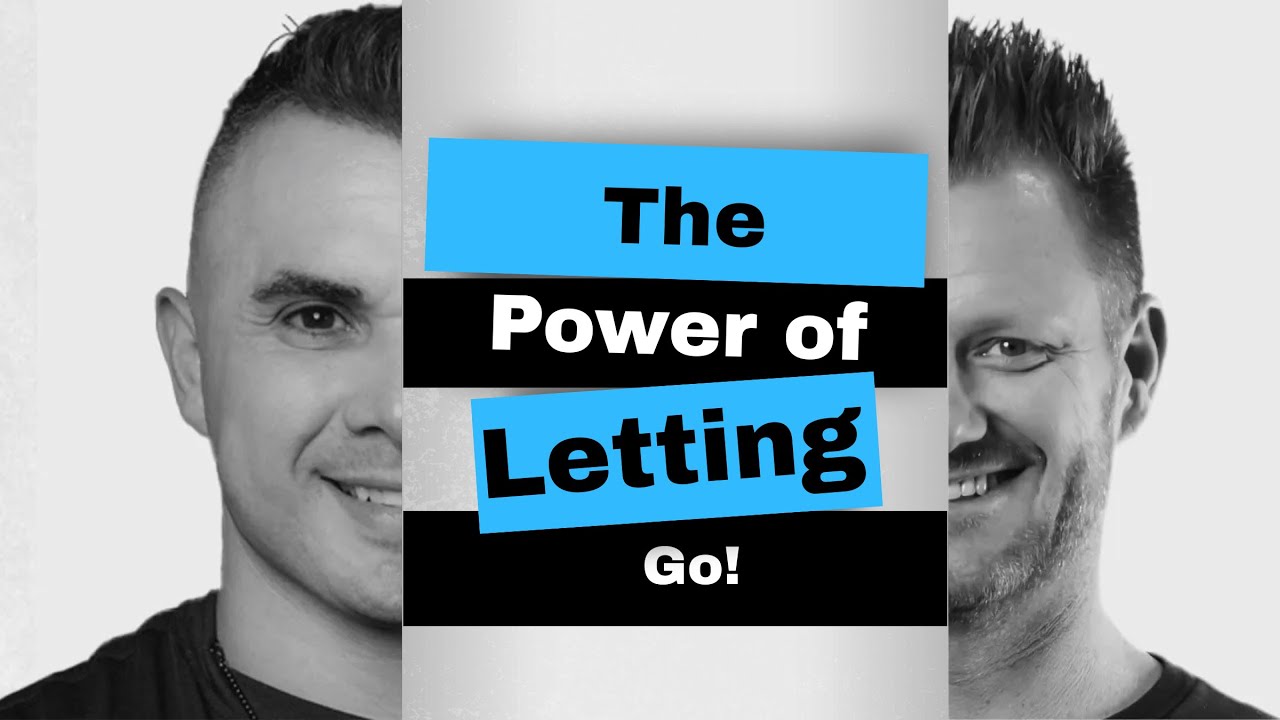

CEO Pulse Podcast | Mindset Monday
TL;DR
In EP 222 of the CEO Pulse Podcast, host Rafael Cortez and Mindset Monday co host Justin Thorstad talk about the practice of letting go of bad habits, old beliefs and even past success. They explain how to tackle the trigger instead of the habit, why there can be no void, and how emotional leverage makes change stick.
What you will learn in this episode
- Why letting go of old habits, beliefs and even past achievements is part of growth
- Why Justin Thorstad says you cannot drag point A with you to point B
- Why change rooted in self love lasts longer than forced obedience
- How Rafael Cortez uses The Power of Habit to tackle the trigger instead of the habit
- A nightly journaling routine to pre plan your response to triggers
- Why there can be no void and how a situation should always hold a solution's hand
- How emotional leverage gives you the push to step into the unknown
How do Rafael Cortez and Justin Thorstad say you can break bad habits?
Why is letting go so important for entrepreneurs?
Rafael Cortez, host of the CEO Pulse Podcast and an Organizational Psychologist, opens this Mindset Monday episode with co host Justin Thorstad on the art and practice of letting go: letting go of old habits, old beliefs and old perceptions. Rafael says many people have the nuts and bolts, the skill set and the talent, a packaged box of amazingness, yet old ways keep them anchored. They prevent growth, success and even forward thinking, because ideas cannot come out when you are stuck in your old ways.
Rafael Cortez adds that the anchor often comes from the bootstrap way of doing things and from the negativity of people around us. It is not always haters. Sometimes it comes from someone who loves you and is simply risk averse. Either way, he says, entrepreneurs have to come to terms with letting go of what does not serve them.
Should you let go of your past successes too?
Justin Thorstad takes it one step further: what about letting go of your successes and achievements? When people succeed, he says, the downside is that they start to identify with it and become complacent. They hit a benchmark, rest on their laurels and stop shooting for more. Comfort sets in, then decay. He sees a start and stop roller coaster in many self employed people, and says to let that go and keep going.
Justin Thorstad calls letting go an emotional intelligence skill. You notice your mind, thoughts, body and feelings. When a negative thought comes up, you catch it and recognize it as your old programming, which is designed to keep you safe in your box. There is only one way to think outside the box, he says, and that is to realize there is no box. You cannot delete old thoughts, but you can make them quieter by focusing on more compelling thoughts and the future version of yourself. Where you place your energy and attention is what grows.
Do you have to kill your old self to grow?
Rafael Cortez asks whether you have to totally let go of the person you were before to grow into a new space. Justin Thorstad says yes. Your personality comes from your belief systems and self image, and it filters your thoughts, feelings and behaviors. That personality creates your personal reality moment by moment. Most people try to change their results while keeping the same personality, and Justin says it never works. You have to define a future version of yourself and start becoming that person now.
Justin Thorstad compares it to going from point A to point B. To get there, you have to let go of point A and stand in the unknown, the space between A and B. Most people try to drag point A with them, and it does not move.
Rafael Cortez admits he has mixed feelings, because killing off your old self sounds like even the good parts go out the window. Justin Thorstad clarifies that he means taking a deep inventory of your recurring themes, keeping the parts that support you and letting go of the ones that sabotage you and hold you back.
Why does change rooted in self love last longer?
Justin Thorstad says he does not mean a forceful, barbarian with a sword approach. He means letting go through love of self: loving yourself enough to understand yourself, pay attention moment by moment and give yourself a chance to evolve and raise your emotional intelligence. That is what creates inner peace, happiness and fulfillment. The forceful method, he says, tends to become forced obedience and obligation. And what you resist persists, so if you hate yourself while trying to change, the pattern continues.
Rafael Cortez says you end up on the same road either way, just for different reasons and with a different energy. When you are friends with the path you are taking, there are fewer battles along the way. Justin Thorstad compares it to a long trip: you would rather travel with someone whose company you enjoy. And you are always taking someone with you, which is you.
How do you break a bad habit by tackling the trigger?
Rafael Cortez says that by the time you decide to let go of something, it has usually been dragged out too long, because the pain of the habit has finally become bigger than the pleasure. He recommends The Power of Habit by Charles Duhigg, which he calls one of the best books on habits he has read, and its key idea: break your reaction to the trigger, not the habit itself.
Rafael Cortez uses smoking as an analogy. The hardest moment to quit is when you are craving it and the box is in front of you, because that is where your mental fortitude and physical will are tested most. The better time is earlier, at the trigger, such as stopping for gas and buying another pack out of habit even though one is already in the car. Your willpower is far more effective on that smaller move.
Rafael Cortez applies the same idea to fitness. If you lack the willpower to go to the gym in the morning, ask why. Maybe you are groggy because you go to bed too late. Then the fix happens the night before: go to bed at 10 instead of midnight and see if the morning changes. If you take one thing from the conversation, he says, take inventory of the triggers that lead to your bad habits, bad thoughts and bad beliefs.
Justin Thorstad notes that Atomic Habits calls the trigger a cue, the start of the cycle. If you notice it in advance, you can choose. He says choice is the only power we have when we are self aware, but many people have gone to sleep and let conditioned ways of thinking and behaving run the show.
Why do you have to decide, and not just try?
Justin Thorstad says quitting something because someone else wants you to, like a spouse asking you to stop smoking, often ends in relapse. Letting go because you love yourself enough to drop something that takes from you is different. Rafael Cortez frames it as forced change versus desired change.
Justin Thorstad points out that the root of decide means to cut off, the same root found in words like homicide and pesticide. A true decision means there is no other outcome. You can make that decision from an elevated place because you want it for your benefit and everyone around you, or from forced obedience. With forced obedience you go back to old ways once you arrive; as Rafael Cortez puts it, you just parked it for a while.
How do you catch the triggers in your thinking?
Rafael Cortez says triggers are not only physical, like diet, fitness and vices. Look at the habits in your thinking process. When do you get pessimistic or demoralized? When do you feel like you are losing momentum or do not have the energy to move forward? He says that happens about 30 times a day for every entrepreneur. You can do something when you see the trigger coming.
Pre plan your response the night before
Justin Thorstad says the hard part is that switching in the moment requires deciding ahead of time what the shift will look like and what you will focus on when you catch yourself. His routine starts the night before. Keep a journal and pen by the nightstand, not your phone or a laptop. Write where you showed up in a big way, where you responded instead of reacted and where you were proud of yourself. Then write where you fell back into conditioning without realizing it was your opportunity to practice. That becomes your focus for tomorrow. It is an inside job, he says, and there is no finish line.
Why can there be no void when you let something go?
Rafael Cortez says letting go takes effort in tandem: you practice dropping the old thing while filling that space with something more productive. He does not believe you can sit and think about a problem hard enough for buttons to click. The issue comes back because nothing new filled the space.
Justin Thorstad calls this a simple truth: there can be no void. You cannot just cut something out. If you do not fill the void intentionally, it fills with something of like kind.
Let go of the emotional charge of judging yourself
Justin Thorstad says the one thing he wishes people would let go of is the emotional charge of judging themselves. Instead of labeling a behavior good, bad, right or wrong, ask one question: is this behavior effective for me to be, do and have what I want? Self judgment makes the behavior the object of your attention, and what you resist persists.
How does Rafael Cortez turn problems into solutions?
Rafael Cortez journals often, and when an issue comes up he never writes the situation by itself. It is always holding a solution's hand. Because of the law of duality, he says, it cannot be a problem if it does not have a solution. Brainstorming keeps him thinking forward instead of anchored to the problem.
Rafael Cortez shares how this works in real estate, where there is a lot of volatility. A big deal heading to closing could get delayed and he would get rattled and carry that emotion through the day. Now he asks: what are three actions I can take right now to move this forward? He sees his team get frustrated the same way, so he lays out the question for them. If there is only one thing to do, they knock it out and move to the next item. Over time, he says, that becomes a habit.
Justin Thorstad adds that attachment to the outcome is what costs you objectivity. If you need the deal to close and it is delayed, you get pulled into blame and negativity. His mantra: if you are not part of the solution, you are the problem. Step back, see the situation for what it truly is, and only then are the solutions available.
How do you let go of labels like I am not a people person?
Rafael Cortez says labels like I am pessimistic or I am not a people person are harder to let go of because they are not tangible. Use the same approach: ask what causes the emotion. If anxiety walking into a networking event is the trigger, invite one person to come with you. He calls it a simple equation: a trigger, a series of steps and a negative outcome. The trigger is where the whole pattern is weakest, so tackle it there.
Justin Thorstad says people want to be more confident or more outgoing, but you either are or you are not. You can be confident in yourself even when you are a beginner at what you are about to do. If you want to be something, decide to be it, and let go of the story that says you are not.
How do you let go of past trauma?
Rafael Cortez raises a harder topic: memories of traumatic events that can throw you off for the rest of the day. Justin Thorstad says trauma is not only what happened, but what happened inside of you, the meaning you made about yourself and the world. Many people are older children in bigger bodies still holding a childhood perspective. Justin shares that he went through a painful childhood experience he kept secret for years and believed it meant he was broken. He reframed it: he was a child with no vote in the matter, and it does not decide who he is.
Justin Thorstad says each time you talk about it from an objective standpoint and a new perspective, it releases some of the energy, because it only grips you while it stays secret. It is simple, he says, but not easy.
Why do new habits feel like a fight at first?
Justin Thorstad says you are already successful at your current habits. Your mind and body run them without conscious effort and produce the same result every time. If you can be that successful at a result you do not like, you will be successful at a new habit if you keep practicing. Rafael Cortez says letting go is a fight for a while, pushing through the I do not feel like it moments. Justin explains why: you have rehearsed the old way so often that it is hardwired, so your mind and body resist when you try something different after decades of conditioning.
Rafael Cortez says it is not a switch you flip overnight. Some people quit something in one day, but he sees that as the exception. Getting to the point where you can truly decide often takes years of working on yourself. Once you build those muscles, the lift gets easier, and once a habit is reinforced it becomes second nature. You will still catch yourself slipping, but now you have a track record of breaking through.
Get emotional leverage on yourself
Justin Thorstad shares a conversation with the founder of Selling Power, which he describes as the longest running periodical for salespeople. Asked what it takes for people to change, the founder said emotional leverage: the pain of staying the same has to be greater than the pain of stepping into the unknown of change. Justin suggests forecasting three, five and 10 years ahead with nothing changed and asking what prices you will pay and what dreams you will not realize. Love yourself enough to step into the unknown, he says, and you will never regret it.
Rafael Cortez closes by saying mindset is not something you learn once. It is a process you keep relearning, because you will forget and old habits will try to take over. The purpose of the series is to help you catch yourself in that space.
Key takeaways
- Let go of past success, not just bad habits. Justin Thorstad says identifying with achievements breeds complacency and the start and stop roller coaster.
- Tackle the trigger, not the habit. Rafael Cortez says willpower works far better at the trigger than at the moment of craving.
- Change from self love, not forced obedience. Justin Thorstad says forced change relapses, while change you choose for yourself lasts.
- There can be no void. Whatever you let go of must be replaced with something productive or it fills with something of like kind.
- Every situation holds a solution's hand. Rafael Cortez asks what three actions he can take right now instead of carrying the emotion all day.
- Emotional leverage drives change. The pain of staying the same has to outweigh the pain of stepping into the unknown.
Quotes from the conversation
“The only power we can exercise is choice.”
Justin Thorstad, 16:47
“There can be no void.”
Justin Thorstad, 21:30
“I won't write the situation by itself, it's always holding a solution's hand.”
Rafael Cortez, 23:06
Episode chapters
| 0:58 | The practice of letting go |
| 2:19 | Letting go of past success |
| 5:32 | Killing off the old personality |
| 11:51 | The Power of Habit and tackling triggers |
| 13:24 | Forced change versus desired change |
| 19:00 | Pre planning your response |
| 21:19 | There can be no void |
| 25:14 | Three actions in a volatile deal |
| 34:38 | Why new habits feel like a fight |
| 40:07 | Emotional leverage |
Who is on this episode?
Justin Thorstad
Justin Thorstad is Rafael Cortez's co host on the Mindset Monday series of the CEO Pulse Podcast. In this episode Justin shares his approach to letting go of old patterns through self awareness, journaling and emotional leverage.
About the host: Rafael Cortez
Rafael Cortez is the host of the CEO Pulse Podcast, an Organizational Psychologist and a real estate broker and investor based in Phoenix, Arizona. Raised in Yuma, Arizona, he became one of the youngest firefighters in Yuma County at 19 and launched his first business at 21. He has been involved in more than 1,300 real estate deals since 2009 and teaches the L.E.S.S. Business philosophy: Lean, Effective, Strategic, Simple. Rafael is the founder of CEO Pulse, Pulse Realty and Pulse Capital and the creator of REI Pulse CRM, and he mentors wholesalers in group and 1 on 1 settings. Read Rafael Cortez’s full bio.
Questions and answers
How do you break a bad habit?
Rafael Cortez says to tackle the trigger instead of the habit itself, an idea from The Power of Habit by Charles Duhigg. Willpower works far better at the trigger than when you are already craving the habit.
Why should you let go of past achievements?
Justin Thorstad says identifying with past success leads to complacency and resting on your laurels. Letting go of it keeps you growing instead of riding a start and stop roller coaster.
Do you have to change your personality to change your results?
Justin Thorstad says yes, because your personality creates your personal reality. You keep the parts that support you, let go of the parts that sabotage you, and start becoming your future self now.
Why does forced change usually fail?
Justin Thorstad says change based on obligation or someone else's wishes tends to relapse, and what you resist persists. Change that comes from loving yourself enough to let something go lasts.
What does there can be no void mean?
Justin Thorstad says you cannot just cut out a habit or belief. If you do not intentionally fill the space with something productive, it fills with something of like kind.
What journaling routine helps you break habits?
Justin Thorstad keeps a journal by the nightstand and writes where he showed up well and where he fell back into old conditioning. That becomes his focus for the next day.
How does Rafael Cortez handle stressful deal setbacks?
Rafael Cortez asks what three actions he can take right now to move the deal forward. Pairing every situation with a solution keeps him and his team from carrying the emotion all day.
Why should you stop judging yourself?
Justin Thorstad says labeling behavior good or bad keeps you focused on it. Instead, ask whether the behavior is effective for you to be, do and have what you want.
Why do new habits feel so hard at first?
Justin Thorstad says old habits are hardwired after years of repetition, so your mind and body resist change. Rafael Cortez says you have to push through until the new habit becomes second nature.
What is emotional leverage?
Justin Thorstad, citing the founder of Selling Power, says emotional leverage is when the pain of staying the same becomes greater than the pain of change. Forecasting where you will be in five or 10 years with nothing changed can create it.
Related episodes
Build your business on systems
Rafael Cortez built REI Pulse CRM from the systems he runs his own deals on. See how it works for wholesalers and investors.
Explore REI PulseBrowse every CEO Pulse Podcast episode · About Rafael Cortez · YouTube · Apple Podcasts · Spotify
