
CEO Pulse Podcast | Interview
TL;DR
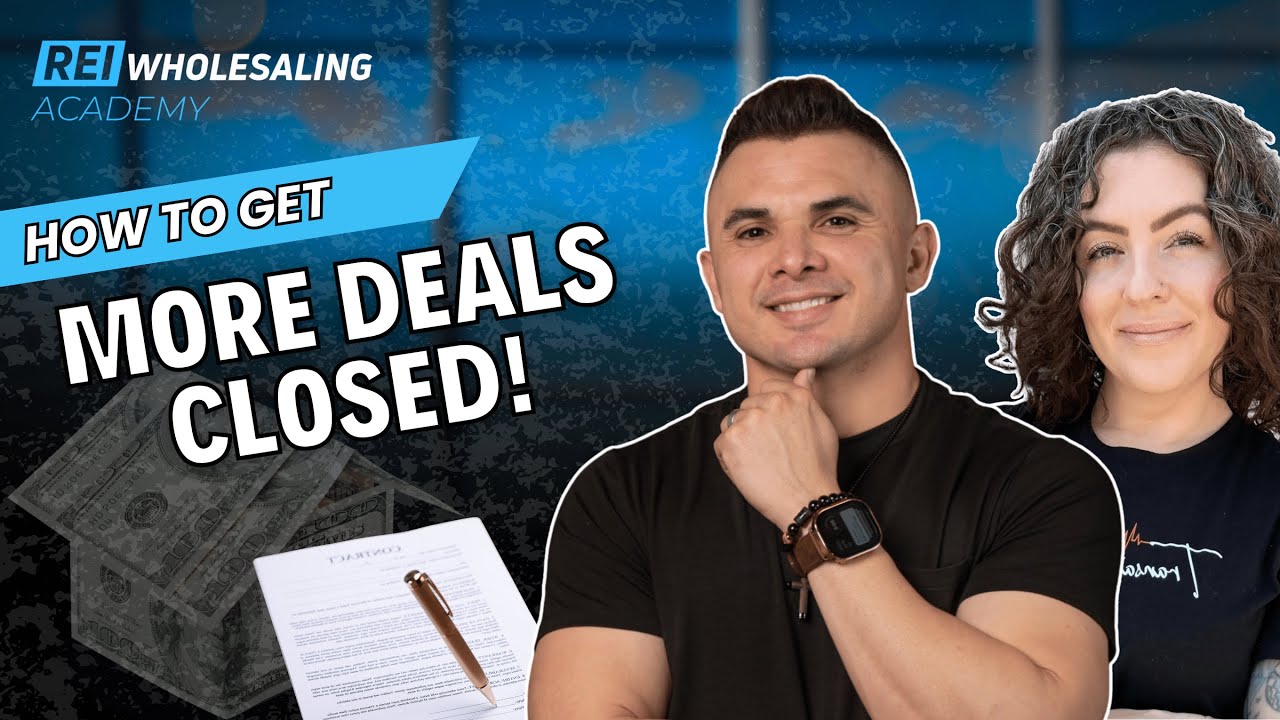
In EP 214 of the CEO Pulse Podcast, Rafael Cortez talks with Kirsten Banks, owner of Transaction Rescue, who spent about 20 years as a closing agent. Kirsten explains when wholesalers should hand off transaction coordination, the three deal killers that never change, how to execute contracts correctly and what to look for in your first TC.
What you will learn in this episode
- Why transaction coordination can make or break a wholesaling business
- When Kirsten Banks says you should hand off your first deal to a transaction coordinator
- The three deal killers that never change: quiet title, probate and seller ghosting or breach
- How acquisitions reps can prepare for probate and title problems during the first call
- Why the right seller name on the contract matters so much
- How edification and live transfers protect deals from seller ghosting
- Kirsten Banks's best practices for transaction coordinators, including a vetted title partner
- What to look for when hiring your first transaction coordinator
What does a real estate transaction coordinator do for a wholesaler?
Who is Kirsten Banks?
Kirsten Banks is the owner of Transaction Rescue, a transaction coordination company that works with real estate wholesalers and investors. Rafael Cortez introduces her as someone who has been part of more than 20,000 transactions over about 22 years in the industry, with experience in dispositions, deal structures and now transaction coordination. Kirsten spent about 20 years as a closing agent in escrow before moving to the investor side.
Rafael Cortez, host of the CEO Pulse Podcast and an Organizational Psychologist, opens by calling transaction coordination one of the least glamorous topics in wholesaling. It rarely gets airtime at conferences or in trainings, yet Rafael says it is one of the things that will make or break a wholesaling business.
The mindset of transaction coordination
Kirsten Banks says most of the attention in wholesaling goes to acquisitions and dispositions. In many operations the disposition rep also handles the TC work, and she believes that bottlenecks the business, because the person has to switch from a sales focus to an administrative focus.
Kirsten Banks says the hardest part of transaction coordination is the mindset. People are frustrated, deadlines are tight and everyone is pushing to get things done. In escrow she learned that no matter who broke the deal, it is always your fault, so you take accountability. As a TC she kept that accountability and added something new: now she gets to stand up for the client.
Why does escrow experience make a better transaction coordinator?
Rafael Cortez says an effective transaction coordinator needs to understand the entire transaction, not just how to prep a contract and send it for electronic signature. Knowing the escrow side lets a TC spot red flags before they turn into problems.
Over the years, Rafael Cortez fine tuned his own acquisitions process so that it collects documents the TC will need later, before the deal ever reaches transaction coordination. Many issues in that middle stage stay invisible until something goes wrong, or until a deal is already lost.
Kirsten Banks agrees. Wholesaling has a fairly low barrier to entry and is usually marketed as sales and marketing, and at its core it is the sales and marketing of a contract. The gap is that many new wholesalers do not understand that a real estate transaction still has to close, that a contract actually means something and that there is a correct way to draft and sign it. She enjoys mentoring young wholesalers on how they lock up deals while handling the transaction for them, so they can stay focused on finding the next one.
When should a wholesaler hand off transaction coordination?
Rafael Cortez asks what deal volume should trigger outsourcing to a TC or hiring one in house. Kirsten Banks answers immediately: the first deal. When you lock up your first contract, she does not think you should coordinate it yourself. You should go get your next deal.
Kirsten Banks explains that the moment a new wholesaler switches into paperwork mode, they lose momentum in their KPIs, dials, talk time and sales posture. She built her own service with that low barrier in mind, so a brand new wholesaler can hand off a first deal without a big upfront cost. In her experience the cost of the TC ends up being a wash for the wholesaler, and keeping their mind on acquisitions and dispositions is worth far more.
Rafael Cortez's lesson on opportunity cost
Rafael Cortez admits he once believed that handing off a deal meant losing revenue. What he did not see was the opportunity cost: while he worked a file, he was not making calls, negotiating other deals or talking to buyers.
Rafael Cortez remembers a pre foreclosure deal in an attorney state, up against the deadline, where everything was ready except the final figure the title company needed. Title was not going to spend hours on hold, so he spent close to two hours on the phone himself. About 45 minutes in, the stress made it clear that something else had to give. When you do volume, a lot of hours go into transaction coordination, and Rafael says wholesalers need to factor that middle stage into their whole process, not just lead generation and dispositions.
Kirsten Banks flips the story around. Rafael's perseverance carried that deal through, but she asks how many deals a brand new investor locked up and then walked away from because they could not see their way through the transaction. Often the missing piece is simply having the right resource, and she says there are not enough resources in the space.
What are the three most common deal killers in wholesaling?
Kirsten Banks says the top three never change: quiet title, probate, and seller ghosting or seller breach. Rafael Cortez laughs that two of the three were on his team's whiteboard that very day, including a seller in Reno who went silent with buyers lined up and assignments almost ready, and a probate deal he calls a nightmare that still made sense on the numbers.
Problem files come in cycles
Across her closing career, Kirsten Banks has noticed that problem files travel in cycles. She has seen waves of foreclosures and short sales, then a stretch where she was closing large numbers of iBuyer transactions, followed by problem sellers who hoped a cash sale would make their issues disappear. On the investor side she has seen clusters of probate and deceased owner files, and then a pile of buyers who purchased at tax deed or sheriff's sales without realizing they needed a quiet title action. Rafael Cortez says he sees trends more by area, such as a part of the Phoenix valley suddenly heating up.
How can acquisitions reps prepare for probate and title issues?
Rafael Cortez asks what a newer wholesaler on the acquisitions side should do when a seller says the property has to go through probate or that the owner has passed away. Kirsten Banks says it comes down to conversation: ask questions and get a full picture up front.
In the one call close operations Kirsten Banks has worked in, acquisitions and dispositions used the holds during the seller call to research the property. The acquisitions rep would put the seller on hold, ask her to look into a possible issue, then come back with sharper questions. She has also asked sellers to email or text a photo of the paperwork so the team can review it while the conversation continues.
Why does the seller name on the contract matter?
Rafael Cortez asks whether Kirsten Banks is seeing much fraud, such as people signing contracts on properties they do not own. Kirsten says she has seen two forgeries in the last 18 to 24 months, while Rafael says his team saw two in a single month. What Kirsten sees far more often is incorrect contract execution, and she believes it comes from a lack of education rather than bad intent.
Kirsten Banks gives a probate example. A wholesaler talks with a daughter and writes the daughter's name as the seller, but the daughter is not the owner. The seller is the estate of the deceased owner, signed by the daughter as personal representative or executor, using whatever language that state requires. If the seller is not identified correctly, it raises a real question about whether the contract is enforceable.
Rafael Cortez's standing protocol
Rafael Cortez says his team has a standing protocol. No matter who they are talking to or how sure that person is, they check public records at the county and cross reference ownership on a couple of platforms such as PropStream, then put the owner's name on the contract. As Rafael puts it, someone cannot sell you their mom's house.
Rafael Cortez learned that lesson the hard way and then found it was not common sense for new hires. Acquisitions reps just want to get ink on the page, so he reminds them to be mindful of the agreement they are signing, to get the numbers right and to confirm they are talking to the right people. His rule is that when in doubt, there is no doubt. If something feels off, his team sends a notary to the seller with the purchase contract and records a memorandum. A seller with no pushback is usually the right person; a seller who suddenly will be out of town for seven months tells you something too.
Kirsten Banks adds that the paperwork can also be wrong. She recently had a novation deal stop cold when the title search came back showing that the person who signed the contract had died. The team had been dealing with the daughter, and Kirsten wondered whether the signature was forged to avoid probate. It turned out the title search had a rare mistake, the mother was alive and well and the deal moved forward. When you work virtually, she says, you go off the paperwork, but you also have to remember the gray areas and keep perspective.
How do edification and live transfers protect a deal?
Rafael Cortez calls edification one of the best tools in any business with multiple people on a team. Lead generation speaks highly of acquisitions when handing off a seller, and acquisitions does the same for dispositions and the TC. When a contract is signed, his team has a same page conversation that repeats the terms and the purchase price and tells the seller exactly who will call next, so the seller is expecting those calls. It becomes a warm handoff.
Kirsten Banks is a big proponent of the live transfer. When she ran dispositions, her operation moved every deal from acquisitions to dispositions by live transfer on purpose. After testing, they saw a 98 percent contract to close rate with live transfers, and every deal that fell off because a seller ghosted was one that did not get a live transfer.
Kirsten Banks now offers the same model to her clients. Through her API link, a client can load the contract and live transfer the seller straight to her, so she can coordinate photos and access before warm transferring the seller to dispositions.
What are the best practices for a transaction coordinator?
Rafael Cortez says a good transaction coordinator is a problem solver, and asks Kirsten Banks for her top best practices. Her first is accountability. She approaches every file as if it were her own and as if the paycheck at the end belonged to her. That focus keeps her professional even when she has to be the enforcer, which has earned her nicknames like the coordinator of chaos and a professional firefighter.
Know your paperwork and your contract
The second best practice is to know your paperwork, and more than that, to understand it. Kirsten Banks says a TC should understand the clauses in wholesale contracts, what they mean, what their consequences are and what leverage they create. She gets frustrated when wholesalers use a contract from a mentor and can pitch it without understanding it, so she runs full training sessions on contracts. Rafael Cortez adds that a contract you truly understand becomes one of your best sales tools when you walk a seller through it.
A vetted title partner
The third best practice, one Kirsten Banks says she will die on, is a vetted title partner, meaning the escrow officer and the insurer. Her clients use her title partner because she has a working relationship there and can make sure what needs to happen actually happens. She rarely lets a buyer choose title, and she has told buyers they are not the buyer for that deal if they insist.
Kirsten Banks found her partner through a referral after six title partners had each cost her team thousands of dollars through errors and escrow officers who did not act at arm's length. When that escrow team moved to a new company focused entirely on wholesalers and investors, it turned out to be the best thing that happened to her. She uses Spartan Title, based in Texas, with a dedicated closing team, a relationship that goes up to the vice president and two closing attorneys for attorney states such as North Carolina and Georgia.
Systems and critical thinking
Kirsten Banks rounds out the list with systems and processes and critical thinking. If you cannot problem solve outside the box, she says, you will never make it as a TC, and it is the first thing she probes in interviews. Rafael Cortez agrees and says that when he vets agents for dispositions, he often looks for brokers, because years of battle scars teach them how wholesale transactions actually work.
What should you look for when hiring your first transaction coordinator?
Rafael Cortez asks what a wholesaler who has never had a TC should look for. Kirsten Banks looks for administrative assistants, executive assistants or anyone with a title or escrow background, because they already have the organizational and technical skills to pick up the real estate nuances. She stays away from people who come from marketing, since transaction coordination is an administrative, systems and processes role. She also likes the engineer mentality, the analytical C profile in a DISC assessment.
What advice would Kirsten Banks give her 17 year old self?
Kirsten Banks would tell her younger self to learn how to trust herself. Self trust was not modeled for her growing up, and she says she gave it away more often than she should have. Looking back, and through the work of healing, she found that a lack of self trust was at the root of many choices that set her back. Learning to trust yourself and hold to it is a powerful tool she wishes she had learned earlier.
You can reach Kirsten Banks on Instagram or at transactionrescue.com, where you can book a free 30 minute strategy call. She works with clients on a retainer with volume, on single transactions, and through consulting and rescue services for issues such as breach packages, probate and quiet title.
Key takeaways
- Hand off your first deal. Kirsten Banks says new wholesalers should give their first contract to a TC and go find the next deal instead of losing sales momentum.
- Know the three deal killers. Quiet title, probate and seller ghosting or breach are the problems that never change.
- Put the right owner on the contract. Check public records and name the actual owner or estate, signed by the proper representative.
- When in doubt, there is no doubt. Rafael Cortez sends a notary and records a memorandum when a seller feels off.
- Live transfers save deals. Kirsten Banks saw a 98 percent contract to close rate when every handoff was a live transfer.
- Vet your title partner. A title team that works with wholesalers and investors is part of your power team.
Quotes from the conversation
“It's always your fault.”
Kirsten Banks, 2:31
“When you lock your first deal up, I don't think you should TC it.”
Kirsten Banks, 7:00
“Top three, never gonna change.”
Kirsten Banks, 11:21
“When in doubt, there's no doubt.”
Rafael Cortez, 19:23
Episode chapters
| 0:45 | Meet Kirsten Banks |
| 2:15 | The mindset of transaction coordination |
| 6:57 | When to hand off your first deal |
| 10:52 | The three deal killers |
| 14:45 | Preparing for probate on the acquisitions call |
| 17:04 | Executing contracts correctly |
| 21:40 | Edification and live transfers |
| 24:50 | Best practices for transaction coordinators |
| 37:22 | Hiring your first TC |
| 42:04 | Advice to her 17 year old self |
Who is on this episode?
Kirsten Banks
Kirsten Banks is the owner of Transaction Rescue, a transaction coordination company for real estate wholesalers and investors. She spent about 20 years as an escrow closing agent and has been part of more than 20,000 transactions.
About the host: Rafael Cortez
Rafael Cortez is the host of the CEO Pulse Podcast, an Organizational Psychologist and a real estate broker and investor based in Phoenix, Arizona. Raised in Yuma, Arizona, he became one of the youngest firefighters in Yuma County at 19 and launched his first business at 21. He has been involved in more than 1,300 real estate deals since 2009 and mentors entrepreneurs through the L.E.S.S. Business philosophy: Lean, Effective, Strategic, Simple. Rafael is the founder of CEO Pulse, Pulse Realty and Pulse Capital and the creator of REI Pulse CRM, and he mentors wholesalers in group and 1 on 1 settings. Read Rafael Cortez’s full bio.
Questions and answers
Who is Kirsten Banks?
Kirsten Banks is the owner of Transaction Rescue, a transaction coordination company for wholesalers and investors. She spent about 20 years as an escrow closing agent and has been part of more than 20,000 transactions.
What does a transaction coordinator do in wholesaling?
A transaction coordinator manages a deal from signed contract to closing, working with the seller, buyer and title company. Kirsten Banks says the role takes accountability, contract knowledge and problem solving so the deal crosses the finish line.
When should a wholesaler hire a transaction coordinator?
Kirsten Banks says from the very first deal. When you lock up your first contract, hand it off and go get your next deal, so you keep your momentum in dials, talk time and sales posture.
What are the most common deal killers for wholesalers?
Kirsten Banks names quiet title, probate, and seller ghosting or seller breach as the top three, and says they never change. Rafael Cortez had two of the three on his team's whiteboard the day they recorded.
How should you write a contract when the owner has died?
Kirsten Banks says the seller is the estate of the deceased owner, signed by the personal representative or executor using that state's language. Putting the relative's name as the seller can make it unclear whether the contract is enforceable.
How does Rafael Cortez confirm he is talking to the property owner?
Rafael Cortez's team checks county public records and cross references ownership on platforms such as PropStream before writing the contract. If something feels off, they send a notary with the purchase contract and record a memorandum.
Why do live transfers matter in wholesaling?
Kirsten Banks saw a 98 percent contract to close rate when her operation moved every deal from acquisitions to dispositions by live transfer. Every deal lost to a ghosting seller was one that skipped the live transfer.
What is edification in a real estate team?
Edification means each team member speaks highly of the next person before handing off the seller. Rafael Cortez's team recaps the contract terms and tells the seller who will call next, creating a warm handoff.
Why is a title partner so important for wholesalers?
Kirsten Banks says a vetted title partner who understands wholesale deals can push transactions through the finish line. She found hers through a referral after six title partners cost her team thousands of dollars.
What should you look for when hiring a transaction coordinator?
Kirsten Banks looks for administrative or executive assistants, or anyone with title or escrow experience, and avoids people from marketing. She wants analytical, action oriented people who can think outside the box.
Related episodes
Build your business on systems
Rafael Cortez built REI Pulse CRM from the systems he runs his own deals on. See how it works for wholesalers and investors.
Explore REI PulseBrowse every CEO Pulse Podcast episode · About Rafael Cortez · YouTube · Apple Podcasts · Spotify
