
CEO Pulse Podcast | Interview
TL;DR
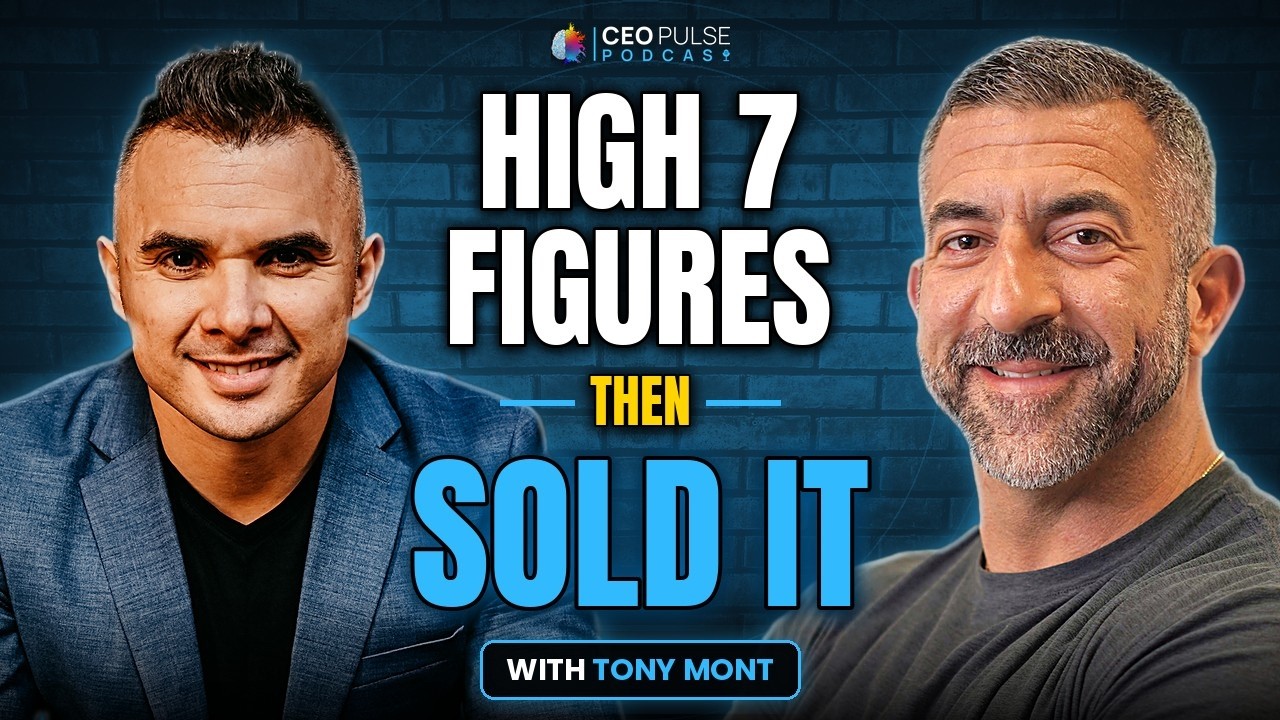
In EP 209 of the CEO Pulse Podcast, Rafael Cortez talks with Tony Mont, a wholesaler known for dispositions who helped build a wholesale business to 8.6 million dollars in assignment fees in three years and then sold it. Tony shares how he scaled, why wholesalers need shared ethics, and how extreme ownership carried him through adversity.
What you will learn in this episode
- How Tony Mont went from a San Diego bike shop to wholesaling real estate
- Why the 2021 market made dispositions easy and how the shift sharpened his process
- How pivoting through hard times helped his bike business double sales during COVID
- Why Tony Mont believes wholesalers need an association and a shared code of ethics
- Why so few wholesale companies are built to be sold
- Why mentoring other wholesalers is more rewarding than making money yourself
- How extreme ownership and the easy day mindset build mental fortitude
- The advice Tony Mont would give his 17 year old self
How did Tony Mont scale and exit a wholesale business in three years?
Who is Tony Mont?
Tony Mont is a wholesaler best known for his dispositions skills. He got into real estate in May 2021 and, with his partners, built a wholesale business that produced 8.6 million dollars in assignment fees in three years before they sold it in a multi million dollar exit. Rafael Cortez, host of the CEO Pulse Podcast and an Organizational Psychologist, recorded this conversation in his Arizona office, where Tony Mont and his longtime partner Eric Cline were working the phones after relocating from North Carolina.
Rafael Cortez points out that most people say you cannot build a wholesale business and sell it, and that results like these usually take decades. Tony Mont says they were going a thousand miles an hour for three years, working 10 to 12 hours a day, five to seven days a week.
Why an office matters
Tony Mont and Eric Cline have known each other for about 20 years. They grew up outside Chicago, were roommates in their early 20s, then went separate ways before combining forces on the wholesale business. Both need an office and a routine. Rafael Cortez says he loved working from home for years until he realized he could never disconnect, because the office was on the other side of the living room wall. Tony Mont agrees: work is work and home is home.
How did Tony Mont go from a bike shop to wholesaling?
Before wholesaling, Tony Mont owned a sizable bicycle shop in San Diego for about 15 years. The business also did distribution, importing its own brand of beach cruisers directly from China. At one point it had three retail shops and two warehouses, importing 5,000 to 6,000 bikes a year.
That experience meant Tony Mont was not scared to start another business or to reinvest. For the first nine months in wholesaling, the partners put everything they made back into the business, which let them scale quickly. Eric Cline and their third partner had run a previous business that was almost a carbon copy of wholesaling with a different product, so they arrived with a CRM, lead generation and a sales process.
Building a dispositions process from scratch
With Eric Cline locking up a lot of deals, Tony Mont's job was to sell them. He locked himself in an office, watched Jerry Norton YouTube videos, pounded the phones and built his own dispositions process to keep up with demand. When it became too much for one person, he hired acquisitions help and then built a dispositions team.
How did the market shift make Tony Mont better at dispositions?
In 2021, hedge funds and big buyers were buying everything. Tony Mont says you could lock up a deal at 80 percent of ARV and still make money, and a single email or Facebook Marketplace post could sell a property. It got so easy that he admits he got a little lazy and relied on the five buyers taking everything in markets like Raleigh and Jacksonville.
When those buyers stopped buying a couple of years later, Tony Mont had to find where the new buyers were. That shift refined his process and made him far more knowledgeable. On the day of recording, someone sent him a Cleveland, Ohio deal they could not move, and within about an hour his process produced three offers. He plans to keep doing JV deals and dispositions after the sale.
Rafael Cortez says most people throw in the towel when things get tough, while Tony Mont used the downturn to fine tune his systems and operations. He believes the people still standing after rocky times come out much stronger, and that the market is already thinning the herd.
How did pivoting help Tony Mont's bike business through COVID?
Tony Mont learned the value of pivoting long before real estate. The bike business had plenty of ups and downs, and over roughly 13 years many competitors fell off because they would not pivot, got lazy or overextended themselves. By the time COVID hit, his was one of only about two shops left in Pacific Beach.
When the pandemic started, the shop had about 1,600 bikes built and waiting in China. The factory told Tony Mont to ship them now or risk not knowing when they could leave. Nobody knew whether the world would shut down, but he decided to take the risk and bring the inventory over. Right as the bikes arrived in San Diego, bicycles became as scarce as toilet paper.
There was a line around the block for six months, and sales doubled for two years. Every day Tony Mont called distributors in Los Angeles and spent whatever cash was in the account on more inventory, while competitors struggled to get stock. He kept every relationship and never burned bridges. His lesson: if you stay in it, the strong survive, and when good times return you are one of the few with a solid foundation.
Why does Tony Mont think wholesalers need an association?
Rafael Cortez notes that wholesaling was largely unregulated until recently, and now lobbyists and state real estate departments are paying attention. He believes the operators who treat wholesaling like a real business, not a side hustle, are the ones who will stand through it.
Tony Mont says the shame is that wholesalers have no control over the regulations coming down the pike because they have no association. Title companies and flat fee listing partners ask him where wholesalers even get their contracts, because every contract is different. Some wholesalers file memorandums on properties and simply wait for a buyer to call. With no code of ethics and no shared training or testing, other groups are writing the rules instead.
Rafael Cortez says Jerry Norton once reached out to him about starting an association, and that he sees more collaboration among active wholesalers, especially in Phoenix, where he knows most of the people doing business. Both agree that a single company cannot push back alone, and that Jerry Norton, one of the most ethical and knowledgeable people they know, would be the right face for it.
Why are so few wholesale businesses built to be sold?
Tony Mont says wholesaling is a business of hustlers, and he means that in a positive way. He is a hustler too. But about 99 percent of the people at any event are one or two person shows working from a spare bedroom. Building a real office takes a lot of work, money and business sense, and that is the only kind of wholesale company you can sell.
Rafael Cortez adds a psychological angle. The appeal of wholesaling is that it feels low risk, so it naturally attracts people with a low risk tolerance. Building a business means payroll, marketing campaigns and other people depending on you, and that is where most people drop off. Tony Mont says that for someone who has built businesses before, none of that feels out of the ordinary. He credits his partners, his previous business experience and his ability to grind through hard times for how fast they grew.
Why does Tony Mont love mentoring other wholesalers?
In the last six months to a year before the sale, Tony Mont noticed how many people reached out for help. He could JV their deals, but he wanted to teach them to fish instead of giving them a fish. Mentorship has become the most rewarding part of his work. Every day he gets messages from people saying a lesson helped them make money when they really needed it.
Tony Mont says helping other people make money is more gratifying than making it yourself, because you can make all the money in the world and still lack purpose. Rafael Cortez says guiding someone forces you to hold space for them and makes you a better human being. Tony Mont agrees: when people look up to you, every part of your life has to be dialed in. Running weekly Zoom calls for around 100 people has made him better at business and life, because every new problem forces him to figure out the answer.
Rafael Cortez says he once asked himself whether he wanted to inspire, motivate or excite people, and realized those feelings fade. Empowering someone with a process plants seeds with an infinite ripple effect across generations. Tony Mont believes passing on knowledge is in our DNA, which is why helping someone learn always feels good.
Where does Tony Mont's mental fortitude come from?
Asked how he stays steady when things get hard, Tony Mont shares that his youth was difficult. His parents and grandparents were hard workers, but he experienced a lot of loss and struggled with drugs and alcohol for years. In his early 20s he faced a trial with the possibility of spending the rest of his life in prison, and he testified on the stand for hours. After that chapter closed, his life completely shifted. Having already been at the lowest point possible, starting a business did not scare him.
Today Tony Mont stays strong through a disciplined routine, a close core group of friends he leans on for support, and hard physical challenges. He sets 90 day challenges, like running two miles a day for 90 days, and he completed three Spartan races in one year. Pushing through physical pain helps him look at hard days logically instead of emotionally.
Extreme ownership
When something goes wrong, Tony Mont asks how he can take responsibility, how it is his fault and what action he can take today so it does not get out of hand. When the market shifted, he asked what he could do every day, step by step, to avoid falling off a cliff. He says choosing your own challenges makes pain a decision, so when life brings a problem you already know you can figure it out.
Rafael Cortez remembers a fire department captain who answered every hard moment with the phrase builds character. He says fault sounds negative, but extreme ownership means owning both the good and the bad in your world instead of blaming the economy. Tony Mont adds that if everything is someone else's fault, you can never climb out of it. He credits Jocko Willink's Extreme Ownership, which he has read and listened to several times, and Ryan Holiday's The Obstacle Is the Way, which taught him that going around obstacles creates anxiety while facing them builds confidence.
It's an easy day
Tony Mont's personal phrase is easy day. He started saying it during his trial, when every day was hard, and afterward every day felt easy by comparison. He still says it during tough workouts and tough business days, because compared to what much of the world is going through, most of our problems are not that bad. Rafael Cortez says he is going to borrow it.
How did a fresh start in San Diego change Tony Mont's life?
Once his legal matters were behind him, Tony Mont decided he needed a fresh start as far from his old life as possible. He looked at a map and chose San Diego. He arrived at the end of 2008, right after the market crashed, with about 3,500 dollars, half of which he spent getting there. He slept on the floor of an empty beach apartment with his dog and his girlfriend and woke up happier than he had ever been.
That morning Tony Mont wrote down: you're one step away from greatness. He lived by it, walking job sites to find work, putting his head down seven days a week, and eventually starting the bike business. He says his life really started at 25 in San Diego.
Mentors, partners and a changing circle
Rafael Cortez says it is hard to fully trust people who have not been through adversity, because hardship is what helps us appreciate joy. Tony Mont agrees that people who stay too comfortable never appreciate comfort. Because he has no wife or kids holding him accountable, he has to create discipline himself. He has had the same mentor for almost 20 years and doubled down on that relationship after his father passed away. His partners also keep him honest and lift him up on hard days.
Rafael Cortez says entrepreneurship can be a lonely place, which is why collaboration matters. Tony Mont adds that his friend group changed at 25, at 35 and again at 40. If people are not willing to grow, you will never pull them up, and they will only pull you down.
What advice would Tony Mont give his 17 year old self?
Tony Mont would tell his younger self that he is not as important as he thinks he is. He would tell him to stay humble and not take life so seriously, because you can be disciplined and successful and still enjoy the present. He would remind him that the world is bigger than his neighborhood, to keep an open mind and to take ownership of everything he does. Rafael Cortez closes by highlighting the core message: own yourself and your actions, do not be a victim, and stay proactive about what you can control.
Key takeaways
- Reinvest early. Tony Mont's team put everything back into the business for nine months, which let them scale fast.
- Hard markets sharpen your process. The post 2021 shift forced Tony Mont to find new buyers and made his dispositions process far stronger.
- Build a business, not a hustle. Only wholesale companies with real offices, teams and systems can be sold.
- Wholesalers need shared ethics. Tony Mont and Rafael Cortez believe an association could set common contracts, training and standards.
- Mentoring creates purpose. Helping others make money is more gratifying than making it yourself.
- Own everything. Extreme ownership means asking what your part was in the good and the bad.
- It's an easy day. Perspective from past adversity makes today's problems feel manageable.
Quotes from the conversation
“Helping other people make money is way more gratifying than making money yourself.”
Tony Mont, 21:18
“Everybody I know that is miserable and unsuccessful is a victim”
Tony Mont, 32:01
“Today's an easy day.”
Tony Mont, 32:23
Episode chapters
| 0:00 | Welcome and the wholesale exit |
| 3:56 | From bike shop to wholesaling |
| 7:03 | Refining dispositions after the market shift |
| 8:35 | Pivoting the bike business through COVID |
| 13:20 | Regulation and a wholesaler association |
| 20:25 | Why mentoring is so rewarding |
| 25:54 | Adversity and mental fortitude |
| 30:33 | Extreme ownership and easy day |
| 37:32 | A fresh start in San Diego |
| 45:25 | Advice to his 17 year old self |
Who is on this episode?
Tony Mont
Tony Mont is a real estate wholesaler known for dispositions who got into the business in 2021 and helped build a company that produced 8.6 million dollars in assignment fees in three years before it was sold. He previously owned a San Diego bicycle shop and distribution business for about 15 years.
About the host: Rafael Cortez
Rafael Cortez is the host of the CEO Pulse Podcast, an Organizational Psychologist and a real estate broker and investor based in Phoenix, Arizona. Raised in Yuma, Arizona, he became one of the youngest firefighters in Yuma County at 19 and launched his first business at 21. He has been involved in more than 1,300 real estate deals since 2009 and mentors entrepreneurs through the L.E.S.S. Business philosophy: Lean, Effective, Strategic, Simple. Rafael is the founder of CEO Pulse, Pulse Realty and Pulse Capital and the creator of REI Pulse CRM, and he mentors wholesalers in group and 1 on 1 settings. Read Rafael Cortez’s full bio.
Questions and answers
Who is Tony Mont?
Tony Mont is a real estate wholesaler known for his dispositions skills. He joined Rafael Cortez on EP 209 of the CEO Pulse Podcast after helping build a wholesale business that produced 8.6 million dollars in assignment fees in three years and was then sold.
How did Tony Mont scale a wholesale business so quickly?
Tony Mont and his partners reinvested everything for the first nine months and worked 10 to 12 hour days. His partners brought a CRM, lead generation and a sales process, while Tony Mont built the dispositions side.
Can you sell a wholesale real estate business?
Yes, but Tony Mont says only if it is a real business with an office, a team and systems. About 99 percent of wholesalers are one or two person operations, which is why few wholesale companies are ever sold.
How did the market shift change dispositions?
In 2021 big buyers purchased almost everything, so deals sold with a single email. When they stopped buying, Tony Mont had to find new buyers, which refined his process so well that he can now get several offers on a hard deal in about an hour.
Why does Tony Mont want a wholesaler association?
Tony Mont says wholesalers have no say in new regulations because they have no association, shared contracts or code of ethics. Rafael Cortez agrees that a single company cannot push back alone.
Why is low risk tolerance a problem in wholesaling?
Rafael Cortez says wholesaling attracts people because it feels low risk. Building a real business means payroll, marketing and people depending on you, which is where many wholesalers stop growing.
Why does Tony Mont enjoy mentoring wholesalers?
Tony Mont says helping other people make money is more gratifying than making money yourself. He runs weekly group calls and says answering everyone's problems has made him better at business and life.
What does extreme ownership mean to Tony Mont?
Tony Mont asks how every problem is his fault and what he can do today to fix it. Rafael Cortez adds that ownership covers the good and the bad, and that blaming the economy leaves you a victim.
What is the easy day mindset?
Tony Mont started saying easy day during the hardest period of his life, and afterward every day felt easy by comparison. He still uses it in tough workouts and business days to keep perspective.
What advice would Tony Mont give his 17 year old self?
Tony Mont would tell his younger self to stay humble, not take life so seriously and remember the world is bigger than his neighborhood. He would also tell him to take ownership of everything he does.
Related episodes
Build your business on systems
Rafael Cortez built REI Pulse CRM from the systems he runs his own deals on. See how it works for wholesalers and investors.
Explore REI PulseBrowse every CEO Pulse Podcast episode · About Rafael Cortez · YouTube · Apple Podcasts · Spotify
