
CEO Pulse Podcast | Mindset Monday
TL;DR
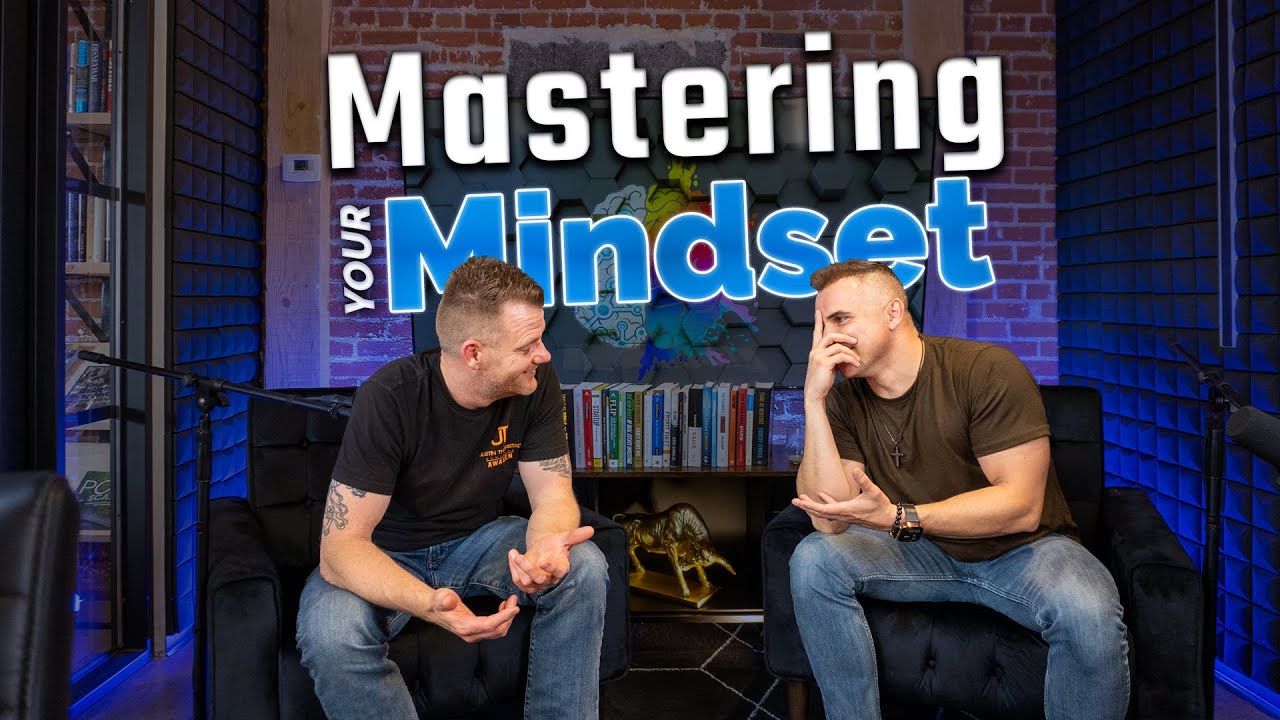
In EP 193 of the CEO Pulse Podcast Mindset Monday series, Rafael Cortez and co host Justin Thorstad ask: if your results are not what you want, what are you avoiding? They share their own frustrations, how to put a value on your hour, why what you resist persists and how an 80/20 list gets you moving.
What you will learn in this episode
- Why the magic you are looking for lives in the actions you avoid
- How frustration with others can mirror what you are not doing yourself
- How putting a dollar value on your hour exposes busy work
- Why what you resist persists and how to quiet the inner voice
- How overthinking turns a simple problem into a catastrophe
- How writing down past wins builds evidence that you can act
- How to build an 80/20 list and delegate with written roles
How do you stop procrastinating and take the actions you are avoiding?
If your results are not what you want, what are you avoiding?
Rafael Cortez, host of the CEO Pulse Podcast and an Organizational Psychologist, calls this Mindset Monday episode with co host Justin Thorstad a special one, because both of them were dealing with the topic at the time. The question is blunt: if your results are not what you want, what are you avoiding? Rafael Cortez says we are the base of everything that happens in our lives and businesses, so they decided to be completely vulnerable and use what they were going through as examples.
Rafael Cortez repeats something Justin Thorstad said before the show: the magic we look for is in the things we are avoiding. So why do we not take actions we already know we need to take? Rafael Cortez admits he has paid mentors to show him a process and still insisted his own way was right. Much of the time, he says, it comes down to avoidance built on a platform of fear.
Justin Thorstad agrees. In your life and business, you usually know exactly what you should be doing. The real question is why you are not doing it.
Why is your frustration with others often a mirror?
Justin Thorstad shares that when Rafael Cortez checked in with him before the episode, he admitted he was frustrated. Some of the people he leads were not doing what they had been guided to do, so their results were good but not great. That frustrated him because it leaves potential opportunities, success and self respect on the table.
Then he turned it around. If you are frustrated with something in your reality, it is simply a mirror reflecting back that you are not doing it yourself. How else would you recognize it in others if you did not see it in yourself?
What was Justin Thorstad avoiding?
Justin Thorstad runs 10 companies, and there is one he wants to breathe new life into. Instead he has been overwhelmed by small tasks. He could play the victim and blame other people, or he could sit down and do what he knows he is supposed to do. About 80 percent of what he is doing, he should not be doing. It needs to be delegated with written roles, responsibilities and agreements so his time and attention are free to focus. When he focuses on one thing and gets into a flow state, he creates effortlessly, and he has not been in that state consistently for a while.
When Rafael Cortez asks whether the fear is about delegating and losing control, Justin Thorstad explains it is about the seminars he used to run. He had never done one before, worked on the first event for nine months, and two weeks before it a little voice asked what if nobody buys tickets and what if you choke on stage. He identified with that voice and it consumed him.
His mentor helped him see that the voice was only showing up because he was about to do something big. It wanted to keep him safe, but there was no danger, just a story. People had already bought tickets, and most ticket sales come in during the final week. His mentor told him to thank the voice and keep moving. The event was a massive success, he ran more events, and many other opportunities spun off from them.
It had been about a year and a half since then, and the voice was louder because he was out of practice. So he found himself not delegating, which kept him from making the revisions he wanted. That is why he was frustrated with the people he leads: he was frustrated with himself for not practicing what he preaches.
How do you stay on your highest and best?
Rafael Cortez says talking about mindset and ownership does not mean you never waver. The practice is a constant reminder. The question he asks himself all the time is, what is my highest and best? Even so, he can get sucked into tasks, and if he loses track for four hours, he realizes he spent that time on something a virtual assistant could do.
He also connects it to fear. He often stays in a task because he knows he has it figured out, while the bigger things still need to be figured out and are not clear yet. The small task gives him a fix of productivity and progress, but it is busy work. Stepping into the unclear space is a muscle you build. And you do not have to walk that path alone, because most roads have been walked before. The how to already exists. The real question is what you are avoiding internally that keeps you from using it. Justin Thorstad calls it a self imposed limitation, just a story.
Justin Thorstad adds that when he created his first seminar, his schedule was clear, with designated days for creating content, and he had no interruptions. He pushes back on the idea that people simply get distracted. You lose focus, he says, and moving your attention from one thing to another is a choice.
How does putting a value on your hour expose busy work?
Rafael Cortez shares an exercise he did a while back. He looked at his results and the hours he was really working, which he and Justin Thorstad joke is closer to 80 to 120 hours a week than 40. When he did the math, an hour of his focused time was worth about $1,200. He then applied that number to everything else. When he caught himself on a $15 or $20 an hour task, he would remember his $1,200 number, and the only question left was why he was still doing it.
Justin Thorstad did something similar years ago, when his hourly value was about $350. He decided he would not clean the yard, spray weeds, clean the pool or do laundry, or take on any task that did not earn at least that much unless he enjoyed it, because he could pay someone else to do it. If he did it anyway without joy or fulfillment, he was losing money.
Over the years his rate went up and he drifted away from that check in. He realized that doing small things to feel productive was really a way of avoiding the important actions. As he puts it, the magic we seek is in the actions we avoid. That is where the transformation, growth, opportunities and flow live, and you only get those benefits once you take the action.
Why do people avoid action even when they know the how to?
Rafael Cortez says it can be many things: a sense of worth, insecurity about your field, or something else. He describes seminar junkies, people who go from event to event for two or three years and memorize every concept but stay in the same spot because the action is not there. That is why it matters to ask what you personally are afraid of and what is holding you back from the next step.
Justin Thorstad rejects the excuse of not knowing how. You always know one step, however small. When you take that first step, the next one is revealed, and you do not need to know it until then. You cannot take step two without step one.
Rafael Cortez lists what can hold us back: fear of loss, fear of success, criticism, or worrying that you will not fit in with your crowd anymore. He spends a lot of time in critical thought asking where a thought or emotion is coming from. Self reflection, if you are completely honest, teaches volumes.
Why does what you resist persist?
Justin Thorstad says if you sit with yourself and truly want to know why you are avoiding something, the answer becomes self evident. There is a story running, an inner voice he calls the roommate, and you are listening to it as if it were true. You have to become aware and honest that it is just a story.
He recalls a real estate agent he was mentoring who told him she just told that voice to shut up. He asked if it got louder. It did. What you resist persists. Telling the voice to shut up shows you do not like what it is saying and want something different, which is a good desire. But it has hooked your attention, and you are fighting with it, which feeds it. Energy flows where attention goes. Instead, switch your focus to what you really desire and the possibilities ahead. When you stop feeding the voice, it quiets down. An ignored guest tends to leave.
How does overthinking turn small problems into catastrophes?
Rafael Cortez says one fallacy is believing that more thought always means more understanding. The brain grabs the wrong thread, pulls on it, creates a perceived fear, then another, until you are in a big story about everything that could go wrong.
He shares a deal his team was working on with his acquisitions and dispositions team members, Dan and Jesus. The seller kept changing his mind near the close of escrow, there was a tenant in place, the buyer was wavering, and then an issue came up with a date. The team started imagining every way it could break the deal and built an elaborate strategy around negotiations, the tenant and cash for keys. Finally someone asked, what if the seller is fine with the date change? They called, and the answer was that it was not a problem.
Rafael Cortez says having a game plan is fine, but we often create catastrophic events in our minds. Think about that when you launch something new, face a new challenge or catch yourself on $10 tasks when your time is worth $1,200 an hour.
How do you build evidence that you can take action?
Justin Thorstad's tool is a piece of paper and a pen. Write down the last time you were scared to do something and took action anyway, and the story you had about it turned out to be wrong. Write the outcome you are proud of. Once you crack that door open, it swings wide, and you remember more and more times you acted and it worked out for your benefit. That becomes a resource.
He explains that the mind is wired by default to keep you safe and treats new things as danger, even though there is no wild animal waiting outside the cave. Getting your emotions aligned with where you want to go is empowering. If you made it this far in life, you have figured out every other day, so you have the capacity to reach beyond your box.
Justin Thorstad shares a line from an audiobook: we are all born with the capability to develop our capabilities. Hold yourself capable. Once you have written down your evidence, you can tell the mind that it tried to stop you before, you went forward anyway and you won, so you will pay attention to where you are going and why.
How does a mentor help you stop avoiding?
Rafael Cortez says the information is almost always available through mentors, study, networking groups or partnering with someone who has walked the path. When people come for mentorship, the nuts and bolts are the hook, but they are never the issue. There is always a mental block. So ask yourself honestly why you do not have the result you want yet. Are you afraid of success? Of the conversations and networking you would have to do?
Justin Thorstad believes one of the best ways to get into action is to have a mentor. Sometimes you need to say what is holding you back out loud to hear how ridiculous it sounds. A good mentor leaves no wiggle room for your excuses. You cannot sell them a story without wasting your time and money, so you have to commit to something on every call. That forces you into forward movement.
What do your bank statement and screen time say about your priorities?
Justin Thorstad says people who claim they do not know what is holding them back have time for streaming shows but not for sitting quietly and asking themselves the question. If you truly want the answer, you do know it. To see your real priorities, look at where your money goes and how much time your phone says you spend on social media. Results are often harsh, but they are always fair.
Rafael Cortez urges listeners to actually review a bank statement. We can list time and family as priorities and it looks good on paper, but spending shows the truth. He also asks whether the race you have been running for a while is in alignment with the life you want, something he had discussed with a friend named Todd. Leave the ego aside, because it is about joy, fulfillment and the quality of life you want to experience. Justin Thorstad adds that we usually want things for the feeling we think they will give us.
How do you build an 80/20 list?
The episode ends with a commitment. Justin Thorstad promises Rafael Cortez his 80/20 list by midnight, and Rafael Cortez says he will hold him accountable. Justin Thorstad's reason is simple: he wants to win, and nothing stops him but him.
His list has two main columns. The first holds the 80 percent of tasks that do not have to be done by him and that he has not delegated yet. The second holds the 20 percent that he enjoys, finds fulfilling and produces great results with. Delegating is not just a verbal conversation. It means written roles and responsibilities that explain what to do, how to do it and how to report back, so he can inspect what he expects and focus on the 20 percent that produces 80 percent of his results. Rafael Cortez calls it a simple and very effective way to prioritize.
Key takeaways
- The magic is in what you avoid. Growth, opportunity and flow live in the actions you keep putting off.
- Frustration is a mirror. What bothers you in others often points to what you are not doing yourself.
- Know what your hour is worth. A dollar value on your time makes busy work obvious.
- What you resist persists. Fighting the inner voice feeds it; focusing on what you want quiets it.
- Start with the simple answer. Overthinking can turn a quick phone call into a made up catastrophe.
- Write down your evidence. Past times you acted despite fear prove you can do it again.
- Delegate in writing. An 80/20 list with written roles frees you for your highest and best.
Quotes from the conversation
“If you are frustrated with something in your reality, it's simply just a mirror”
Justin Thorstad, 3:19
“What's my highest and best? What's my highest and best?”
Rafael Cortez, 8:04
“Energy flows where attention goes”
Justin Thorstad, 17:18
“We're all born with the capability to develop our capabilities”
Justin Thorstad, 22:44
Episode chapters
| 1:34 | The magic is in what you avoid |
| 3:09 | Frustration as a mirror |
| 4:41 | The seminar and the inner voice |
| 7:47 | Highest and best as a practice |
| 10:55 | What your hour is worth |
| 14:07 | Seminar junkies and the first step |
| 16:28 | What you resist persists |
| 18:00 | Overthinking a deal |
| 21:07 | Writing down your evidence |
| 30:31 | The 80/20 list |
Who is on this episode?
Justin Thorstad
Justin Thorstad is Rafael Cortez's co host on the Mindset Monday series of the CEO Pulse Podcast. In this episode Justin shares how fear crept back into one of his businesses, why what you resist persists and how he builds an 80/20 list.
About the host: Rafael Cortez
Rafael Cortez is the host of the CEO Pulse Podcast, an Organizational Psychologist and a real estate broker and investor based in Phoenix, Arizona. Raised in Yuma, Arizona, he became one of the youngest firefighters in Yuma County at 19 and launched his first business at 21. He has been involved in more than 1,300 real estate deals since 2009 and mentors entrepreneurs through the L.E.S.S. Business philosophy: Lean, Effective, Strategic, Simple. Rafael is the founder of CEO Pulse, Pulse Realty and Pulse Capital and the creator of REI Pulse CRM, and he mentors wholesalers in group and 1 on 1 settings. Read Rafael Cortez’s full bio.
Questions and answers
What causes procrastination for entrepreneurs?
Rafael Cortez says it usually comes down to avoidance built on fear, even when you already know what to do. Justin Thorstad adds that the inner voice tries to keep you safe when you are about to do something big.
Why does frustration with your team point back to you?
Justin Thorstad says frustration is a mirror. He realized he was frustrated with the people he leads because he was not doing what he knew he needed to do himself.
How do you handle the inner voice before a big event?
Justin Thorstad's mentor told him to thank the voice for trying to keep him safe and keep moving, because there was no real danger. His first seminar turned into a massive success.
How does knowing your hourly value help you focus?
Rafael Cortez calculated his focused hour was worth about $1,200, so $15 or $20 tasks stood out as busy work. Justin Thorstad once used $350 an hour to decide what to hand off.
What does what you resist persists mean?
Justin Thorstad explains that fighting the inner voice keeps your attention on it and feeds it energy. Shifting focus to what you want lets it quiet down, because an ignored guest tends to leave.
What if you do not know how to do something?
Justin Thorstad says you always know one small step. Taking it reveals the next step, and you cannot take step two without step one.
How can overthinking hurt a real estate deal?
Rafael Cortez's team built a complex strategy around a possible date problem on a deal. When they finally asked the seller, the date change was not a problem at all.
How do you build confidence to take action?
Justin Thorstad writes down past times he was scared, acted anyway and succeeded. That evidence shows the mind's warning stories are usually wrong.
Why does having a mentor help you take action?
Justin Thorstad says a good mentor leaves no room for excuses, so you commit to real actions on every call. Rafael Cortez notes the nuts and bolts are never the issue; the mental block is.
What is an 80/20 list?
Justin Thorstad's list splits tasks into the 80 percent others can do and the 20 percent he enjoys and produces great results with. He delegates the first column with written roles and responsibilities.
Related episodes
Build your business on systems
Rafael Cortez built REI Pulse CRM from the systems he runs his own deals on. See how it works for wholesalers and investors.
Explore REI PulseBrowse every CEO Pulse Podcast episode · About Rafael Cortez · YouTube · Apple Podcasts · Spotify
