
CEO Pulse Podcast | Interview
TL;DR
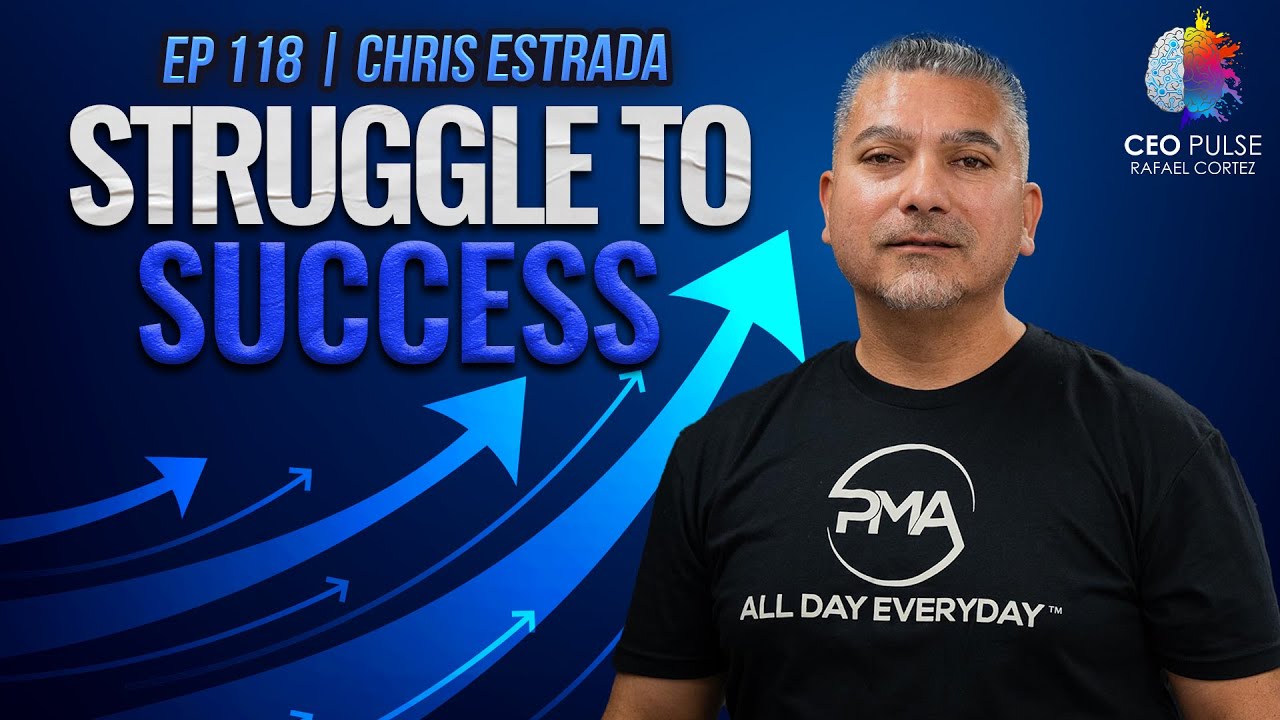
In EP 181 of the CEO Pulse Podcast, Rafael Cortez talks with Chris Estrada, a pastor whose commercial drywall company has passed $15 million in revenue. Chris shares how forgiveness reconnected him with his father, why exposure expands vision, why to be proud of your success and why the owner gives first and gets paid last.
What you will learn in this episode
- How a difficult childhood and Job Corps shaped Chris Estrada
- What made him walk away from drugs and a destructive marriage at 23
- How a moment of forgiveness led to meeting his biological father
- Why seeing what is possible expands what you can picture for yourself
- Why preparation meets opportunity, and why to be proud of your success
- Why Chris Estrada gives first and gets paid last in his business
- His advice to his 17 year old self
How did Chris Estrada go from struggle to success?
Who is Chris Estrada?
Rafael Cortez, host of the CEO Pulse Podcast and an Organizational Psychologist, sits down with Chris Estrada about a week after Chris interviewed Rafael Cortez on his own show. Walking through Chris's office, Rafael Cortez saw his mindset written all over the walls, including a favorite quote: ego is not your amigo. Rafael Cortez introduces Chris Estrada, 43, as the founder of a commercial drywall contracting company that has grown past $15 million, and an ordained pastor who impacts lives on a regular basis.
Chris Estrada says we are a reflection of our surroundings. If we are going up, our surroundings go up, and if we are going down, they go down. It is up to us to keep feeding our minds, bodies and hearts.
What was Chris Estrada's childhood like?
Chris Estrada was born in Phoenix and grew up in the projects. His mother struggled with addiction, and before he turned eight she gave him up. His sister's dad, Paul, took him in. Paul did not have it easy himself, but he built things with Chris from an early age, from nest boxes to bird cages, and that is how Chris got into building. Chris still visited his mom, never knew his biological father and was surrounded by drugs and crime, which he admits he liked at the time.
Rafael Cortez notes that without a picture of anything else, you take your environment as normal. Chris Estrada says the older people he thought were cool were not good influences. Seventh grade was the last grade where he really learned. He was pushed out of eighth grade, expelled from high school in the first month of ninth grade after a fight with a teacher and started picking up charges.
How did Job Corps change Chris Estrada's path?
At about 16 and a half, a judge gave Chris Estrada a choice: Phoenix Job Corps, a federal trade school, or juvenile detention. Rafael Cortez notes that was his own son's age at the time. Chris took carpentry and learned to build even better, the one thing he had loved since childhood. He finished at about 17 and a half and got his first job in the industry where he thrives today. He adds that all of his kids have now passed him in school, which he calls a blessing.
What made Chris Estrada turn his life around?
Rafael Cortez asks what clicked, since thought patterns built at that age are hard to change without conscious effort. Chris Estrada says he has always been confident and a fast learner, which let him excel even with a seventh grade education. Something inside kept saying do more, be more, a drive he later recognized came from his biological father, while the party side came from his mom's world.
He describes struggling with drugs from 13 to 23 and being in a hard marriage where both partners were struggling with addiction. His oldest son was born when he was about 21 and his daughter at 22. At 23, with another child on the way, he decided he was done and quit drugs at once. The divorce took another year and a half, but the shift had happened. He wanted more, and he had kids to do better for.
Rafael Cortez observes that big pivots are often linked to a catalyst, and more often to pain than to a desire for pleasure, because pain puts us in survival mode. He says Chris Estrada's ability to drop that baggage and walk in a better direction speaks to real willpower and commitment. By 20, Chris was already a foreman, faster and sharper than his peers, and he wanted more.
How did forgiveness change Chris Estrada's life?
Chris Estrada shares what he calls a spiritual story. Around 2004 or 2005, still in the bad marriage, a former boss who saw something in him kept inviting him to church. One day, flipping through channels, he stopped on Joel Osteen, the youngest preacher on TV. Joel Osteen told viewers that someone out there needed to forgive someone, and that now was the opportunity.
Chris Estrada's mother had passed away four or five years earlier at 46, and he admits he had been angry with her for not taking care of him and his siblings. Following the prayer on screen, he said he forgave his mom and that he loved her. Then he forgave his biological father, a man he had seen once and whose last name he did not know.
How did Chris Estrada meet his father?
Within weeks, his biological father found Chris Estrada's older sister, who had a different last name. Chris carries his mother's maiden name, Estrada, which is why his father had been searching under the wrong name for years. His sister called to say his dad was looking for him and had left a letter. In it his father acknowledged Chris might hate him, said he had been looking for years and offered to visit at Christmas.
Chris Estrada was not angry, just confused, and he worried about hurting Paul, the man who raised him. After about three weeks he called. His father came at Christmas, and they bonded instantly. Chris finally saw why he always thought bigger and faster. His father asked what he wanted to do, and Chris brought out blueprints: he wanted to start a drywall company and sell real estate. When his father asked what was stopping him, Chris took him outside, explained that he used to use drugs, was sober and was about to divorce. His father said he had his back. Chris says his life went from cruising uphill at 20 miles an hour to taking off.
Rafael Cortez, whose own dad left when he was three, says this speaks to who Chris Estrada is. He chose to be open minded and then open hearted instead of staying angry in a victim role. Chris Estrada says that had he not forgiven, he would not be where he is, because every move after that led here.
How did Chris Estrada start building wealth?
Chris Estrada learned his father was a savvy, successful investor with many rental properties across several states. Around 2007 they started buying and selling houses, with his father connecting him to people who could help. Chris had won custody of his three oldest kids, and for a time it was him and the kids while he worked a full time job and remodeled houses at night, sometimes 20 hours a day.
Rafael Cortez relates it to his own opportunity, which came from sitting next to a man who happened to be a fire chief, a conversation that led to everything after. Opportunity shows up in many forms, he says. Chris Estrada had 50 reasons to say no and chose the one that said yes.
Why does seeing what is possible matter?
Around 2008 Chris Estrada met his wife, and soon after construction work dried up. She exposed him to a different life. He laughs about the first time she suggested Cheesecake Factory, which he thought looked too fancy and expensive, and about discovering sushi and dressing a little sharper. He knew he wanted more, but he needed to see it, because he did not grow up seeing it.
Rafael Cortez agrees that awareness is key. Growing up in a mobile home, he could not picture much beyond the corner. Once awareness kicked in, dreaming bigger became easier with each small win. Chris Estrada notes that before social media you only saw what was within a mile of home. Rafael Cortez adds that today the world is so noisy that all it takes to feel bad about your progress is scrolling someone else's highlights, which makes looking inward more important than ever.
How do preparation and pride fuel success?
Chris Estrada says knowing who you are and what you want quiets the noise. For him, faith ties into it. He cites the saying that success is where opportunity meets preparation, and adds that the preparation is on us while God brings the opportunity, often through a person. That is why he is always learning and asking what things are and why. He believes faith opens doors, but you also need confidence in your ability to walk through them, where succeeding means trying, learning and growing.
Rafael Cortez ties this to Chris's mantra of how to win and live a blessed life, and to his own guiding purpose of empowering entrepreneurship, which shapes nearly everything he does. He notes the ripple effects Chris and his wife create as pastors.
Why be proud of your success?
For years Chris Estrada and his wife did not want to show what they had built. Then someone told them that being proud is not bragging, because people cannot know what they want unless they see what you have. Rafael Cortez relates: he used to hold back because he did not want to sound salesy, until a well known speaker in his industry told him backstage that when we are not loud about what we are good at, we do others a disservice. Rafael Cortez realized he had simply been scared of judgment.
Chris Estrada says they will be judged no matter what, so within the last few years they decided to enjoy what they earned. Rafael Cortez admits he once waited for company to go have a steak, then asked why he could not just enjoy one alone. Many providers pour from their cup without refilling it. Chris Estrada connects that to self worth. Growing up poor, he wondered whether he deserved a seat at the table, and he still spends freely on the company and little on himself. He realized he does deserve that seat, and now he shares what hard work has done so others know they can do it too.
Why does Chris Estrada give first and get paid last?
Rafael Cortez notes the shift from survival mode to contribution, and that in the end we take only what we have in spirit. Entrepreneurs get caught in the doing, and he admits he had been buried in deals for hours before Chris arrived. Chris Estrada adds that entrepreneurs can get stuck in a rat race of more, just with different people. Rafael Cortez says he does things because he can make an impact, so why wouldn't he?
Chris Estrada credits his surroundings: a positive wife and in laws, close friends and several mentors around the country. Keep your mind balanced with spiritual and motivational input, he says, and make sure the people around you know what you want. He rarely drinks because he wants optimal performance, and he and his wife set up a family trust to build a legacy for their children. Every step, including mistakes, is a deposit into the next thing. Rafael Cortez likes that Chris thinks several steps ahead, noting that hustle is a season, not a business strategy.
Chris Estrada says hustle can be selfish, focused on getting yours. A business mindset is about team, we and us. His company has been in business since 2009, and the business comes first. Some people say pay yourself first, and that is fine for them, but he gives first and gets paid last. He cites Tim Storey's idea of plow, plant, water, harvest. If he did not give first and take care of people, he would be out of alignment with who he is. Giving means time, money and wisdom, not just paychecks.
How does giving create a ripple effect?
Rafael Cortez says that when you take care of people, they go the extra mile with you, and every perspective a leader holds ripples through the operation. Chris Estrada compares it to marriage: if you only take, it breaks. Rafael Cortez calls it reciprocity or energy, and reminds listeners that giving does not require money. Advice and time count too. He points out that Chris's shifts began the moment he chose forgiveness.
Chris Estrada told his team that morning that the only way to keep stacking wins is together, and the only way to do it together is if everyone gives. When a speaker or mentor changes his life, he shows honor, sometimes giving on the spot, and he encourages others to honor mentors who give their time.
What would Chris Estrada tell his 17 year old self?
Chris Estrada would tell his younger self not to judge people, not to be afraid to learn and not to fear change, but to embrace it and the growth it brings. Challenge yourself to do more, and remember that improving does not always cost money, since there is plenty of information on YouTube and in books. Keep your competitiveness alive, but compete with yourself and use your peers as a measure.
Chris Estrada also hosts his own podcast and a show for young Arizona entrepreneurs, with the goal of showing people that if he can do it, so can they. Rafael Cortez closes by noting that everybody's story has a catalyst and an X factor, and he asks listeners what theirs could be.
Key takeaways
- Your past does not set your ceiling. Chris Estrada went from Job Corps to a company past $15 million.
- Forgiveness frees you. Choosing to forgive opened the door to meeting his father and a new trajectory.
- Exposure expands vision. You often need to see what is possible before you can pursue it.
- Prepare for the next door. Preparation is on you; opportunity tends to follow.
- Be proud, not boastful. Sharing your results shows others what is possible.
- Give first, get paid last. Taking care of people first builds a team that goes the extra mile.
- Embrace change. Keep learning and compete with yourself.
Quotes from the conversation
“We're a reflection of our surroundings”
Chris Estrada, 2:03
“The preparation happens with us right and God brings the opportunity”
Chris Estrada, 31:59
“Hustle is a season it's not a business strategy”
Rafael Cortez, 50:01
“I give first, and I get mine last.”
Chris Estrada, 52:51
Episode chapters
| 3:07 | Growing up in Phoenix |
| 5:26 | Job Corps at 16 |
| 8:37 | Quitting drugs and wanting more |
| 12:42 | A message on TV inspires forgiveness |
| 16:43 | Meeting his father |
| 19:54 | Buying and selling houses |
| 24:35 | Seeing a bigger life |
| 29:16 | Looking inward in a noisy world |
| 35:35 | Being proud of your success |
| 52:01 | Give first and get paid last |
Who is on this episode?
Chris Estrada
Chris Estrada grew up in Phoenix, attended Phoenix Job Corps as a teenager and built a commercial drywall contracting company that has passed $15 million in revenue, in business since 2009. He is an ordained pastor and hosts his own podcast for entrepreneurs.
About the host: Rafael Cortez
Rafael Cortez is the host of the CEO Pulse Podcast, an Organizational Psychologist and a real estate broker and investor based in Phoenix, Arizona. Raised in Yuma, Arizona, he became one of the youngest firefighters in Yuma County at 19 and launched his first business at 21. He has been involved in more than 1,300 real estate deals since 2009 and mentors entrepreneurs through the L.E.S.S. Business philosophy: Lean, Effective, Strategic, Simple. Rafael is the founder of CEO Pulse, Pulse Realty and Pulse Capital and the creator of REI Pulse CRM, and he mentors wholesalers in group and 1 on 1 settings. Read Rafael Cortez’s full bio.
Questions and answers
Who is Chris Estrada?
Chris Estrada is a Phoenix entrepreneur who built a commercial drywall contracting company past $15 million in revenue. He is also an ordained pastor and podcast host.
How did Job Corps help Chris Estrada?
At about 16 and a half, a judge sent Chris Estrada to Phoenix Job Corps. He studied carpentry, built on his childhood love of building and got his first job in the industry he works in today.
What made Chris Estrada quit drugs?
Chris Estrada tells Rafael Cortez that at 23, with young children and another on the way, he decided he was done. He quit at once and later left a destructive marriage.
How did forgiveness change Chris Estrada's life?
After hearing Joel Osteen urge viewers to forgive, Chris Estrada forgave his late mother and his biological father. Within weeks his father found him, and that relationship changed his life.
Why does exposure matter for entrepreneurs?
Chris Estrada says he knew he wanted more but needed to see it first. Rafael Cortez adds that awareness of what is possible makes it easier to dream bigger.
What does Chris Estrada believe about opportunity?
Chris Estrada says success comes where opportunity meets preparation. He believes preparation is on us, so he is always learning for the next step.
Is sharing your success bragging?
Chris Estrada says no. Being proud shows others what is possible, and Rafael Cortez adds that hiding what you are good at does people a disservice.
Why does Chris Estrada get paid last?
Chris Estrada puts the business and his people first and pays himself last. He believes giving first, in time, money and wisdom, is how he receives.
What does Rafael Cortez mean by hustle is a season?
Rafael Cortez says hustle is a season, not a business strategy. Long term growth comes from forward thinking and building a vision, not grinding in place.
What would Chris Estrada tell his younger self?
Chris Estrada would tell his 17 year old self not to judge, to embrace change and keep learning. He would also say to stay competitive with yourself.
Related episodes
Build your business on systems
Rafael Cortez built REI Pulse CRM from the systems he runs his own deals on. See how it works for wholesalers and investors.
Explore REI PulseBrowse every CEO Pulse Podcast episode · About Rafael Cortez · YouTube · Apple Podcasts · Spotify
