
CEO Pulse Podcast | Interview
TL;DR
In this CEO Pulse Podcast interview, Rafael Cortez sits down with his longtime mentor Sean Terry, founder of Flip 2 Freedom. Sean Terry shares how a radio ad led him into wholesaling at 33, how he lost nearly everything in 2007 and rebuilt, why going virtual was his best business decision, and why clarity, tenacity and faith drive entrepreneurs.
What you will learn in this episode
- How Sean Terry went from broke at 33 to his first wholesale deal
- What the 2007 crash taught him about market cycles and humility
- Why switching to a national virtual wholesaling model paid off
- The three attributes Sean Terry sees in successful entrepreneurs
- Why correct expectations and consistent work beat quick wins
How did Sean Terry overcome adversity and build a wholesaling empire?
Who is Sean Terry?
Rafael Cortez, host of the CEO Pulse Podcast and an Organizational Psychologist, calls Sean Terry one of his mentors and one of the people he admires most. Rafael Cortez worked on Sean Terry's team for years, running acquisitions, and credits him with always leading from a space of contribution and never holding back information that could help others. Sean Terry is a wholesaler, multifamily investor and founder of Flip 2 Freedom, an education company for real estate investors.
Sean Terry grew up in a small town in Vermont, where his father, a police officer, earned modest pay and the family often heard that they could not afford things. After serving in the Marine Corps, he read success books such as Think and Grow Rich and was struck by the idea of behavioral congruency: if you adopt what successful people do, you can get what they got. It did not matter where he came from, his grades or his background.
How did a radio ad change Sean Terry's life?
Despite the books, Sean Terry drifted through bartending jobs, a pool company and a network marketing venture. At 33 he was living month to month with a brand new daughter, selling pools and landscaping. Driving to a Saturday appointment, he heard a radio ad claiming you could make big money in real estate in 30 days. He laughed and called it a scam, because he believed you needed cash and credit to buy houses. A feeling made him turn the station back, and he heard the concept of wholesaling for the first time: get a contract with a seller, find a buyer and sell the contract for a profit.
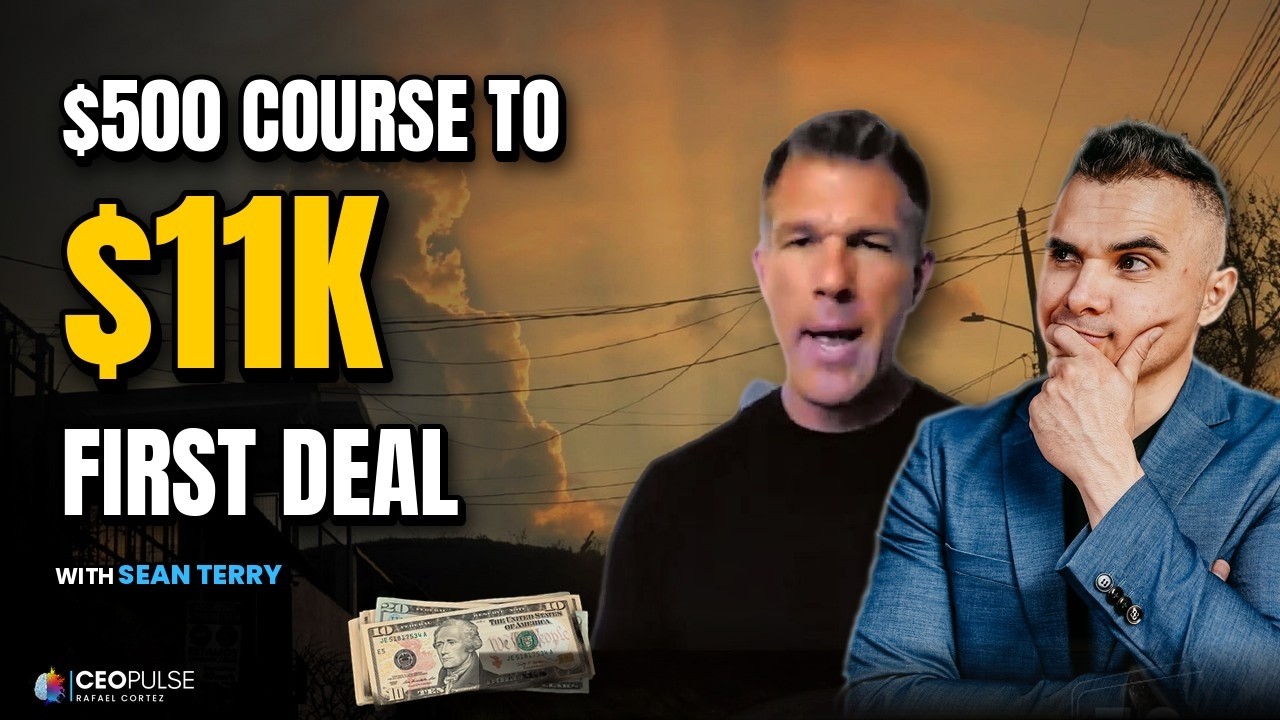
He bought the course for 500 dollars using his wife's small starter credit card, even though the recordings dated back to 1992. Knocking on doors in Arizona was scary and he wanted to quit a thousand times. Then he found a motivated seller and a buyer, and his first deal made about 11,000 dollars. Sean Terry calls it a game changing moment because it turned a concept into proof. His third deal took four more months, and he wondered if the first two had been a fluke.
What did the 2007 crash show him?
Sean Terry's smart move was holding properties. He structured seller financing deals that kept existing loans in place, fixed up houses, rented them out and built a portfolio of about 120 properties. He then bought about 30 million dollars of land and took it through entitlements with engineers and attorneys on staff. His mistake, he says, was not understanding market cycles. He got too big for his britches and thought everything he touched turned to gold.
When lenders collapsed in 2007, he ran out of cash and came close to losing his car. Shaken, he went back to the basics that had worked: a preforeclosure list, a yellow pad and handwritten letters to sellers. By late 2008 and early 2009 he was wholesaling again, and in 2010 he launched a podcast documenting what he was doing to help others in Phoenix. Rafael Cortez notes how quickly Sean Terry gets out of friction when a hard decision appears.
Why was going virtual his best business decision?
Over the years, Sean Terry watched his local cost per lead climb from roughly 35 to 40 dollars to several hundred. Team members, including Rafael Cortez's former colleague Brandon, pushed him to try virtual wholesaling. Looking at his P&Ls in November, he made the call to stop marketing locally and go national. Leads poured in from across the country, often from small markets with motivated sellers and active cash buyers but few big wholesalers. He calls the agility of a small business its superpower.
When COVID arrived, his team was already remote, closing deals over the phone with hundreds of thousands of dollars set to close. He rebuilt systems for acquisitions and dispositions, wrote phone scripts and even ran dispositions himself until a new hire came on. He also shares a story about integrity: when another wholesaler showed a prior contract on a property his team was about to close, Sean Terry cancelled the deal and found his buyer another property. Do the right thing, he says, even when it hurts.
What are the three attributes of a good entrepreneur?
Sean Terry and his partners now own close to 800 apartment units worth over 30 million dollars, yet he jokes that he still has 9,200 units to go toward his vision of 10,000. He loves the journey more than the destination and runs his real estate business as the model for his education company, so the best ideas come from doing the business. His three attributes are clarity about exactly where you are going and why, tenacity to keep going when it gets hard, and faith, since many times you must go all in and believe in the vision.
His inspiration starts with reading the Bible every morning. He also credits the book Organize Tomorrow Today, Jason Medley for giving him permission to hire, and Nick Perry for the virtual model. Meditation quiets the chatter so he can hear gut feelings and flashes of inspiration. Inspired action plus a clear vision, he says, beats forcing a round peg into a square hole. Rafael Cortez adds that working with a mindset mentor helped him create from being rather than constant doing, and both agree priorities do not change when circumstances change.
What is Sean Terry's advice for new entrepreneurs?
First, set correct expectations. Many new investors expect a 50,000 dollar check in three weeks, and when it does not come, they feel like failures and quit. Sean Terry suggests committing to a five year plan, noting he is 17 years in. His friend Pace Morby calls it getting married to your idea for a set amount of time. Like a farmer, plant the crop and keep watering it instead of ripping it up because nothing has sprouted yet. Results build in stages until something clicks.
Second, pay for speed. Learn from people who have done what you want to do, then go to work and implement. To his 17 year old self, he would say save 10 to 20 percent of your income so you can buy cash flowing real estate when opportunities appear during downturns. Rafael Cortez closes by thanking Sean Terry for being a mentor and for showing, through the highs and lows, what it means to keep going.
Key takeaways
- Proof beats theory. Sean Terry's first deal turned wholesaling from an idea into belief.
- Respect market cycles. Overconfidence in a hot market cost him nearly everything in 2007.
- Pivot fast. Going national and virtual cut costs and prepared his team for COVID.
- Clarity, tenacity, faith. These three attributes carry entrepreneurs through hard seasons.
- Set correct expectations. Commit to a five year plan and pay for speed by learning from others.
Quotes from the conversation
“It doesn't matter where I come from, it doesn't matter my background”
Sean Terry, 4:58
“And I can tell you that was a game changing moment for me.”
Sean Terry, 11:53
“So first off, have correct expectations.”
Sean Terry, 1:13:10
Episode chapters
| 2:25 | Broke at 33 with a new daughter |
| 7:07 | The radio ad that introduced wholesaling |
| 10:59 | Knocking doors and the first deal |
| 13:21 | Seller financing, land and the 2007 crash |
| 17:24 | Back to basics and rebuilding |
| 19:41 | Rising lead costs and going virtual |
| 27:33 | Doing the right thing even when it hurts |
| 41:40 | Clarity, tenacity and faith |
| 53:44 | Quieting the mind for inspiration |
| 1:11:27 | Advice for new entrepreneurs |
Who is on this episode?
Sean Terry
Sean Terry is a Marine Corps veteran who started wholesaling in Arizona at 33, rebuilt after the 2007 crash and now runs a national virtual wholesaling business, a multifamily portfolio and the Flip 2 Freedom education company.
About the host: Rafael Cortez
Rafael Cortez is the host of the CEO Pulse Podcast, an Organizational Psychologist and a real estate broker and investor based in Phoenix, Arizona. Raised in Yuma, Arizona, he became one of the youngest firefighters in Yuma County at 19 and launched his first business at 21. He has been involved in more than 1,300 real estate deals since 2009 and mentors entrepreneurs through the L.E.S.S. Business philosophy: Lean, Effective, Strategic, Simple. Rafael is the founder of CEO Pulse, Pulse Realty and Pulse Capital and the creator of REI Pulse CRM, and he mentors wholesalers in group and 1 on 1 settings. Read Rafael Cortez’s full bio.
Questions and answers
Who is Sean Terry?
Sean Terry is a real estate wholesaler, multifamily investor and founder of Flip 2 Freedom. Rafael Cortez worked on his team and considers him a mentor.
How did Sean Terry get started in wholesaling?
At 33, Sean Terry heard a radio ad about wholesaling while driving to sell a pool. He bought a course for 500 dollars and his first deal made about 11,000 dollars.
What happened to Sean Terry in 2007?
Sean Terry had expanded into rentals and land without respecting market cycles. When lenders collapsed he ran out of cash, then rebuilt by returning to basic preforeclosure marketing.
Why did Sean Terry switch to virtual wholesaling?
His local cost per lead climbed from about 40 dollars to several hundred. Sean Terry went national and virtual, which prepared his team to keep closing deals during COVID.
What three attributes does Sean Terry value most?
Sean Terry names clarity, tenacity and faith. He says successful people know exactly where they are going and keep going when it gets hard.
What advice does Sean Terry give new entrepreneurs?
Sean Terry says to set correct expectations and commit to a five year plan. He also recommends paying for speed by learning from people who have done it.
Related episodes
Build your business on systems
Rafael Cortez built REI Pulse CRM from the systems he runs his own deals on. See how it works for wholesalers and investors.
Explore REI PulseBrowse every CEO Pulse Podcast episode · About Rafael Cortez · YouTube · Apple Podcasts · Spotify
