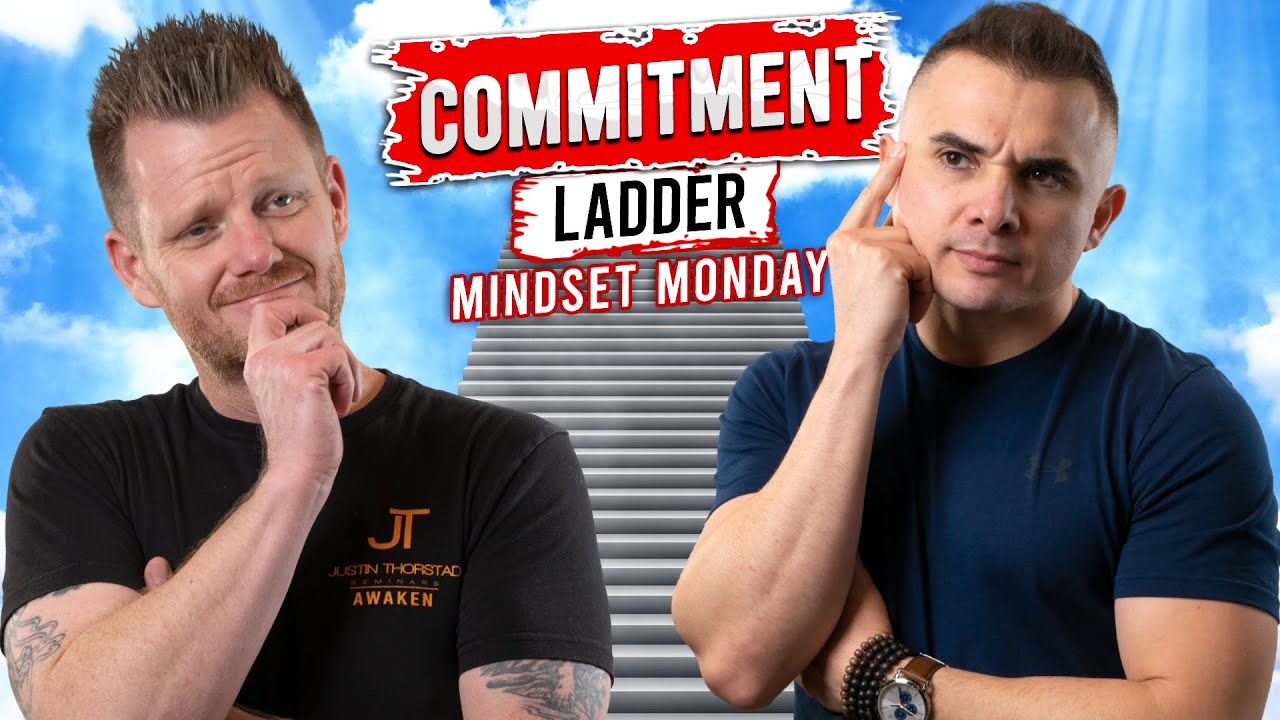

CEO Pulse Podcast | Mindset Monday
TL;DR
In this CEO Pulse Podcast Mindset Monday episode, Rafael Cortez and co host Justin Thorstad break down the commitment ladder, from I hope and I will try to doing whatever it takes. They explain why anything less than whatever it takes only means you are interested, how desire beats discipline, and how to handle overwhelm when a commitment stretches you.
What you will learn in this episode
- The rungs of the commitment ladder, from I hope to whatever it takes
- Why anything below whatever it takes really just means you are interested
- Why most people have more left in the tank than they think
- Why desire is a stronger driver than discipline
- What the word decide really means
- A simple perspective shift for overwhelm and stress
What is the commitment ladder and why does it matter?
Why did commitment come up on this Mindset Monday?
Rafael Cortez, host of the CEO Pulse Podcast and an Organizational Psychologist, opens this Mindset Monday episode with co host Justin Thorstad. Both walked in feeling some overwhelm. Rafael Cortez says that even during a successful streak, things can grow legs and move faster than you expected. The show is never scripted, so whatever the hosts are going through becomes the topic. As they put it, we are all the student, the teacher and the material at the same time.
Rafael Cortez says he often asks people whether they are committed to something or merely interested. Justin Thorstad adds that in business you work with customers, employees and partners, so it helps when everyone uses the same definition of words like commitment. He also rejects the idea that you can be committed in business but not elsewhere. How you show up in one area is how you show up in all of them: your integrity with your word, your follow through and whether you see things to the end.
What are the rungs of the commitment ladder?
Justin Thorstad lays out the ladder. The lowest rung is I hope: I am committed, but I hope it works out. Above that is I want, then I will try. Next is I will until or unless: I am committed until I hear no on a big sale, or unless someone else does not follow through. Then comes his pet peeve, I did the best I can, which becomes an excuse when something does not get done.
All of these, Justin Thorstad says, pale in comparison to real commitment: doing whatever it takes. Are you willing to persevere and persist until you win, or will you throw in the towel at the first obstacle and claim it was not that important anyway?
Many people hear whatever it takes and imagine endless sacrifice and grind. Justin Thorstad says that before committing to anything, he asks whether he is willing to take on the state of being all in. If the answer is no, the goal may not align with his values, vision or mission, so he does not say yes. What he has noticed is that when he does embody that state, the process tends to unfold and feels more effortless.
Do we underestimate what we have left in the tank?
Rafael Cortez says I did the best I can is where many people draw the line, but we often underestimate what we have. He references the David Goggins idea that when you think you are done, physically, mentally or emotionally, you can still squeeze out about 40 percent more.
Rafael Cortez works out with his son and has him grade each session from one to ten. They tend to hover around seven or eight, good enough. Sometimes Rafael Cortez feels he gave a ten, but when he trains with his personal trainer, that ten suddenly feels easy by comparison. It makes him wonder where else he thinks he is done.
Justin Thorstad answers with a smile: everywhere, from managing your day to relationships and family. Our greatest qualities are rarely revealed because they are rarely demanded. Having a mentor who pulls that out of you, not just by telling you but by getting you into action, lets you experience your own brilliance. He makes a distinction: this is not about accountability, but about discovering what you are made of.
Is commitment tested, or is it practice?
Rafael Cortez says commitment works like a muscle. Willpower is learned and nurtured through struggles and successes, not something most people are born with. Justin Thorstad pushes back on the word tested, because it implies pass or fail. A mentor once asked him who was keeping score. He realized he was, and that he only ever beat himself up and rarely gave himself praise. There is no scoreboard, so he now treats each challenge as a chance to practice the new personality his vision calls for.
Rafael Cortez explains how he moved past I will give it my best. He thinks about the collective best, the who not how idea. He is confident in his talents, but when he hits something he struggles with, he brings in someone who knows more instead of using his limits as an excuse to drop it.
Asked how he became someone who does whatever it takes, Justin Thorstad answers honestly. He saw a TED talk about why people who have struggled with addiction can make strong CEOs. He openly shares that he dealt with addictions when he was young, which made him extremely resourceful. Over time he redirected that resourcefulness into business. Rafael Cortez tells newer entrepreneurs that tenacity comes with experience and trials.
Why does desire beat discipline?
Justin Thorstad has noticed that some of his biggest results felt effortless while some smaller business tasks felt like heavy work. The difference was desire. When you want something and enjoy the process, it feels like play and hours pass like minutes. When it feels laborious, you avoid it and procrastinate. He suggests asking whether the result is truly what you want, why, and what experience you want along the way. Can you turn work into play and obligations into opportunities?
He shares a story from a new mentee who said he wanted to be more disciplined. When Justin Thorstad asked about a childhood memory of discipline, the memory was painful, tied to a difficult home. No wonder discipline felt like danger. Justin Thorstad suggests using desire to move toward what you want, instead of discipline to move away from what you do not want. They are two different energies.
What does it really mean to decide?
Justin Thorstad says the top rung, whatever it takes, is the only real commitment. His brother told him to look up the word commitment, which carries the sense of restricting yourself to one path. The word decide works the same way. Its root means to cut off, so a true decision means there is no other option. If you say you decided to get in shape and then do nothing, you did not decide; you had a wish.
Rafael Cortez adds that commitment feels different when it is a choice instead of an obligation. Choosing to do whatever it takes comes from empowerment. Justin Thorstad shares that he started about five businesses in six months. Every project takes about 400 to 500 percent more than he expects, even though the plan looks great on a spreadsheet. He has learned not to kid himself.
How do you handle overwhelm when a commitment stretches you?
Justin Thorstad offers a marathon analogy. Saying I will run until I get tired, or until someone passes me, is not running a marathon. Whatever it takes means walking, resting, drinking water and finishing at your own pace. Rafael Cortez shares that he is working on a project with people 10 to 15 years ahead of him whose vision is far bigger than his own, and it takes time to wrap his head around it.
Justin Thorstad treats discomfort as a sign of self love, a chance to practice transcending what holds him back. When he gets too serious, he reminds himself that life is short and someday what he is stressing about will not matter. That brings him back to center so he can ask what he is resisting and which expectations are not being met. Committing creates the situations that make you grow.
In closing, Justin Thorstad says the only way to truly honor yourself is to finish the thing. Rafael Cortez urges listeners to ask whether a commitment aligns with who they are, and if it does, to see it through, knowing obstacles will build thicker skin along the way.
Key takeaways
- Know your rung. I hope, I want, I will try, until or unless and I did my best all fall short of whatever it takes.
- Anything less is just being interested. Justin Thorstad says real commitment means doing whatever it takes.
- You have more in the tank. Rafael Cortez learned his ten was easy compared to what a trainer could pull out of him.
- Desire beats discipline. Moving toward what you want feels like play; forcing yourself away from what you fear feels like work.
- Commitment creates growth. The challenges a commitment brings are chances to practice who you are becoming.
Quotes from the conversation
“And all those pale in comparison to the real commitment called doing whatever it takes.”
Justin Thorstad, 5:55
“The only way to finish the thing, to see it through is to have that level of commitment, no matter what.”
Justin Thorstad, 31:46
Episode chapters
| 0:00 | Overwhelm and the topic of commitment |
| 4:44 | The commitment ladder |
| 6:16 | Taking on the whatever it takes state |
| 7:48 | 40 percent left in the tank |
| 12:32 | Tested or practice? |
| 15:37 | How Justin Thorstad became resourceful |
| 17:59 | Desire versus discipline |
| 21:13 | What it means to decide |
| 25:56 | The marathon analogy and handling stress |
| 31:46 | Finish the thing |
Who is on this episode?
Justin Thorstad
Justin Thorstad co hosts the Mindset Monday series on the CEO Pulse Podcast with Rafael Cortez. He runs several businesses and mentors entrepreneurs on mindset and self image.
About the host: Rafael Cortez
Rafael Cortez is the host of the CEO Pulse Podcast, an Organizational Psychologist and a real estate broker and investor based in Phoenix, Arizona. Raised in Yuma, Arizona, he became one of the youngest firefighters in Yuma County at 19 and launched his first business at 21. He has been involved in more than 1,300 real estate deals since 2009 and mentors entrepreneurs through the L.E.S.S. Business philosophy: Lean, Effective, Strategic, Simple. Rafael is the founder of CEO Pulse, Pulse Realty and Pulse Capital and the creator of REI Pulse CRM, and he mentors wholesalers in group and 1 on 1 settings. Read Rafael Cortez’s full bio.
Questions and answers
What is the commitment ladder?
Justin Thorstad describes rungs that start with I hope, then I want, I will try, I will until or unless, and I did my best. The top rung is doing whatever it takes, which he says is the only real commitment.
What is the difference between being committed and interested?
Justin Thorstad says anything below whatever it takes is being interested. Rafael Cortez often asks people which one they are before they start a project.
What is the 40 percent rule mentioned in the episode?
Rafael Cortez references the David Goggins idea that when you think you are done, you still have about 40 percent left. He saw it firsthand when a trainer pushed him far past what he thought was a ten.
Why does Justin Thorstad prefer desire over discipline?
Justin Thorstad says desire pulls you toward what you want and makes work feel like play. Discipline often means pushing away from what you fear, which feels heavy and leads to procrastination.
What does it mean to truly decide?
Justin Thorstad explains that decide comes from a root meaning to cut off, so a real decision leaves no other option. Saying you decided and then doing nothing is only a wish.
How do you stay committed when you feel overwhelmed?
Justin Thorstad reminds himself that life is short and most stress will not matter later, then asks what he is resisting. Rafael Cortez says to check that the commitment aligns with who you are and then see it through.
Related episodes
Build your business on systems
Rafael Cortez built REI Pulse CRM from the systems he runs his own deals on. See how it works for wholesalers and investors.
Explore REI PulseBrowse every CEO Pulse Podcast episode · About Rafael Cortez · YouTube · Apple Podcasts · Spotify
