
CEO Pulse Podcast | Interview
TL;DR
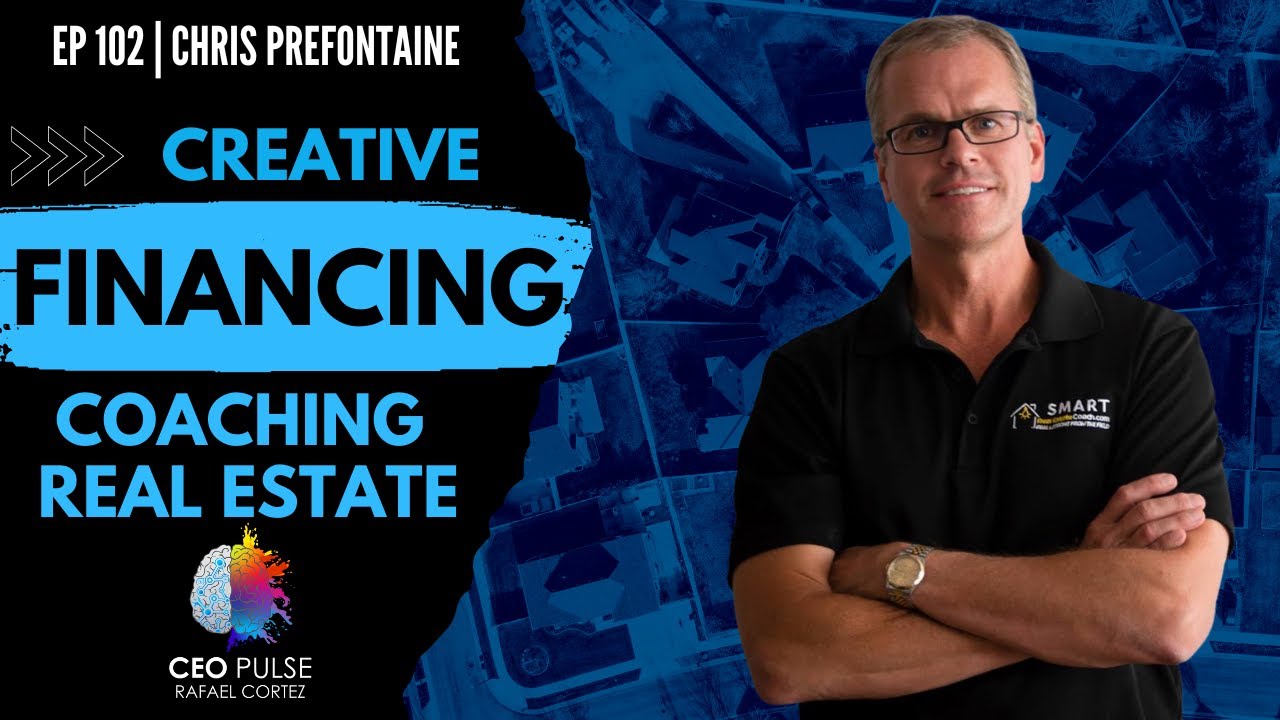
In this CEO Pulse Podcast interview, Rafael Cortez talks with Chris Prefontaine,, who has 31 years in real estate and mentors investors across North America. Chris Prefontaine explains how he rebuilt after 2008, how shared values keep a family company running smoothly, how his team made the Inc. 5000, and why confidence and focus matter.
What you will learn in this episode
- How Chris Prefontaine rebuilt his business after the 2008 crash
- Why finding someone who has already done it shortens the learning curve
- How his team generates leads with virtual assistants and niche lists
- How shared values and a mission remove conflict in a family business
- Why being in a room of other business owners changes your perspective
- Why Chris Prefontaine would tell his younger self to build confidence and focus
How did Chris Prefontaine build a family real estate business that mentors investors?
How did Chris Prefontaine get started in real estate?
Rafael Cortez, host of the CEO Pulse Podcast and an Organizational Psychologist, welcomes Chris Prefontaine, founder of a family owned real estate education company based in Rhode Island. Between their own deals and joint ventures with students, his team does 15 to 30 deals a month.
Chris Prefontaine has been in the business for 31 years. He started in 1991 building homes, then bought a real estate franchise and sold it in 2000. After that he focused on his own investments and began mentoring people across Canada and the United States. The 2008 crash forced him to reengineer the entire business. He rebuilt around creative deal structures that do not depend on banks or large amounts of his own cash, and today his family buys and sells locally while his team teaches investors across North America the same methods they use every day.
Many of his students come from W2 jobs. They do deals in a joint venture, revenue share model with his team, so someone is on their shoulder when things go sideways. As he puts it, things happen that you never hear about at a seminar.
Why should you learn from someone who has already done it?
When Chris Prefontaine came out of the crash, he had already been in real estate for 18 years. Even so, he found someone experienced in his new niche and worked with them for six months before he could soar. He used the same approach to scale. His view is simple: whatever you want to do, someone has done it, so go find them.
Rafael Cortez admits he once had a stigma against paying for mentorship. A good friend reframed it: do you want to cut to the front of the line? You can piece it together from YouTube, but it takes longer and usually costs more in mistakes. Rafael Cortez says the combination of action and progress is what makes mentorship worthwhile.
What is Chris Prefontaine seeing in the market?
Chris Prefontaine says the market is facing only the third affordability problem in 50 years. Many buyers who thought they could purchase a home months earlier no longer can. As demand drops, sellers are now calling his students in a way they were not six months before.
That shift also created a new opportunity. Large fix and flip and wholesale communities approached his company because their members kept finding deals that did not fit their usual box. Through a strategic alliance, his team shows those members other ways to structure those deals. Rafael Cortez, who has used multiple deal structures since 2012, agrees that having more than one way to solve a seller's problem keeps deals from being left on the table.
How does his team find leads?
Chris Prefontaine says the answer is both broad and targeted. For new students, the foundation is having virtual assistants call expired listings, for rent by owner listings and for sale by owner listings. When students want more leads, they add niche lists. One of his favorites is owners who live out of state, since they are often open to a simple solution for a property they no longer want to manage.
He also notes that his company keeps its products updated to match the market, so the tools students use do not go stale. He describes a trademarked three payday structure that his deals are built around, which he says has produced significant profit per deal for his team.
How do you run a family business without conflict?
Rafael Cortez asks the question many owners have: how do you manage family members in the business? Chris Prefontaine says until 2016 it was basically just him and a couple of employees. Then he joined a company that helps entrepreneurs scale, and the business made the Inc. 5000 list of fastest growing companies two years in a row. As the company grew, it became clear he could not be in every role. His son in law has earned the CEO role starting at the beginning of the year.
The key, Chris Prefontaine says, is that the group sets values, a mission and a purpose, and everyone votes on them. Their first mission ran five years and the next will run three. When a decision comes up, it is not about opinion or personality. It is about whether it aligns with what everyone agreed on. That takes personality conflict out of the equation, whether the person is family or not.
He also values being in a room with companies from many industries at the same revenue stage, because they face the same problems. Rafael Cortez relates. One of his first masterminds was a Vistage chapter of 10 to 12 CEOs from franchising, restaurants and other industries, back when he ran a medical transportation business. The industries were different, but the business problems were similar. Talking with people who were doing better than he was broke his tunnel vision and showed him where to pivot.
What is next for Chris Prefontaine's company?
Rafael Cortez notes a common trap in education: people stop doing deals and keep teaching what worked ten years ago. Real estate moves too fast for that. Chris Prefontaine's team stays active in the field. Their next mission, like the last, revolves around student transactions, not product sales. Products exist only to give students the right resources. What has changed is a leadership team that can handle scaling, along with six or seven certified mentors where it used to be just him and later his son. Rafael Cortez praises the controlled growth, since growing too fast can break a company.
What would Chris Prefontaine tell his younger self?
Chris Prefontaine says the biggest issue for almost anyone is confidence. He would tell his 17 year old self that he can do anything he wants. Find someone who has already walked that path, latch on to them and put the blinders on for at least three years for that first endeavor, so shiny object syndrome does not pull you away. He adds that at any age you can look back three years and see what you would do better, so think bigger and remember that someone has already done it.
Key takeaways
- Reinvent when the market forces you to. Chris Prefontaine rebuilt his entire business after 2008.
- Someone has already done it. Find them and shorten your learning curve.
- Shared values remove conflict. Decisions are judged against the mission everyone voted on, not personalities.
- Stay in the field. Mentors who still do deals teach what works today.
- Focus for three years. Blinders protect you from shiny object syndrome.
Quotes from the conversation
“I don't care what you want to do. Someone's done it. You just go find them.”
Chris Prefontaine, 6:06
“You literally can do anything you want.”
Chris Prefontaine, 23:25
Episode chapters
| 0:00 | Meet Chris Prefontaine |
| 1:32 | 31 years in real estate |
| 5:25 | Find someone who has done it |
| 7:06 | What he sees in the market |
| 9:29 | How his team finds leads |
| 16:36 | Running a family business and the Inc. 5000 |
| 18:13 | Masterminds and perspective |
| 19:45 | What comes next |
| 22:50 | Advice to his younger self |
Who is on this episode?
Chris Prefontaine
Chris Prefontaine started in real estate in 1991 building homes and later owned a real estate franchise. He runs a family owned real estate company in Rhode Island that mentors investors across North America and has appeared on the Inc. 5000 list.
About the host: Rafael Cortez
Rafael Cortez is the host of the CEO Pulse Podcast, an Organizational Psychologist and a real estate broker and investor based in Phoenix, Arizona. Raised in Yuma, Arizona, he became one of the youngest firefighters in Yuma County at 19 and launched his first business at 21. He has been involved in more than 1,300 real estate deals since 2009 and mentors entrepreneurs through the L.E.S.S. Business philosophy: Lean, Effective, Strategic, Simple. Rafael is the founder of CEO Pulse, Pulse Realty and Pulse Capital and the creator of REI Pulse CRM, and he mentors wholesalers in group and 1 on 1 settings. Read Rafael Cortez’s full bio.
Questions and answers
How did Chris Prefontaine start in real estate?
Chris Prefontaine started in 1991 building homes, then bought and later sold a real estate franchise. After the 2008 crash, he reengineered his business and began mentoring investors across North America.
Why does Chris Prefontaine recommend finding a mentor?
Chris Prefontaine says whatever you want to do, someone has already done it. Even with 18 years of experience, he worked with an expert for six months when he entered a new niche.
How does Chris Prefontaine's team generate leads?
Chris Prefontaine says new students have virtual assistants call expired listings, for rent by owner and for sale by owner listings. They add niche lists such as out of state owners when they want more leads.
How does Chris Prefontaine avoid conflict in a family business?
Chris Prefontaine says his team sets values, a mission and a purpose that everyone votes on. Decisions must align with those agreements, which removes personality from conflicts.
What advice would Chris Prefontaine give his younger self?
Chris Prefontaine would say you can do anything you want. Find someone who has done it, latch on and keep the blinders on for at least three years.
Related episodes
Build your business on systems
Rafael Cortez built REI Pulse CRM from the systems he runs his own deals on. See how it works for wholesalers and investors.
Explore REI PulseBrowse every CEO Pulse Podcast episode · About Rafael Cortez · YouTube · Apple Podcasts · Spotify
