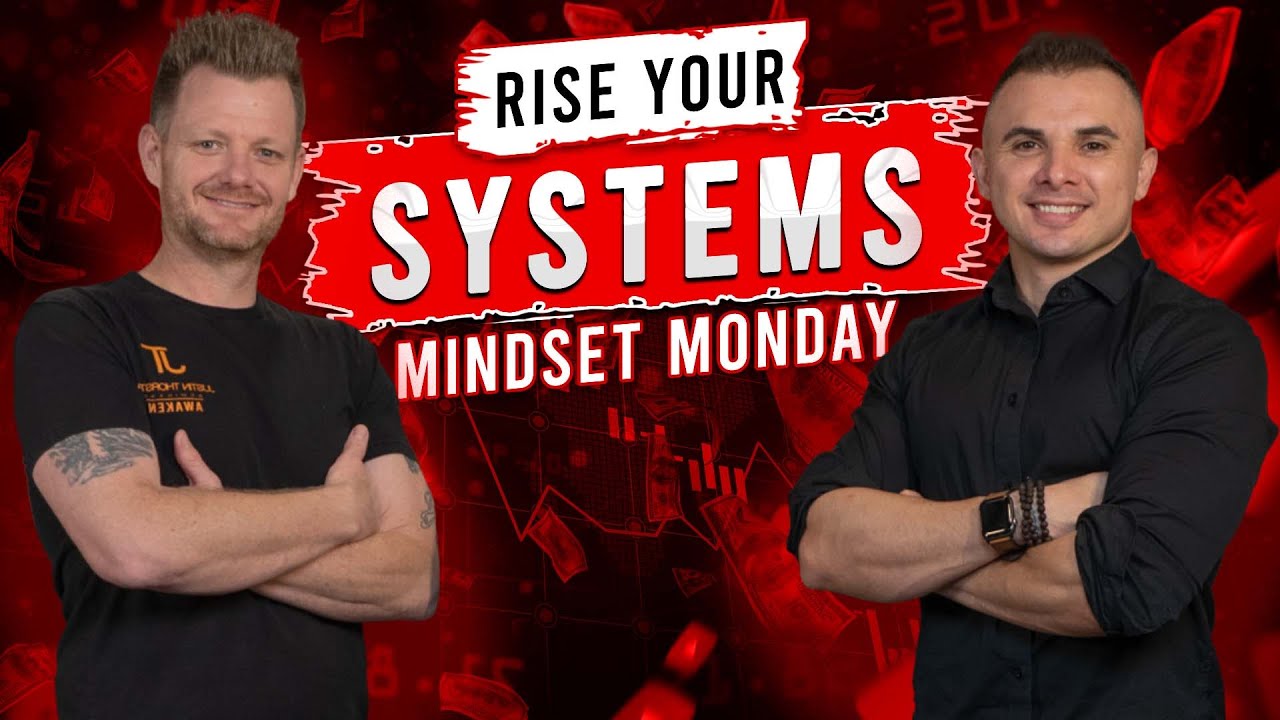

CEO Pulse Podcast | Mindset Monday
TL;DR
In this CEO Pulse Podcast Mindset Monday episode, Rafael Cortez and co host Justin Thorstad apply the idea that you rise to the level of your systems to five areas of life: mindset, health, relationships, profession and money. They share their morning rituals, explain why desire beats discipline, and walk through simple income distribution accounts.
What you will learn in this episode
- Why systems apply to mindset, health, relationships and money, not just business
- Why clear intention matters more than the mechanism
- Why a morning ritual takes desire, not discipline
- How Rafael Cortez and Justin Thorstad structure their mornings
- Why the quality of your life reflects the quality of your relationships
- How income distribution accounts change your relationship with money
How do you rise to the level of your systems in every area of life?
What does it mean to rise to the level of your systems?
Rafael Cortez, host of the CEO Pulse Podcast and an Organizational Psychologist, opens this Mindset Monday episode with co host Justin Thorstad on a common saying: you rise to the level of your systems. Rafael Cortez admits his mind went straight to business systems, processes and KPIs. Justin Thorstad widened the lens. Your mindset, health, relationships and money run on systems too.
They break life into five areas: mindset, profession, health, relationships and money. Justin Thorstad says most people run on autopilot and then complain about parts of their life they do not like. The first question is whether you have even defined point B. If you do not know where you are going, any road will get you there. Once you get clear on what you want to elevate, the strategy becomes more obvious and the right book, podcast or conversation seems to show up.
Rafael Cortez links that to the reticular activating system, the part of the brain that starts noticing cues that match what you are looking for. Justin Thorstad describes it as resonance. When the intention is clear, the mechanism unfolds. That, he says, is why the hustle and grind is dead. He suggests listeners pause and write down what they truly want in each of the five areas before going further.
Why does a morning ritual take desire instead of discipline?
Rafael Cortez notes that the word system can feel mechanical, but any morning routine is a system that sets up the day intentionally. Justin Thorstad says mindset is the most important area because beliefs create filters that shape what we see. If you are unhappy with your health or money, those results came from your current mindset and system. Even having no system is a system.
Rafael Cortez adds that everything can be improved once you measure and track it. Nothing is being done to you. It is your call.
Justin Thorstad pushes back on the idea that you just need more discipline. Many people have a negative relationship with that word. He does not see himself as especially disciplined, yet he is very consistent with what matters to him. A morning practice takes desire. It is not something you do because you are not enough. It is sacred time you get to give yourself, because the elevated version of you that walks out the door creates bigger and better results.
What do the hosts' morning rituals look like?
Justin Thorstad starts with gratitude, then meditation to quiet his mind and body. He often receives solutions to problems he had forgotten about. He shares the saying that prayer is talking to God and meditation is listening. Next comes movement, because moving your body changes your mood and supports your mindset.
Rafael Cortez calls his morning a non negotiable. He used to meditate first, but the effect started to taper, so he switched the order. Now he wakes at five and is at the gym with his son by 5:30, often listening to an audiobook such as The Power of Intention by Wayne Dyer. After dropping his kids off, he has about 90 minutes for himself to meditate, journal and plan before work starts around 9:30. If his cup is not filled in the morning, the rest of his day feels reactive and chaotic.
Both agree there is no single right way. Justin Thorstad says the biggest reason people never start is that they do not know what to do or in what order. His advice is to start with three items, even ten minutes each, and experiment like a mad scientist. He calls himself his favorite experiment. The practice is about building a relationship with yourself, because you cannot give something you do not possess. If you feel you do not have ten minutes, that is even more reason to take them.
Rafael Cortez shares a simple system he once resisted: a written schedule. A few years ago he felt silly scheduling anything for himself. Now gym time, personal time and focused work blocks are all scheduled, and time blocking has become the foundation for some of the most important areas of his life.
How do relationships and legacy fit into your systems?
For Rafael Cortez, legacy is part of his mindset. He wants to leave behind advice, beliefs and values, so he uses his mornings to talk with his kids. One recent morning he asked them what they were excited about that day and told them he would ask again in the afternoon. Doing that from a place of love nourishes his own mindset too.
Justin Thorstad believes the quality of our lives comes down to the quality of our relationships. If health, money and possessions were taken away, you would lean on your community and tribe. So he asks what he is contributing to each relationship, because we are always contributing something positive or negative. He describes an event where employees of a fast growing company kept saying they work with the owners, not for them. That culture, he says, reflects the relationship the owners have with themselves.
Rafael Cortez adds that there is an order to everything. You cannot have a great relationship with your parents if you never call them. Justin Thorstad admits part of him resists methodical systems because he gets bored, but he knows that is his own story and he can reframe it. If you fail to plan, you are planning to fail.
What is a simple system for managing money?
Justin Thorstad says many people treat all incoming money as theirs and then fall behind on bills and taxes. He recommends Profit First by Mike Michalowicz, and David Richter's version for real estate investors. Years ago he broke six figures as a realtor and was still broke. When his income grew to around 400,000 dollars a year, he was still broke. He realized more money would never fix the problem. His relationship with money had to change.
He trained himself to live on 40 percent of his income. When a commission comes in, a share goes to personal living, a share to taxes, a share to investing, and a share to an education bucket. If you are not paying yourself first for your own growth, he says, nobody else will.
Rafael Cortez uses a similar setup with four named accounts: Create, Wealth, Live and Flow. Wealth is where income lands and a healthy portion stays. Create funds memories like family trips. Live covers home expenses, utilities and groceries. Seeing money move this way showed him how much his household actually spent, and putting money into the Create account excites him.
Justin Thorstad's tip for anyone who thinks this will not work on their income: distribute the money anyway. If you need some of it back to cover living expenses, move it back, but you will have started the behavior. He shares a mentorship client who was earning about 125,000 dollars a year as an agent and always felt broke. After adjusting her mindset and using income distribution, she earned about 414,000 dollars within a year and had every account full. The lesson, he says, is to recognize each win and build new evidence for who you are becoming.
Key takeaways
- Every area of life runs on systems. Mindset, health, relationships, profession and money all need a process.
- Clarity comes first. Define point B and the strategy becomes more obvious.
- Desire beats discipline. A morning practice is a gift to yourself, not a punishment.
- Experiment with your routine. Start with three items and adjust the order until it fits you.
- Relationships define quality of life. Ask what you are contributing to each one.
- Distribute income on purpose. Separate accounts change your relationship with money.
Quotes from the conversation
“When the intention is clear, the mechanism will appear.”
Justin Thorstad, 5:38
“I'm my favorite experiment.”
Justin Thorstad, 20:07
“I believe the quality of our lives come down to the amount of quality relationships we have.”
Justin Thorstad, 26:02
Episode chapters
| 0:00 | You rise to the level of your systems |
| 2:24 | Defining point B |
| 4:00 | Five areas of life |
| 6:22 | Mindset and the morning ritual |
| 11:59 | Gratitude, meditation and movement |
| 15:55 | There is no single right routine |
| 20:31 | Scheduling and time blocking |
| 23:41 | Legacy and relationships |
| 29:11 | Income distribution accounts |
| 36:57 | Recognize the win |
Who is on this episode?
Justin Thorstad
Justin Thorstad co hosts the Mindset Monday series on the CEO Pulse Podcast with Rafael Cortez. He runs several businesses and mentors entrepreneurs on mindset and self image.
About the host: Rafael Cortez
Rafael Cortez is the host of the CEO Pulse Podcast, an Organizational Psychologist and a real estate broker and investor based in Phoenix, Arizona. Raised in Yuma, Arizona, he became one of the youngest firefighters in Yuma County at 19 and launched his first business at 21. He has been involved in more than 1,300 real estate deals since 2009 and mentors entrepreneurs through the L.E.S.S. Business philosophy: Lean, Effective, Strategic, Simple. Rafael is the founder of CEO Pulse, Pulse Realty and Pulse Capital and the creator of REI Pulse CRM, and he mentors wholesalers in group and 1 on 1 settings. Read Rafael Cortez’s full bio.
Questions and answers
What does it mean to rise to the level of your systems?
Rafael Cortez and Justin Thorstad say your results reflect the systems you run in every area of life. That includes mindset, health, relationships, profession and money, not just business processes.
Why does Justin Thorstad say desire matters more than discipline?
Justin Thorstad says many people resist the word discipline. When a morning practice comes from desire, it feels like a gift to yourself and consistency follows.
What is Rafael Cortez's morning routine?
Rafael Cortez goes to the gym with his son at 5:30, often listening to an audiobook. After dropping his kids off, he takes about 90 minutes to meditate, journal and plan before work.
How should you build a morning ritual if you do not know where to start?
Justin Thorstad suggests starting with three items, even ten minutes each. Then experiment with the order and notice how you show up during the day.
Why are relationships a system?
Justin Thorstad says the quality of life comes down to the quality of relationships. Rafael Cortez adds that there is an order to them, like regularly calling your parents.
What is income distribution?
Justin Thorstad splits every payment into set shares for living, taxes, investing and education, inspired by Profit First. Rafael Cortez uses four accounts named Create, Wealth, Live and Flow.
Related episodes
Build your business on systems
Rafael Cortez built REI Pulse CRM from the systems he runs his own deals on. See how it works for wholesalers and investors.
Explore REI PulseBrowse every CEO Pulse Podcast episode · About Rafael Cortez · YouTube · Apple Podcasts · Spotify
