
CEO Pulse Podcast | Interview
TL;DR
In this CEO Pulse Podcast interview, Rafael Cortez talks with Blake Templeton, CEO and founder of Boron Capital, a former wholesaler turned commercial real estate and crypto fund manager. Blake explains his view of Bitcoin as digital gold, how blockchain works like an app store, how smart contracts could change real estate closings, and what he tells newcomers.
What you will learn in this episode
- How Blake Templeton went from college dropout to wholesaling and commercial real estate
- Why he calls Bitcoin digital gold and what he means by fiat currency
- How blockchain works, explained with an iPhone and app store comparison
- How smart contracts could handle title, escrow and deeds in real estate
- The three things he believes entrepreneurs should know about crypto
- Why he would tell his 17 year old self to surrender his will
How does Blake Templeton explain cryptocurrency to entrepreneurs?
Who is Blake Templeton?
Rafael Cortez, host of the CEO Pulse Podcast and an Organizational Psychologist, sits down with Blake Templeton, CEO and founder of Boron Capital and a member of the Forbes Business Council. Blake Templeton started in real estate, moved into commercial properties and now manages two investment funds: one in real estate focused on self storage and mobile home parks, and one in cryptocurrency.
Rafael Cortez admits that crypto feels overwhelming. His lane is real estate, so it is easy to tune out important changes. He says lack of clarity tends to be one of the biggest issues for entrepreneurs, and he wants this conversation to bring some clarity. This post summarizes Blake Templeton's views as shared in the episode, recorded in 2022. It is educational content from the conversation, not investment advice.
How did Blake Templeton get started as an entrepreneur?
Blake Templeton describes himself as a college dropout without a penny to his name who humbly moved back in with his parents. In 2006 his parents got a letter inviting them to a real estate conference. He went, and he was hooked. He did not know the specifics of real estate, but he knew numbers and could follow the formulas.
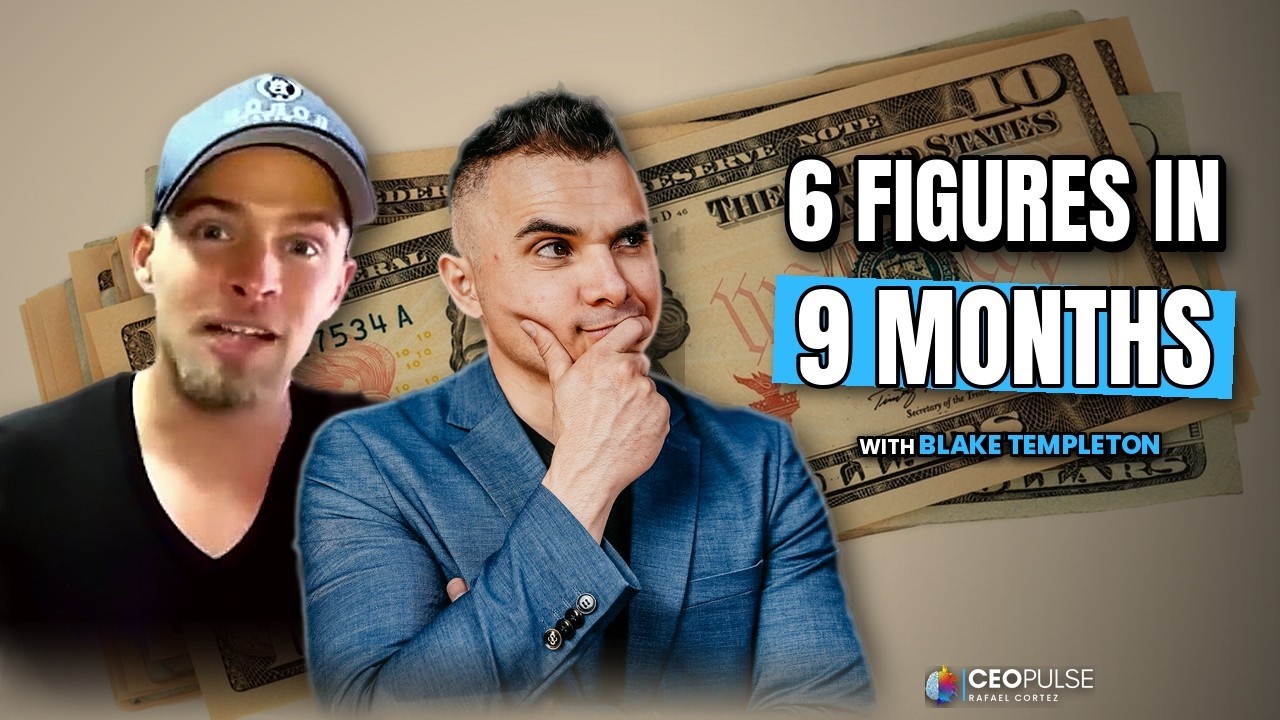
He started wholesaling in 2006, knocking on foreclosures and running mail campaigns and bandit signs. He says he made six figures in his first nine months and doubled it each of the next two years. His parents and his wife's parents each ended up flipping about a dozen houses with his help. Between 2006 and 2012 his team did more than 300 deals, and few people were wholesaling in his area at the time.
Then Blake Templeton adopted what he calls a play bigger mentality. From 2012 on he moved into commercial real estate, starting with apartments in Texas and Georgia, then self storage and mobile home parks. He says those two asset classes appreciated more than any other from 1993 forward. His team partners with experienced operators on properties worth 10 to 30 million dollars each and holds them long term.
Why does Blake Templeton call Bitcoin digital gold?
Blake Templeton explains that the US dollar is a fiat currency, meaning it is not backed by anything physical. He traces this to 1971, when the dollar came off the gold standard. In his view, heavy money printing dilutes the value of every dollar, and he believes real inflation on everyday purchases is higher than official numbers suggest.
By contrast, he points out that Bitcoin has a fixed limit of 21 million coins, and he argues that scarcity is what creates value. He calls Bitcoin thermodynamically designed, which he explains as money that can move almost instantly and cheaply to anyone with a phone. His example is a friend in India who had to walk a full day to collect a money transfer that took a large fee. With a Bitcoin wallet, Blake Templeton says, that money could arrive in moments.
Rafael Cortez asks what backs crypto. Blake Templeton answers that Bitcoin itself becomes the value, and that its usefulness matters as much as its supply.
How does blockchain work?
Blake Templeton uses an iPhone to explain it. The phone runs software, and Bitcoin is software. The phone has an app store, which is a platform, and the platform behind crypto is called a blockchain. The apps in the store are businesses, and blockchains host many businesses too. He names Ethereum and Solana as examples of other blockchains.
Smart contracts in real estate
For a real estate audience, Blake Templeton's most practical example is the smart contract. Today a buyer waits on a title company to search for liens, which can take days. He describes a future where ownership, liens and title records live on the blockchain, the buyer sends funds to a smart contract, and the contract releases the money to the seller and records the warranty deed at the same moment. He believes this removes middlemen and makes fraud far harder.
He also mentions other possible uses, such as digital rights, global payments and voting. Rafael Cortez sums it up as a decentralized process, and Blake Templeton adds that it is secure, automated and shared publicly.
What are the three things to know about cryptocurrency?
Rafael Cortez asks for the top three things entrepreneurs should know. Blake Templeton's first point is awareness. If you do not recognize that crypto is changing the world, he says, you will only be a user and miss what he calls the greatest wealth transfer in history.
His second point is that major investors have changed their public views. He cites Ray Dalio, Ken Griffin, Kevin O'Leary and Mark Cuban as examples of people he says went from skeptical to supportive, and he mentions El Salvador making Bitcoin legal tender. Rafael Cortez connects this to a familiar principle: you cannot keep doing the same thing and expect different results, because everything around us is changing.
His third point is about getting started. Blake Templeton believes the value of a coin is based on utility, not noise, and that the next few years are an adoption period. He suggests beginners start learning through free sources such as Bitcoin news on YouTube and Bitcoin Magazine, and that they learn from people with a real track record.
How does Blake Templeton approach crypto investing?
Blake Templeton says buying through a trading app and reacting to short term moves rarely builds wealth. His fund holds a portion of Bitcoin and actively trades what he calls the narratives of other coins, using stop losses. He notes that his crypto fund is open only to accredited investors because it operates under SEC rules.
Rafael Cortez shares that he once tried day trading stocks and found it a full time job that sucked the joy out of his life. He says he respects the expertise that advanced strategies require, and that the bigger lesson for entrepreneurs is to keep learning as everything shifts.
What would Blake Templeton tell his 17 year old self?
Blake Templeton gives an answer he says is not the usual one. At 17 he was arrogant and prideful and wanted to own the island and live by his own rules. He would show his younger self the fear of the Lord, which he describes as the fear of being outside of God's presence, favor, protection and guidance.
He says the Lord takes you through painful roads to get you back on track, and that true freedom means surrendering your will. Rafael Cortez sums it up simply: do not walk alone.
Key takeaways
- Clarity comes before action. Rafael Cortez says lack of clarity, not lack of ability, is what stops many entrepreneurs from exploring new topics.
- Blockchain is a platform, not just a currency. Blake Templeton compares Bitcoin to software and the blockchain to an app store full of businesses.
- Smart contracts could reshape closings. Blake Templeton describes title, escrow and deeds handled on the blockchain without a third party.
- Look at utility over noise. In Blake Templeton's view, the value of a coin comes from its real uses rather than hype.
- Learn before you act. Blake Templeton suggests starting with free learning resources and studying people with a real track record.
Quotes from the conversation
“Lack of clarity tends to be one of the biggest issues for entrepreneurs”
Rafael Cortez, 2:41
“Think software versus currency.”
Blake Templeton, 12:34
“The value, remember, is not based on noise, but it's based on the utility”
Blake Templeton, 24:40
“You've got to actually surrender your will and make it his will”
Blake Templeton, 40:03
Episode chapters
| 0:00 | Meet Blake Templeton |
| 2:21 | From college dropout to wholesaling |
| 4:43 | Scaling into commercial real estate |
| 6:14 | Bitcoin as digital gold |
| 11:58 | Blockchain explained with an iPhone |
| 13:34 | Smart contracts in real estate |
| 18:12 | Three things to know about crypto |
| 23:57 | Utility over noise |
| 30:26 | How his fund approaches crypto |
| 38:19 | Advice to his 17 year old self |
Who is on this episode?
Blake Templeton
Blake Templeton is the CEO and founder of Boron Capital and a member of the Forbes Business Council. He started wholesaling in 2006, moved into commercial real estate in 2012 and manages funds focused on self storage, mobile home parks and cryptocurrency.
About the host: Rafael Cortez
Rafael Cortez is the host of the CEO Pulse Podcast, an Organizational Psychologist and a real estate broker and investor based in Phoenix, Arizona. Raised in Yuma, Arizona, he became one of the youngest firefighters in Yuma County at 19 and launched his first business at 21. He has been involved in more than 1,300 real estate deals since 2009 and mentors entrepreneurs through the L.E.S.S. Business philosophy: Lean, Effective, Strategic, Simple. Rafael is the founder of CEO Pulse, Pulse Realty and Pulse Capital and the creator of REI Pulse CRM, and he mentors wholesalers in group and 1 on 1 settings. Read Rafael Cortez’s full bio.
Questions and answers
Who is Blake Templeton?
Blake Templeton is the CEO and founder of Boron Capital and a member of the Forbes Business Council. He started wholesaling in 2006, did more than 300 deals by 2012 and then moved into commercial real estate and a cryptocurrency fund.
Why does Blake Templeton call Bitcoin digital gold?
Blake Templeton points to Bitcoin's fixed supply of 21 million coins and contrasts it with fiat currency, which is not backed by anything physical. He tells Rafael Cortez that he sees that scarcity as the source of its value.
How does Blake Templeton explain blockchain?
Blake Templeton compares Bitcoin to the software on an iPhone and the blockchain to the app store. Just as the app store hosts many apps, a blockchain hosts many businesses and uses.
How could smart contracts change real estate transactions?
Blake Templeton describes title records and liens stored on the blockchain, with a smart contract releasing funds to the seller and recording the deed at the same time. He believes this would remove middlemen and reduce fraud.
What does Blake Templeton suggest for crypto beginners?
Blake Templeton suggests starting with free resources such as Bitcoin news on YouTube and Bitcoin Magazine, and learning from people with a real track record. He says the value of a coin should be judged by its utility, not noise.
What would Blake Templeton tell his 17 year old self?
Blake Templeton says he was arrogant and prideful at 17. He would point his younger self toward the fear of the Lord and surrendering his will, which Rafael Cortez sums up as not walking alone.
Related episodes
Build your business on systems
Rafael Cortez built REI Pulse CRM from the systems he runs his own deals on. See how it works for wholesalers and investors.
Explore REI PulseBrowse every CEO Pulse Podcast episode · About Rafael Cortez · YouTube · Apple Podcasts · Spotify
